
 “Cannabis is an annual plant with a long history of use as food, feed, fiber, oil, medicine, and narcotics. Despite realizing its true value, it has not yet found its true place. Cannabis has had a long history with many ups and downs, and now it is our turn to promote it.
Cannabis contains approximately 600 identified and many yet unidentified potentially useful compounds. Cannabinoids, phenolic compounds, terpenoids, and alkaloids are some of the secondary metabolites present in cannabis. However, among a plethora of unique chemical compounds found in this plant, the most important ones are phytocannabinoids (PCs).
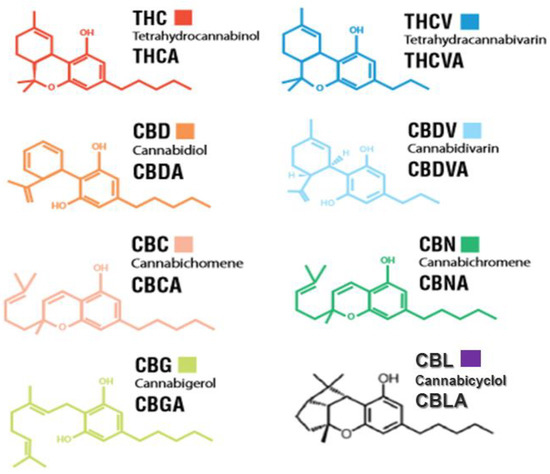
Over hundreds of 21-22-carbon compounds exclusively produce in cannabis glandular hairs through either polyketide and or deoxyxylulose phosphate/methylerythritol phosphate (DOXP/MEP) pathways. Trans-Δ9-tetrahydrocannabinol (Δ9-THC) and cannabidiol (CBD) are those that first come to mind while talking about cannabis. Nevertheless, despite the low concentration, cannabinol (CBN), cannabigerol (CBG), cannabichromene (CBC), tetrahydrocannabivarin (THCV), cannabidivarin (CBDV), cannabinodiol (CBND), and cannabinidiol (CBDL) may have potentially some medical effects.
PCs and endocannabinoids (ECs) mediate their effects mainly through CB1 and CB2 receptors. Despite all concerns regarding cannabis, nobody can ignore the use of cannabinoids as promising tonic, analgesic, antipyretic, antiemetic, anti-inflammatory, anti-epileptic, anticancer agents, which are effective for pain relief, depression, anxiety, sleep disorders, nausea and vomiting, multiple sclerosis, cardiovascular disorders, and appetite stimulation.
The scientific community and public society have now increasingly accepted cannabis specifically hemp as much more than a recreational drug. There are growing demands for cannabinoids, mainly CBD, with many diverse therapeutic and nutritional properties in veterinary or human medicine. The main objective of this review article is to historically summarize findings concerning cannabinoids, mainly THC and CBD, towards putting these valuable compounds into food, feed and health baskets and current and future trends in the consumption of products derived from cannabis.”
https://pubmed.ncbi.nlm.nih.gov/32899626/
https://www.mdpi.com/1420-3049/25/18/4036
 “The immune-suppressive effects of cannabidiol (CBD) are attributed to the modulation of essential immunological signaling pathways and receptors. Mechanistic understanding of the pharmacological effects of CBD emphasizes the therapeutic potential of CBD as a novel immune modulator.
 “Non-Uremic Calciphylaxis (NUC) is a rare condition that often manifests as intractable and painful integumentary wounds, afflicting patients with a high burden of co-morbidity.
 “Previous preclinical studies have demonstrated that cannabidiol (CBD) and cannabigerol (CBG), two non-psychotomimetic phytocannabinoids from Cannabis sativa, induce neuroprotective effects on toxic and neurodegenerative processes.
 “Staphylococcal enterotoxin B (SEB) is a potent activator of Vβ8+T-cells resulting in the clonal expansion of ∼30% of the T-cell pool. Consequently, this leads to the release of inflammatory cytokines, toxic shock, and eventually death.
 “Staphylococcal enterotoxin‐B (SEB) is one of the most potent bacterial superantigens that exerts profound toxic effects by inducing cytokine storm. When SEB is inhaled, it can cause Acute Respiratory Distress Syndrome (ARDS), which is often fatal and currently there are no effective treatment modalities.
 “Acute Respiratory Distress Syndrome (ARDS) causes up to 40% mortality in humans and is difficult to treat. ARDS is also one of the major triggers of mortality associated with coronavirus-induced disease (COVID-19). We used a mouse model of ARDS induced by Staphylococcal enterotoxin B (SEB), which triggers 100% mortality, to investigate the mechanisms through which Δ9-tetrahydrocannabinol (THC) attenuates ARDS.
 “Coronavirus disease-2019 (COVID-19) pandemic caused by the severe acute respiratory syndrome coronavirus-2 (SARS-CoV-2) is evolving across the world and new treatments are urgently needed as with vaccines to prevent the illness and stem the contagion. The virus affects not only the lungs but also other tissues, thus lending support to the idea that COVID-19 is a systemic disease. The current vaccine and treatment development strategies ought to consider such systems medicine perspectives rather than a narrower focus on the lung infection only.
 “Cannflavins are a group of prenylflavonoids derived from Cannabis sativa L.. Cannflavin A (CFL-A), B (CFL-B) and C (CFL-C) have been heralded for their anti-inflammatory properties in pre-clinical evaluations.
 “Inspired by the medicinal properties of the plant Cannabis sativa and its principal component (-)-trans-Δ9-tetrahydrocannabinol (THC), researchers have developed a variety of compounds to modulate the endocannabinoid system in the human brain.