Cannabinoid receptor 2‑selective agonist JWH015 attenuates bone cancer pain through the amelioration of impaired autophagy flux induced by inflammatory mediators in the spinal cord.

Journal Cover “Bone cancer pain (BCP) is a severe complication of advanced bone cancer.

Although cannabinoid receptor 2 (CB2) agonists may have an analgesic effect, the underlying mechanism remains unclear.

CB2 serves a protective role in various pathological states through the activation of autophagy. Therefore, the present study aimed to determine whether the analgesic effects of the selective CB2 agonist JWH015 was mediated by the activation of autophagy in BCP.

The results of the present study suggested that the impairment of autophagy flux was induced by glia‑derived inflammatory mediators in spinal neurons. Intrathecal administration of the selective CB2 agonist JWH015 ameliorated autophagy flux through the downregulation of IL‑1β and IL‑6 and attenuated BCP.”

https://www.ncbi.nlm.nih.gov/pubmed/31661120

https://www.spandidos-publications.com/10.3892/mmr.2019.10772

Antibacterial properties of hemp hurd powder against E. coli

Publication cover image“Hemp (Cannabis sativa L.) is an eco‐friendly and multifunctional plant. Hemp hurd is a by‐product of hemp plant during hemp fiber separation. Although hemp hurd is repeatedly announced owing antibacterial activity, it has never been systematically investigated and reported. In this study, the antibacterial activity of hemp hurd powder against Escherichia coli is investigated. This article reveals antibacterial activity of hemp hurd where hemp hurd powder inhibits the growth of E. coli. Meanwhile, the self‐contamination (forming during retting process) inside hemp hurd has dramatic impact on the antibacterial performance. To achieve better antibacterial activity, hemp hurd was heat treated to eliminate self‐contaminations. The impact of the particle sizes and heat treatment on the antibacterial effectiveness was evaluated.”

https://onlinelibrary.wiley.com/doi/abs/10.1002/app.41588

https://www.researchgate.net/publication/267628173_Antibacterial_Properties_of_Hemp_Hurd_Powder_Against_E_coli

WIN55,212-2-Induced Expression of Mir-29b1 Favours the Suppression of Osteosarcoma Cell Migration in a SPARC-Independent Manner.

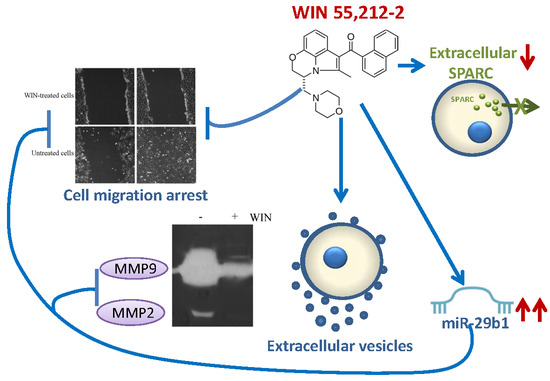
ijms-logo“WIN55,212-2 (WIN) is a synthetic agonist of cannabinoid receptors that displays promising antitumour properties.

The aim of this study is to demonstrate that WIN is able to block the migratory ability of osteosarcoma cells and characterize the mechanisms involved.

Overall, these findings suggest that WIN markedly affects cell migration, dependently on miR-29b1 and independently of SPARC, and can thus be considered as a potential innovative therapeutic agent in the treatment of osteosarcoma.”

https://www.ncbi.nlm.nih.gov/pubmed/31652569

https://www.mdpi.com/1422-0067/20/20/5235

Roles of the Hepatic Endocannabinoid and Apelin Systems in the Pathogenesis of Liver Fibrosis.

cells-logo“Hepatic fibrosis is the consequence of an unresolved wound healing process in response to chronic liver injury and involves multiple cell types and molecular mechanisms. The hepatic endocannabinoid and apelin systems are two signalling pathways with a substantial role in the liver fibrosis pathophysiology-both are upregulated in patients with advanced liver disease. Endogenous cannabinoids are lipid-signalling molecules derived from arachidonic acid involved in the pathogenesis of cardiovascular dysfunction, portal hypertension, liver fibrosis, and other processes associated with hepatic disease through their interactions with the CB1 and CB2 receptors. Apelin is a peptide that participates in cardiovascular and renal functions, inflammation, angiogenesis, and hepatic fibrosis through its interaction with the APJ receptor. The endocannabinoid and apelin systems are two of the multiple cell-signalling pathways involved in the transformation of quiescent hepatic stellate cells into myofibroblast like cells, the main matrix-producing cells in liver fibrosis. The mechanisms underlying the control of hepatic stellate cell activity are coincident despite the marked dissimilarities between the endocannabinoid and apelin signalling pathways. This review discusses the current understanding of the molecular and cellular mechanisms by which the hepatic endocannabinoid and apelin systems play a significant role in the pathophysiology of liver fibrosis.”

https://www.ncbi.nlm.nih.gov/pubmed/31653030

https://www.mdpi.com/2073-4409/8/11/1311

A role for cannabinoids in the treatment of myotonia? Report of compassionate use in a small cohort of patients.

“The symptomatic treatment of myotonia and myalgia in patients with dystrophic and non-dystrophic myotonias is often not satisfactory.

Some patients anecdotally report symptoms’ relief through consumption of cannabis.

METHODS:

A combination of cannabidiol and tetrahydrocannabinol (CBD/THC) was prescribed as compassionate use to six patients (four patients with myotonic dystrophy types 1 and 2, and 2 patients with CLCN1-myotonia) with therapy-resistant myotonia and myalgia. CBD/THC oil was administered on a low dose in the first 2 weeks and adjusted to a higher dose in the following 2 weeks. Myotonia behaviour scale (MBS), hand-opening time, visual analogue scales (VAS) for myalgia and myotonia, and fatigue and daytime sleepiness severity scale (FSS, ESS) were performed weekly to monitor treatment response.

RESULTS:

All patients reported an improvement of myotonia especially in weeks 3 and 4 of treatment: MBS improved of at least 2 points in all patients, the hand-opening time variously improved in 5 out of 6 patients. Chronic myalgia was reported by both DM2 patients at baseline, one of them experienced a significant improvement of myalgia under treatment. Some gastrointestinal complaints, as abdominal pain and diarrhoea, improved in 3 patients; however, 4 out of 6 patients reported new-onset constipation. No other relevant side effect was noticed.

CONCLUSIONS:

These first empirical results suggest a potentially beneficial role of CBD/THC in alleviating myotonia and should encourage further research in this field including a randomized-controlled trial on larger cohorts.”

https://www.ncbi.nlm.nih.gov/pubmed/31655890

https://link.springer.com/article/10.1007%2Fs00415-019-09593-6

“Myotonia is a medical term that refers to a neuromuscular condition in which the relaxation of a muscle is impaired.” https://www.ninds.nih.gov/Disorders/All-Disorders/Myotonia-Information-Page

Medical Marijuana Guidelines for Practice: Health Policy Implications.

Journal of Pediatric Health Care Home“Cannabis use in pediatric health care remains limited, however, there is increasing evidence on the pharmacologic benefits of medical marijuana for chronic conditions in childhood. Realizing the need for guidance in practice, the National Council of State Boards of Nursing (NCSBN) published guidelines to aid in decision making in nursing practice. While focusing primarily on adult use of cannabis, the guidelines do address special populations such as children and adolescents. This article reviews the endocannabinoid system, current state of legislation on medical marijuana, policy considerations, recent FDA approval of a cannabis product for pediatric use, NCSBN National Nursing Guidelines for Medical Marijuana, and pediatric implications for nursing practice.”

https://www.ncbi.nlm.nih.gov/pubmed/31655786

https://www.jpedhc.org/article/S0891-5245(19)30399-2/fulltext

Effects of Cannabis and Its Components on the Retina: A Systematic Review.

 Publication Cover“Cannabis is the most prevalent drug in the world and its consumption is growing. Cannabinoid receptors are present in the human central nervous system. Recent studies show evidence of the effects of cannabinoids on the retina, and synthesizing the results of these studies may be relevant for ophthalmologists. Thus, this review adopts standardized, systematic review methodology to investigate the effects of exposure to cannabis and components on the retina.

RESULTS:

We retrieved 495 studies, screened 229 studies, assessed 52 studies for eligibility, and included 16 studies for qualitative analysis. The cannabinoids most frequently investigated were delta-9-tetrahydrocannabinol (THC), abnormal cannabidiol, synthetic cannabinoid, and cannabidiol (CDB). The outcomes most studied were neuroretinal dysfunction, followed by vascular effects. The studies also included investigation of neuroprotective and anti-inflammatory effects and teratogenic effects.

CONCLUSIONS:

This review suggests that cannabinoids may have an important role in retinal processing and function.”

https://www.ncbi.nlm.nih.gov/pubmed/31648567

https://www.tandfonline.com/doi/abs/10.1080/15569527.2019.1685534?journalCode=icot20

Medical Cannabis for the Primary Care Physician.

 SAGE Journals“Medical cannabis use is common in the United States and increasingly more socially acceptable. As more patients seek out and acquire medical cannabis, primary care physicians will be faced with a growing number of patients seeking information on the indications, efficacy, and safety of medical cannabis. We present a case of a patient with several chronic health conditions who asks her primary care provider whether she should try medical cannabis. We provide a review of the pharmacology of medical cannabis, the state of evidence regarding the efficacy of medical cannabis, variations in the types of medical cannabis, and safety monitoring considerations for the primary care physician.”

https://www.ncbi.nlm.nih.gov/pubmed/31646929

https://journals.sagepub.com/doi/10.1177/2150132719884838

Cannabinoids in the treatment of rheumatic diseases: Pros and cons.

Autoimmunity Reviews“Medical cannabis is being increasingly used in the treatment of rheumatic diseases because, despite the paucity of evidence regarding its safety and efficacy, a growing number of countries are legalising its use for medical purposes in response to social pressure.

Cannabinoids may be useful in the management of rheumatic disorders for two broad reasons: their anti-inflammatory and immunomodulatory activity, and their effects on pain and associated symptoms.

It is interesting to note that, although a wide range of medications are available for the treatment of inflammation, including an ever-lengthening list of biological medications, the same is not true of the treatment of chronic pain, a cardinal symptom of many rheumatological disorders.

The publication of systematic reviews (SR) concerning the use of cannabis-based medicines for chronic pain (with and without meta-analyses) is outpacing that of randomised controlled trials. Furthermore, narrative reviews of public institution are largely based on these SRs, which often reach different conclusions regarding the efficacy and safety of cannabis-based medicines because of the lack of high-quality evidence of efficacy and the presence of indications that they may be harmful for patients.

Societal safety concerns about medical cannabis (e.g. driving risks, workplace safety and pediatric intoxication) must always be borne in mind, and will probably not be addressed by clinical studies. Medical cannabis and cannabis-based medicines have often been legalised as therapeutic products by legislative bodies without going through the usual process of regulatory approval founded on the results of traditional evidence-based studies. This review discusses the advantages and limitations of using cannabis to treat rheumatic conditions.”

https://www.ncbi.nlm.nih.gov/pubmed/31648042

https://www.sciencedirect.com/science/article/abs/pii/S1568997219302162?via%3Dihub

A time-dependent contribution of hippocampal CB1, CB2, and PPARγ receptors to cannabidiol-induced disruption of fear memory consolidation.

Publication cover image“Preclinical studies have shown that cannabidiol (CBD) mitigates fear memories by facilitating their extinction or interfering with their generalization and reconsolidation. The brain regions and mechanisms underlying these effects, and their temporal window, are still poorly understood. The present paper aimed at investigating related questions in the dorsal hippocampus (DH) during contextual fear consolidation.

KEY RESULTS:

CBD impaired memory consolidation when given immediately or 1 h after fear conditioning, but not after 3 h. The DH Arc expression was reduced by systemic CBD treatment in both cases. Immediately after fear conditioning, the CBD effect was abolished by CB1 or CB2 receptor blockade, partly reduced by 5-HT1A or A2A antagonism, and remained unchanged after antagonism of PPARγ receptors. 1 h after fear conditioning, the CBD effect was only prevented by PPARγ receptor antagonism. Besides, the FAAH inhibition impaired memory consolidation when URB597 was infused immediately, but not 1 hour after fear conditioning.

CONCLUSIONS AND IMPLICATIONS:

CBD disrupts memory consolidation up to 1 h after fear conditioning, allowing an extended window of opportunity to mitigate aversive memories after their acquisition. The results suggest time-dependent participation of DH anandamide, CB1, CB2, and PPARγ receptors in this process.”

https://www.ncbi.nlm.nih.gov/pubmed/31648363

https://bpspubs.onlinelibrary.wiley.com/doi/abs/10.1111/bph.14895