Potential Cure for Epilepsy: Cannabis Vastly Reduces Seizures in Boy with Dravet Syndrome

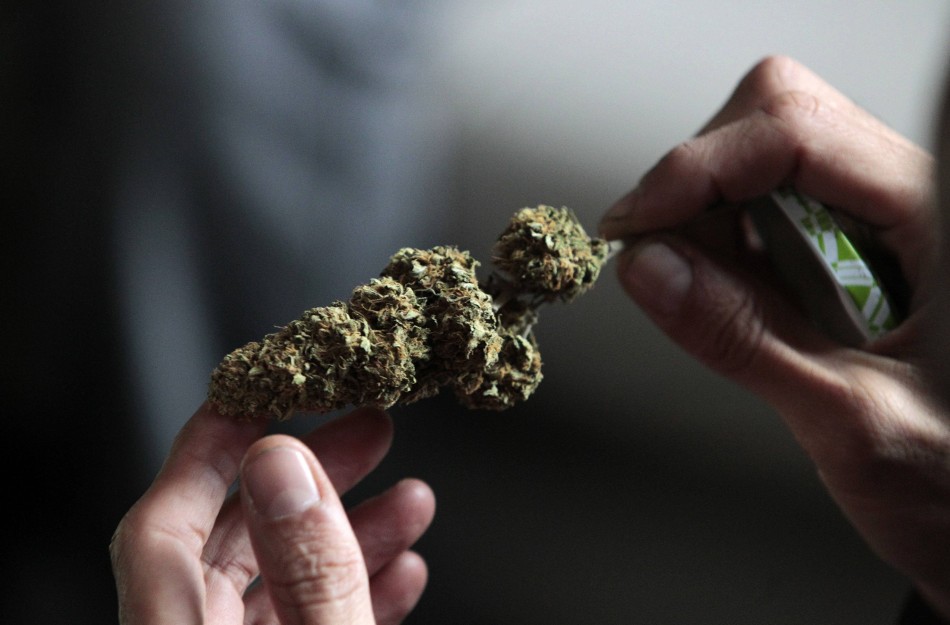
A judge checks on a marijuana sample during a judging session at Uruguay's second

“Scientists are looking at the potential use of cannabis to treat and potentially cure severe forms of epilepsy.

The medical benefits of medical marijuana for neurological conditions like epilepsy are highly debated.

Examining the potential use of the drug, a series of articles in the journal Epilepsia, a journal of the International League Against Epilepsy, looks at its potential use for treating the syndrome.

Edward Maa, from the Comprehensive Epilepsy Program at Denver Health in Denver, Colorado, looks at a case study of a child with Dravet syndrome – a very severe form of epilepsy.

In the case, a mother provided her child with a strain of medical marijuana high in Cannabidiol (CBD) and tetrahydrocannabinol (THC) known as Charlotte’s Web.

When used with the child’s normal drug regime, seizures dropped from 50 convulsions per day to just two or three per month.”

http://www.ibtimes.co.uk/potential-cure-epilepsy-cannabis-vastly-reduces-seizures-boy-dravet-syndrome-1449505

http://www.thctotalhealthcare.com/category/dravet-syndome/


Toddler’s seizures stopped after consuming cannabis oil, parents say

Two-year-old Kyla Williams hasn‘t learned to walk or talk, her development has stopped as she suffered as many as 200 seizures daily and no medication helped. Now the girl’s family say she hasn’t had a seizure in a week, ever since they began giving her cannabis oil extracted from hemp. (handout from family)

“Two-year-old Kyla Williams hasn’t learned to walk or talk, her development has stopped as she suffered as many as 200 seizures daily and no medication helped. Now the girl’s family says she hasn’t had a seizure in a week, ever since they began giving her cannabis oil extracted from hemp.

The oil being used by the toddler has high amounts of cannabidiol, known as CBD, the main ingredient in medical marijuana, and almost no psychoactive ingredients.”

http://www.theglobeandmail.com/news/british-columbia/toddlers-seizures-stopped-after-consuming-cannabis-oil-parents-say/article18769814/

http://www.thctotalhealthcare.com/category/epilepsy-2/


Marijuana Effectively Reduces Seizures in Epilepsy Patients

marijuanas

“Medicinal uses of marijuana have been a matter for heated debate for quite some time now. A review by American Academy of neurology collated all available information on marijuana use for brain disease treatment and concluded that except for treating symptoms of multiple sclerosis, there is no hard evidence in favor of medical usage of marijuana.

But now some articles have been published in the journal Epilepsia that contradicts the earlier review. One of these articles is a case study of a family living in Denver, CO. The child in the family suffers from a severe form of epilepsy known as Dravet Syndrome and used to have frequent seizures, as many as 50 convulsions a day. But the child was given “Charlotte’s Web”- a marijuana strain with high levels of cannabidiol (CBD) and tetrahydrocannabinol (THC). Reportedly, the seizures decreased considerably and now the child suffers from only 2 or 3 seizures each month.

According to the author of the article, Dr. Edward Maa, “As medical professionals it is important that we further the evidence of whether CBD in cannabis is an effective antiepileptic therapy.””

http://www.newsonwellness.com/2014/05/marijuana-effectively-reduces-seizures-epilepsy-patients/

http://www.thctotalhealthcare.com/category/epilepsy-2/

Study examines potential use of medical marijuana, CBD in treating epilepsy

“…cannabis has been used to treat epilepsy for centuries… The therapeutic potential of medical marijuana and pure cannabidiol (CBD), an active substance in the cannabis plant, for neurologic conditions is highly debated. A series of articles published in Epilepsia, a journal of the International League Against Epilepsy (ILAE), examine the potential use of medical marijuana and CBD in treating severe forms of epilepsy…”

http://www.news-medical.net/news/20140523/Study-examines-potential-use-of-medical-marijuana-CBD-in-treating-epilepsy.aspx

http://www.thctotalhealthcare.com/category/epilepsy-2/

Smoking cannabis associated with PTSD symptom reduction in some patients, says study

“Clinical research from New Mexico supports a conclusion that smoking cannabis [marijuana] is associated with PTSD symptom reduction in some patients.”

http://www.news-medical.net/news/20140523/Smoking-cannabis-associated-with-PTSD-symptom-reduction-in-some-patients-says-study.aspx

“PTSD Symptom Reports of Patients Evaluated for the New Mexico Medical Cannabis Program”  http://www.tandfonline.com/doi/full/10.1080/02791072.2013.873843#.U39UHBVX-uY

http://www.thctotalhealthcare.com/category/post-traumatic-stress-disorder-ptsd/

CB1 cannabinoid receptors are involved in neuroleptic-induced enhancement of brain neurotensin.

“Targeting the neuropeptide systems has been shown to be useful for the development of more effective antipsychotic drugs. Neurotensin, an endogenous neuropeptide, appears to be involved in the mechanism of action of antipsychotics…

Conclusion: The brain neurotensin under the regulatory action of CB1 receptors is involved in  the effects of amisulpride and fluphenazine.”

http://www.ncbi.nlm.nih.gov/pubmed/24847420

Cannabidiol can improve complex sleep-related behaviours associated with rapid eye movement sleep behaviour disorder in Parkinson’s disease patients: a case series.

“Cannabidiol (CBD) is the main non-psychotropic component of the Cannabis sativa plant. REM sleep behaviour disorder (RBD) is a parasomnia characterized by the loss of muscle atonia during REM sleep associated with nightmares and active behaviour during dreaming. We have described the effects of CBD in RBD symptoms in patients with Parkinson’s disease.

CASES SUMMARY:

Four patients treated with CBD had prompt and substantial reduction in the frequency of RBD-related events without side effects.

WHAT IS NEW AND CONCLUSION:

This case series indicates that CBD is able to control the symptoms of RBD.”

http://www.ncbi.nlm.nih.gov/pubmed/24845114

Potential effects of cannabidiol as a wake-promoting agent.

“Over the last decades, the scientific interest in chemistry and pharmacology of cannabinoids has increased. Most attention has focused on ∆(9)-tetrahydrocannabinol (∆(9)-THC) as it is the psychoactive constituent of Cannabis sativa (C. sativa). However, in previous years, the focus of interest in the second plant constituent with non-psychotropic properties, cannabidiol (CBD) has been enhanced. Recently, several groups have investigated the pharmacological properties of CBD with significant findings; furthermore, this compound has raised promising pharmacological properties as a wake-inducing drug. In the current review, we will provide experimental evidence regarding the potential role of CBD as a wake-inducing drug.”

http://www.ncbi.nlm.nih.gov/pubmed/24851090

Δ9-tetrahydrocannabinol prevents methamphetamine-induced neurotoxicity.

“Methamphetamine (METH) is a potent psychostimulant with neurotoxic properties…

Preclinical studies have shown that natural (Δ9-tetrahydrocannabinol, Δ9-THC) and synthetic cannabinoid CB1 and CB2 receptor agonists exert neuroprotective effects on different models of cerebral damage. Here, we investigated the neuroprotective effect of Δ9-THC on METH-induced neurotoxicity…

Our results indicate that Δ9-THC reduces METH-induced brain damage via inhibition of nNOS expression and astrocyte activation through CB1-dependent and independent mechanisms, respectively.”

http://www.ncbi.nlm.nih.gov/pubmed/24844285

Full-text: http://www.ncbi.nlm.nih.gov/pmc/articles/PMC4028295/

A restricted population of CB1 cannabinoid receptors with neuroprotective activity.

“The CB1 cannabinoid receptor, the main molecular target of endocannabinoids and cannabis active components, is the most abundant G protein-coupled receptor in the mammalian brain…

The data unequivocally identify the restricted population of CB1 receptors located on glutamatergic terminals as an indispensable player in the neuroprotective activity of (endo)cannabinoids, therefore suggesting that this precise receptor pool constitutes a promising target for neuroprotective therapeutic strategies.”

http://www.ncbi.nlm.nih.gov/pubmed/24843137