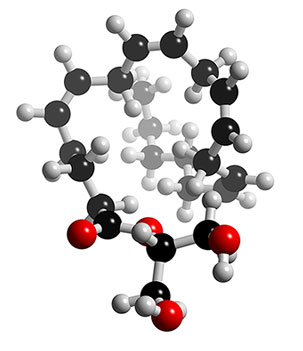
Synthetic cannabinoid ajulemic acid exerts potent antifibrotic effects in experimental models of systemic sclerosis.

BMJ Journals

“Cannabinoids modulate fibrogenesis in scleroderma.

Ajulemic acid (AjA) is a non-psychoactive synthetic analogue of tetrahydrocannabinol that can bind the peroxisome proliferator-activated receptor-γ (PPAR-γ). Recent evidence suggests a key role for PPAR-γ in fibrogenesis. To determine whether AjA can modulate fibrogenesis in murine models of scleroderma.”

“RESULTS:

AjA significantly prevented experimental bleomycin-induced dermal fibrosis and modestly reduced its progression when started 3 weeks into the disease. AjA strongly reduced collagen neosynthesis by scleroderma fibroblasts in vitro, an action which was reversed completely by co-treatment with a selective PPAR-γ antagonist.”

“CONCLUSIONS:

AjA prevents progression of fibrosis in vivo and inhibits fibrogenesis in vitro by stimulating PPAR-γ signalling. Since therapeutic doses of AjA are well tolerated in humans, it is suggested that AjA as an interesting molecule targeting fibrosis in patients with scleroderma.”

http://www.ncbi.nlm.nih.gov/pubmed/22492781

http://ard.bmj.com/content/71/9/1545

Activation and Binding of Peroxisome Proliferator-Activated Receptor γ by Synthetic Cannabinoid Ajulemic Acid

   “Ajulemic acid (AJA) is a synthetic analog of the tetrahydrocannabinol (THC) metabolite THC-11-oic acid; THC is a major active ingredient of the drug marijuana derived from the plant cannabis. AJA has potent analgesic and anti-inflammatory activity without the psychotropic action of THC. Unlike the nonsteroidal anti-inflammatory drugs, AJA is not ulcerogenic at therapeutic doses, making it a promising anti-inflammatory drug. However, the mechanism of AJA action remains unknown. Here we report that AJA binds directly and specifically to the peroxisome proliferator-activated receptor γ (PPARγ), a pharmacologically important member of the nuclear receptor superfamily. Functional assay indicates that AJA activates the transcriptional activity of both human and mouse PPARγ at pharmacological concentrations. Activation of PPARγ by AJA requires the AF-2 helix of the receptor, suggesting that AJA activates PPARγ through the ligand-dependent AF-2 function. AJA binding consistently enables PPARγ to recruit nuclear receptor coactivators. In addition, we show that AJA inhibits interleukin-8 promoter activity in a PPARγ-dependent manner, suggesting a link between the anti-inflammatory action of AJA and the activation of PPARγ. Finally, we find that AJA treatment induces differentiation of 3T3 L1 fibroblasts into adipocytes, a process mediated by PPARγ. Together, these data indicate that PPARγ may be a molecular target for AJA, providing a potential mechanism for the anti-inflammatory action of AJA, and possibly other cannabinoids. These studies also implicate other potential therapeutic actions of AJA through PPARγ activation in multiple signaling pathways.”

“The mood-altering drug marijuana derived from the hemp plant Cannabis sativa contains a group of biosynthetically related substances known collectively as cannabinoids. Tetrahydrocannabinol (THC), one of the major cannabinoids in marijuana, has potent analgesic and anti-inflammatory activities, but it also exhibits psychotropic effects, which limit its clinical application. Considerable effort has been expended toward the goal of creating nonpsychotropic cannabinoid derivatives that retain therapeutic actions but are free of psychotropic activity. A useful template for this search is the THC metabolite THC-11-oic acid…”

http://molpharm.aspetjournals.org/content/63/5/983.long

Effect of the cannabinoid ajulemic acid on rat models of neuropathic and inflammatory pain.

Abstract

   “There is increasing evidence that cannabinoid agonists alleviate the abnormal pain sensations associated with animal models of neuropathic and inflammatory pain. However, cannabinoids produce a number of motor and psychotropic side effects. In the present study we found that systemic administration of the cannabinoid acid derivative 1′,1′-dimethylheptyl-delta-8-tetrahydrocannabinol-11-oic acid (ajulemic acid, IP-751) and the non-selective cannabinoid receptor agonist HU-210 reduced mechanical allodynia in a nerve-injury induced model of neuropathic pain and in the CFA-induced model of inflammatory pain. In contrast, HU-210, but not ajulemic acid reduced motor performance in the rotarod test. These findings suggest that ajulemic acid reduces abnormal pain sensations associated with chronic pain without producing the motor side effects associated with THC and other non-selective cannabinoid receptor agonists.”

http://www.ncbi.nlm.nih.gov/pubmed/15925096

Ajulemic acid (CT3): a potent analog of the acid metabolites of THC.

Abstract

“The acid metabolites of THC were discovered almost 30 years ago and were later shown to posses modest analgesic and anti-inflammatory activity in a variety of models. Ajulemic acid (CT3) is a more potent analog of THC-11-oic acid in which a dimethylheptyl side chain is substituted for the pentyl side chain of the naturally occurring metabolite. It produces analgesia in the mouse hot plate, the PPQ writhing, the formalin and the tail clip assays. In the latter, it was equipotent to morphine; however, it showed a much greater duration of action. In the paw edema, subcutaneous air pouch and rat adjuvant-induced arthritis models of inflammation; it showed significant therapeutic activity at a dose of 0.2 mg/kg p.o. In the arthritis model it greatly reduced permanent damage to joints when compared to an indomethacin control as evidenced by an improved joint score over vehicle controls and by histopathological examination. In contrast to the NSAIDs, it was totally nonulcerogenic at therapeutically relevant doses. Moreover, it does not depress respiration, exhibit dependence, induce body weight loss or cause mutagenesis. It shows none of the typical actions in models of the psychotropic actions of cannabinoids suggesting that a good separation of desirable from undesirable effects was achieved. Studies on its mechanism of action are currently underway. The data thus far suggest the existence of a novel receptor for ajulemic acid with possible downstream effects on eicosanoid production, cytokine synthesis and metalloprotease activity. There is also circumstantial evidence for a putative endogenous ajulemic acid, namely, arachidonylglycine.”

http://www.ncbi.nlm.nih.gov/pubmed/10903396

A peripheral cannabinoid mechanism suppresses spinal fos protein expression and pain behavior in a rat model of inflammation.

  “The present studies were conducted to test the hypothesis that systemically inactive doses of cannabinoids suppress inflammation-evoked neuronal activity in vivo via a peripheral mechanism…

…These data provide direct evidence that a peripheral cannabinoid mechanism suppresses the development of inflammation-evoked neuronal activity at the level of the spinal dorsal horn and implicate a role for CB(2) and CB(1) in peripheral cannabinoid modulation of inflammatory nociception.”

http://www.ncbi.nlm.nih.gov/pubmed/12617970

Hippies Vindicated: Human-produced Cannabinoids Have Anti-inflammatory Powers

“Extracts of the hemp plant cannabis are traditionally used as a popular remedy against inflammation. At the beginning of the last century this natural remedy was even available at every chemist’s. But due to the intoxicating effect of the component THC (tetrahydrocannabinol) the plant was taken off the chemist’s shelves in the 1930s.”

“Scientists from the University of Bonn have discovered in experiments with mice that Endocannabinoids play an important role in regulating inflammation processes. In their animal experiments, a solution with an important component made from cannabis reduced allergic reactions of the skin.”

 “When inflammation occurs the endocannabinoids act like someone stepping on the brakes. They prevent the body from doing too much of a good thing and the immune reaction from getting out of control. This is consistent with the fact that at the beginning of the infection the endocannabinoid concentration increased in the mice. ‘Apart from that there are strains of mice in which the breakdown of these active substances produced by the body is malfunction-ing,’ Evelyn Gaffal says. ‘They have an increased endocannabinoid concen-tration in their skin. In our experiments these animals also showed a less marked allergic reaction.'”

“The results open up new options for the treatment of skin allergies and inflammation. Firstly, drugs which prevent the breakdown of endocannabin-oids look promising. But the old household remedy cannabis could also make a comeback as an ointment. In the experiment on mice this approach has already been successful. ‘If we dabbed THC solution on to the animals’ skin shortly before and after applying the allergen, a lot less swelling occurred than normal,’ Professor Thomas Tüting explains. ‘THC attaches itself to cannabin-oid receptors and activates them. In this way the active substance reduces the allergic reaction.’ Incidentally, ointment like this would probably not have an intoxicating effect, for this the amount of THC contained would be much too small.”

http://www.science20.com//news/marijuana_benefit_also_human_produced_cannabinoids_have_anti_inflammatory_powers?fb_action_ids=459596310743682&fb_action_types=og.likes&fb_source=aggregation&fb_aggregation_id=288381481237582


Prolonged oral cannabinoid administration prevents neuroinflammation, lowers β-amyloid levels and improves cognitive performance in Tg APP 2576 mice

“Background

Alzheimer’s disease (AD) brain shows an ongoing inflammatory condition and non-steroidal anti-inflammatories diminish the risk of suffering the neurologic disease. Cannabinoids are neuroprotective and anti-inflammatory agents with therapeutic potential.”

“… we have shown that chronically administered cannabinoid showed marked beneficial effects concomitant with inflammation reduction and increased Aβ clearance.”

“Cannabinoids, whether plant derived, synthetic or endocannabinoids, interact with two well characterized cannabinoid receptors, CB1 and CB2 . In addition, some cannabinoids may interact with other receptors, such as the TRPV1 receptor or the orphan receptor GPR55. The CB1 receptor is widely distributed, with a particularly high expression in brain, which contrasts with the limited expression of the CB2 receptor, which is characteristic of immune organs and cells. In fact, while CB1 receptors are expressed by all types of cells in the brain (neurons and glial cells), CB2 are mainly localized in microglial cells, the resident immune cell of the brain.”

“We and others have proposed cannabinoids as preventive treatment for AD, based on their neuroprotective and anti-inflammatory effects. Indeed, cannabinoids are able to decrease the release of cytokines and nitric oxide in cultured microglial cells induced by lipopolysacharide and Aβ addition. In several in vitro studies cannabidiol (CBD), the major non-psychotropic constituent of cannabis, has shown to be neuroprotective against β-amyloid (Aβ) addition to cultured cells.”

“Conclusions

In summary, cannabinoid agonists, in particular CB2 selective agonists, interfere with several interconnected events of importance in the pathophysiology of AD. These compounds by directly interacting with cannabinoid receptors, in particular CB2, decrease microglial activation thereby reducing inflammation and its consequences (eg cognitive deficits). At the same time they may indirectly have beneficial effects on microglial activation (eg decrease cytokine release) by lowering brain Aβ levels.”

http://www.ncbi.nlm.nih.gov/pmc/articles/PMC3292807/

Cannabinoids for the treatment of inflammation.

“Cannabinoids are effective at suppressing immune and inflammation functions in leukocytes in vitro, and in animal models of acute inflammation, such as the mouse hind paw, ear and air pouch models, as well as gastrointestinal, pulmonary, myocardial, vascular, periodontal, neural, hepatic, pancreatic and arthritic inflammation models.

The non-psychoactive cannabinoid receptor CB2 is emerging as a critical target for cannabinoid regulation of inflammation, and thus CB2-selective agonists are undergoing intense investigation and research. This review discusses the evidence for cannabinoid regulation of inflammation across a range of models and highlights the most promising drug candidates.”

http://www.ncbi.nlm.nih.gov/pubmed/17520866

Cannabinoid-based drugs as anti-inflammatory therapeutics.

“In the nineteenth century, marijuana was prescribed by physicians for maladies ranging from eating disorders to rabies. However, as newer, more effective drugs were discovered and as the potential for abuse of marijuana was recognized, its use as a therapeutic became restricted, and only recently has its therapeutic potential been re-evaluated.


 Recent studies in animal models and in humans have produced promising results for the treatment of various disorders – such as obesity, cancer, and spasticity and tremor due to neuropathology – with drugs based on marijuana-derived cannabinoids.


 Moreover, as I discuss here, a wealth of information also indicates that these drugs have immunosuppressive and anti-inflammatory properties; therefore, on the basis of this mode of action, the therapeutic usefulness of these drugs in chronic inflammatory diseases is now being reassessed.”


http://www.ncbi.nlm.nih.gov/pubmed/15864274

Prospects for cannabinoids as anti-inflammatory agents.

Abstract

“The marijuana plant (Cannabis sativa) and preparations derived from it have been used for medicinal purposes for thousands of years. It is likely that the therapeutic benefits of smoked marijuana are due to some combination of its more than 60 cannabinoids and 200-250 non-cannabinoid constituents. Several marijuana constituents, the carboxylic acid metabolites of tetrahydrocannabinol, and synthetic analogs are free of cannabimimetic central nervous system activity, do not produce behavioral changes in humans, and are effective antiinflammatory and analgesic agents. One cannabinoid acid in particular, ajulemic acid, has been studied extensively in in vitro systems and animal models of inflammation and immune responses. This commentary reviews a portion of the work done by investigators interested in separating the medicinal properties of marijuana from its psychoactive effects. Understanding the mechanisms of the therapeutic effects of nonpsychoactive cannabinoids should lead to development of safe effective treatment for several diseases, and may render moot the debate about “medical marijuana”.”