Cannabimimetic Properties of Ajulemic Acid

   “Side effects of marijuana-based drugs and synthetic analogs of Δ9-tetrahydrocannabinol (Δ9-THC), including sedation and dysphoria, have limited their therapeutic application. Ajulemic acid (AJA), a side-chain synthetic analog of Δ8-THC-11-oic acid, has been reported to have anti-inflammatory properties without producing undesired psychoactive effects. Moreover, it has been suggested that AJA does not interact with cannabinoid receptors to produce its pharmacological effects. The aim of the present study was to conduct a thorough evaluation of the pharmacological effects of AJA then to determine whether actions at cannabinoid receptor (CB)1 mediated these effects… These studies demonstrated that AJA shares a number of CB1-mediated pharmacological properties with Δ9-THC, including cannabimimetic, discriminative stimulus, and antihyperalgesic effects. Furthermore, a separation between doses that produced antinociception and those that produced the other pharmacological effects in mice was not observed. Moreover, AJA showed nearly equipotency for therapeutic efficacy in the CFA model and for substitution in Δ9-THC discrimination. In summary, this study shows that AJA, like Δ9-THC, exhibits psychoactive and therapeutic effects at nearly equal doses in preclinical models, suggesting similar limitations in their putative therapeutic profiles.”

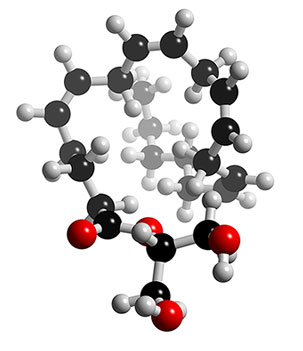
“Cannabis sativa (marijuana plant) has been used since antiquity for its presumed therapeutic, as well as for its euphoric effects. Although Δ9-tetrahydrocannabinol (Δ9-THC) has been identified as the major psychoactive ingredient in C. sativa, difficulty in dissociating unwanted side effects, such as sedation and psychotropic effects, from therapeutic effects has limited clinical application of Δ9-THC-based drugs. For example, dronabinol, an orally administered synthetic version of Δ9-THC, has been developed as an appetite stimulant and antiemetic for use in chronic diseases such as AIDS and cancer. In addition, recent evidence suggests oral Δ9-THC may be effective as an adjunct to opioid analgesics. The therapeutic utility of Δ9-THC, however, has been limited due to patient complaints of dysphoria and unpleasant subjective effects. Previous research has suggested that Δ9-THC carboxylic acid, one of the acid metabolites of Δ9-THC, lacks psychoactive properties of the parent compound and yet retains antinociceptive and other effects. Since this metabolite has a relatively low potency, structural changes that increased potency and stability of Δ9-THC analogs in previous structure-activity relationship studies were applied to the structure Δ9-THC carboxylic acid. The resulting compound, ajulemic acid (AJA), substitutes a 1′,1-dimethylheptyl side chain for the pentyl group of Δ9-THC and changes the Δ9-THC core structure to a more stable confirmation, Δ8-THC (Fig. 1).”

Fig. 1

 
“To date, the efficacy of AJA has been demonstrated in numerous pain and inflammation studies…”
 
“These findings also underscore the importance of thoroughly evaluating the pharmacological characteristics of novel Δ9-THC-like compounds…”
 

Activation and Binding of Peroxisome Proliferator-Activated Receptor γ by Synthetic Cannabinoid Ajulemic Acid

   “Ajulemic acid (AJA) is a synthetic analog of the tetrahydrocannabinol (THC) metabolite THC-11-oic acid; THC is a major active ingredient of the drug marijuana derived from the plant cannabis. AJA has potent analgesic and anti-inflammatory activity without the psychotropic action of THC. Unlike the nonsteroidal anti-inflammatory drugs, AJA is not ulcerogenic at therapeutic doses, making it a promising anti-inflammatory drug. However, the mechanism of AJA action remains unknown. Here we report that AJA binds directly and specifically to the peroxisome proliferator-activated receptor γ (PPARγ), a pharmacologically important member of the nuclear receptor superfamily. Functional assay indicates that AJA activates the transcriptional activity of both human and mouse PPARγ at pharmacological concentrations. Activation of PPARγ by AJA requires the AF-2 helix of the receptor, suggesting that AJA activates PPARγ through the ligand-dependent AF-2 function. AJA binding consistently enables PPARγ to recruit nuclear receptor coactivators. In addition, we show that AJA inhibits interleukin-8 promoter activity in a PPARγ-dependent manner, suggesting a link between the anti-inflammatory action of AJA and the activation of PPARγ. Finally, we find that AJA treatment induces differentiation of 3T3 L1 fibroblasts into adipocytes, a process mediated by PPARγ. Together, these data indicate that PPARγ may be a molecular target for AJA, providing a potential mechanism for the anti-inflammatory action of AJA, and possibly other cannabinoids. These studies also implicate other potential therapeutic actions of AJA through PPARγ activation in multiple signaling pathways.”

“The mood-altering drug marijuana derived from the hemp plant Cannabis sativa contains a group of biosynthetically related substances known collectively as cannabinoids. Tetrahydrocannabinol (THC), one of the major cannabinoids in marijuana, has potent analgesic and anti-inflammatory activities, but it also exhibits psychotropic effects, which limit its clinical application. Considerable effort has been expended toward the goal of creating nonpsychotropic cannabinoid derivatives that retain therapeutic actions but are free of psychotropic activity. A useful template for this search is the THC metabolite THC-11-oic acid…”
http://molpharm.aspetjournals.org/content/63/5/983.long

Ajulemic acid: A novel cannabinoid produces analgesia without a “high”.

Abstract

   “A long-standing goal in cannabinoid research has been the discovery of potent synthetic analogs of the natural substances that might be developed as clinically useful drugs. This requires, among other things, that they be free of the psychotropic effects that characterize the recreational use of Cannabis. An important driving force for this goal is the long history of the use of Cannabis as a medicinal agent especially in the treatment of pain and inflammation. While few compounds appear to have these properties, ajulemic acid (AJA), also known as CT-3 and IP-751, is a potential candidate that could achieve this goal. Its chemical structure was derived from that of the major metabolite of Delta9-THC, the principal psychotropic constituent of Cannabis. In preclinical studies it displayed many of the properties of non-steroidal anti-inflammatory drugs (NSAIDs); however, it seems to be free of undesirable side effects. The initial short-term trials in healthy human subjects, as well as in patients with chronic neuropathic pain, demonstrated a complete absence of psychotropic actions. Moreover, it proved to be more effective than placebo in reducing this type of pain as measured by the visual analog scale. Unlike the narcotic analgesics, signs of dependency were not observed after withdrawal of the drug at the end of the one-week treatment period. Data on its mechanism of action are not yet complete; however, the activation of PPAR-gamma, and regulation of eicosanoid and cytokine production, appear to be important for its potential therapeutic effects.”

http://www.ncbi.nlm.nih.gov/pubmed/15240185

Marijuana, inflammation, and CT-3 (DMH-11C): cannabis leads to new class of antiinflammatory drugs.

Abstract:

“CT-3, a synthetic derivative of a metabolite of marijuana, is being tested by arthritis researchers as a possible new anti-inflammatory drug. Early studies show that CT-3 may be effective without the gastric side effects of steroids and psychoactive effects of marijuana. The processes of inflammation may be important in the pathogenesis of HIV disease. Obtaining the medical benefits without the psychoactive effects of marijuana is also important, as the high associated with cannabis use can be debilitating. The drug is currently in early pre-clinical animal testing.”

http://www.ncbi.nlm.nih.gov/pubmed/11365002

Inhibitory effect of cannabichromene, a major non-psychotropic cannabinoid extracted from Cannabis sativa, on inflammation-induced hypermotility in mice.

“BACKGROUND AND PURPOSE:

Cannabichromene (CBC) is a major non-psychotropic phytocannabinoid that inhibits endocannabinoid inactivation and activates the transient receptor potential ankyrin-1 (TRPA1). Both endocannabinoids and TRPA1 may modulate gastrointestinal motility. Here, we investigated the effect of CBC on mouse intestinal motility in physiological and pathological states.”

“CONCLUSION AND IMPLICATIONS:

CBC selectively reduces inflammation-induced hypermotility in vivo in a manner that is not dependent on cannabinoid receptors or TRPA1.”

http://www.ncbi.nlm.nih.gov/pubmed/22300105

Cannabinoid-like anti-inflammatory compounds from flax fiber.

Abstract

“Flax is a valuable source of fibers, linseed and oil. The compounds of the latter two products have already been widely examined and have been proven to possess many health-beneficial properties. In the course of analysis of fibers extract from previously generated transgenic plants overproducing phenylpropanoids a new terpenoid compound was discovered.The UV spectra and the retention time in UPLC analysis of this new compound reveal similarity to a cannabinoid-like compound, probably cannabidiol (CBD). This was confirmed by finding two ions at m/z 174.1 and 231.2 in mass spectra analysis. Further confirmation of the nature of the compound was based on a biological activity assay. It was found that the compound affects the expression of genes involved in inflammatory processes in mouse and human fibroblasts and likely the CBD from Cannabis sativa activates the specific peripheral cannabinoid receptor 2 (CB2) gene expression. Besides fibers, the compound was also found in all other flax tissues. It should be pointed out that the industrial process of fabric production does not affect CBD activity.The presented data suggest for the first time that flax products can be a source of biologically active cannabinoid-like compounds that are able to influence the cell immunological response. These findings might open up many new applications for medical flax products, especially for the fabric as a material for wound dressing with anti-inflammatory properties.”

http://www.ncbi.nlm.nih.gov/pubmed/22706678

Analgesic and antiinflammatory activity of constituents of Cannabis sativa L.

Abstract

“Two extracts of Cannabis sativa herb, one being cannabinoid-free (ethanol) and the other containing the cannabinoids (petroleum), were shown to inhibit PBQ-induced writhing in mouse when given orally and also to antagonize tetradecanoylphorbol acetate (TPA)-induced erythema of mouse skin when applied topically. With the exception of cannabinol (CBN) and delta 1-tetrahydrocannabinol (delta 1-THC), the cannabinoids and olivetol (their biosynthetic precursor) demonstrated activity in the PBQ test exhibiting their maximal effect at doses of about 100 micrograms/kg. delta 1-THC only became maximally effective in doses of 10 mg/kg. This higher dose corresponded to that which induced catalepsy and is indicative of a central action. CNB demonstrated little activity and even at doses in excess of 10 mg/kg could only produce a 40% inhibition of PBQ-induced writhing. Cannabinoid (CBD) was the most effective of the cannabinoids at doses of 100 micrograms/kg. Doses of cannabinoids that were effective in the analgesic test orally were used topically to antagonize TPA-induced erythema of skin. The fact that delta 1-THC and CBN were the least effective in this test suggests a structural relationship between analgesic activity and antiinflammatory activity among the cannabinoids related to their peripheral actions and separate from the central effects of delta 1-THC.”

http://www.ncbi.nlm.nih.gov/pubmed/3169967

Medical Marijuana Inc. Marijuana Extract Cannabidiol (CBD) Anti-inflammatory Properties

 “SAN DIEGO–(BUSINESS WIRE)–Medical Marijuana Inc (OTC: MJNA) is pleased to announce that studies have shown Cannabidiol (CBD) has anti-inflammatory properties. Medical Marijuana Inc. through CannaBANK has a patent pending on an extraction method from Cannabis (Marijuana) and its industrialized non psychoactive counterpart Hemp, allowing Cannabidiol (CBD) to be isolated in its pure form. Once isolated the Cannabidiol can be added as a direct counter agent or as an additive to other current anti-inflammatory products.

Medical Marijuana Inc. is planning on expanding its Cannabidiol sales through licensing agreements with companies already involved in the heavily marketed nutraceutical and pharmaceutical markets.

Resources and Abstracts on Anti-inflammatory properties of Cannabidiol:
United States National Library of Medicine (PubMed)”

http://www.ncbi.nlm.nih.gov/pubmed/19199042
http://www.ncbi.nlm.nih.gov/pmc/articles/PMC3034694/
http://www.ncbi.nlm.nih.gov/pubmed/19070683
http://www.ncbi.nlm.nih.gov/pubmed/18641283
http://www.ncbi.nlm.nih.gov/pubmed/18469842
http://www.ncbi.nlm.nih.gov/pubmed/14963641

http://www.businesswire.com/news/home/20110923005989/en/Medical-Marijuana-Marijuana-Extract-Cannabidiol-CBD-Anti-inflammatory?fb_action_ids=459561104080536&fb_action_types=og.likes&fb_ref=news_view&fb_source=aggregation&fb_aggregation_id=288381481237582

Hippies Vindicated: Human-produced Cannabinoids Have Anti-inflammatory Powers

“Extracts of the hemp plant cannabis are traditionally used as a popular remedy against inflammation. At the beginning of the last century this natural remedy was even available at every chemist’s. But due to the intoxicating effect of the component THC (tetrahydrocannabinol) the plant was taken off the chemist’s shelves in the 1930s.”

“Scientists from the University of Bonn have discovered in experiments with mice that Endocannabinoids play an important role in regulating inflammation processes. In their animal experiments, a solution with an important component made from cannabis reduced allergic reactions of the skin.”

 “When inflammation occurs the endocannabinoids act like someone stepping on the brakes. They prevent the body from doing too much of a good thing and the immune reaction from getting out of control. This is consistent with the fact that at the beginning of the infection the endocannabinoid concentration increased in the mice. ‘Apart from that there are strains of mice in which the breakdown of these active substances produced by the body is malfunction-ing,’ Evelyn Gaffal says. ‘They have an increased endocannabinoid concen-tration in their skin. In our experiments these animals also showed a less marked allergic reaction.'”

“The results open up new options for the treatment of skin allergies and inflammation. Firstly, drugs which prevent the breakdown of endocannabin-oids look promising. But the old household remedy cannabis could also make a comeback as an ointment. In the experiment on mice this approach has already been successful. ‘If we dabbed THC solution on to the animals’ skin shortly before and after applying the allergen, a lot less swelling occurred than normal,’ Professor Thomas Tüting explains. ‘THC attaches itself to cannabin-oid receptors and activates them. In this way the active substance reduces the allergic reaction.’ Incidentally, ointment like this would probably not have an intoxicating effect, for this the amount of THC contained would be much too small.”

http://www.science20.com//news/marijuana_benefit_also_human_produced_cannabinoids_have_anti_inflammatory_powers?fb_action_ids=459596310743682&fb_action_types=og.likes&fb_source=aggregation&fb_aggregation_id=288381481237582


Cannabidiol, extracted from Cannabis sativa, selectively inhibits inflammatory hypermotility in mice

 “Cannabidiol is a Cannabis-derived non-psychotropic compound that exerts a plethora of pharmacological actions, including anti-inflammatory, neuroprotective and antitumour effects, with potential therapeutic interest. However, the actions of cannabidiol in the digestive tract are largely unexplored. In the present study, we investigated the effect of cannabidiol on intestinal motility in normal (control) mice and in mice with intestinal inflammation.”

“Cannabidiol selectively reduces croton oil-induced hypermotility in mice in vivo and this effect involves cannabinoid CB1 receptors and FAAH. In view of its low toxicity in humans, cannabidiol may represent a good candidate to normalize motility in patients with inflammatory bowel disease.”

“The plant Cannabis sativa contains more than 60 terpenophenolic compounds, named phytocannabinoids. The best-studied phytocannabinoid is Δ9-tetrahydrocannabinol, which binds specific G-protein-coupled receptors, named cannabinoid (CB1 and CB2) receptors. The well-known psychotropic effects of Δ9-tetrahydrocannabinol, which are largely mediated by activation of brain cannabinoid CB1 receptors, have always raised a number of clinical and ethical problems. Therefore, a valid therapeutic alternative may be the use of non-psychotropic phytocannabinoids, including cannabidiol (CBD). CBD, unlike Δ9-tetrahydrocannabinol, has very low affinity for both cannabinoid CB1 and CB2 receptors, although it has been proposed that CBD may modulate endocannabinoid function through its ability to inhibit the hydrolysis of anandamide and to act as a transient receptor potential vanilloid 1 agonist. CBD is a major component of Sativex, a preparation of cannabinoids, which has been approved by Health Canada for the treatment of neuropathic pain in multiple sclerosis.”

“The pharmacological profile of CBD has been recently reviewed. Briefly stated, CBD has been shown to exert (1) antioxidant, neuroprotective and antiproliferative actions in cultured cells and (2) anti-anxiety, hypnotic, anticonvulsant, neuroprotective, antinausea, anti-ischaemic, anticancer and notably anti-inflammatory effects in rodents in vivo. The anti-inflammatory effects of CBD have been demonstrated in both acute and chronic experimental models of inflammation, that is, paw oedema and arthritis.”

“In conclusion, we have shown that the marijuana component CBD normalize intestinal motility in an experimental model of ileitis. In vitro results showed antispasmodic actions of CBD on intestinal ileal segments. The inhibitory effect of CBD involves, at least in vivo, cannabinoid CB1 receptors and FAAH. In view of its safety records in humans (an average daily dose of about 700 mg/day for 6 weeks was found to be non-toxic, relative to placebo, in clinical trials; and because CBD reduced motility during inflammation and not in physiological conditions, CBD might be considered as a good candidate to be clinically evaluated for the treatment of hypermotility associated with inflammatory bowel disease.”

http://www.ncbi.nlm.nih.gov/pmc/articles/PMC2451037/