
 “Staphylococcal enterotoxin‐B (SEB) is one of the most potent bacterial superantigens that exerts profound toxic effects by inducing cytokine storm. When SEB is inhaled, it can cause Acute Respiratory Distress Syndrome (ARDS), which is often fatal and currently there are no effective treatment modalities.
Experimental Approach
We used mouse model of SEB‐mediated ARDS to test the efficacy of Δ9‐tetrahydrocannabinol (THC). These mice were monitored for lung inflammation, alterations in gut and lung microbiota and production of short‐chain fatty acids (SCFA). Gene dysregulation of lung epithelial cells was studied by transcriptome arrays. Fecal microbiota transplantation (FMT) was performed to confirm the role of microbiota in suppressing ARDS.
Key results
While SEB triggered ARDS and 100% mortality in mice, THC protected the mice from fatality effects. Pyrosequencing analysis revealed that THC caused significant and similar alterations in microbiota in the lungs and gut of mice exposed to SEB. THC significantly increased the abundance of beneficial bacterial species, Ruminococcus gnavus, but decreased pathogenic microbiota, Akkermansia muciniphila. FMT confirmed that THC‐mediated reversal of microbial dysbiosis played crucial role in attenuation of SEB‐mediated ARDS. THC treatment also led to increase in SCFA, of which propionic acid was found to inhibit the inflammatory response. Transcriptome array showed that THC up‐regulated several genes like lysozyme‐1&2, β‐defensin‐2, claudin, zonula‐1, occludin‐1, Mucin2 and Muc5b while downregulating β‐defensin‐1.
Conclusions
Current study demonstrates for the first time that THC attenuates SEB‐mediated ARDS and toxicity by altering the microbiota in the lungs and the gut as well as promoting anti‐microbial and anti‐inflammatory pathways.”
https://www.ncbi.nlm.nih.gov/pmc/articles/PMC7436585/
https://bpspubs.onlinelibrary.wiley.com/doi/10.1111/bph.15226
 “Acute Respiratory Distress Syndrome (ARDS) causes up to 40% mortality in humans and is difficult to treat. ARDS is also one of the major triggers of mortality associated with coronavirus-induced disease (COVID-19). We used a mouse model of ARDS induced by Staphylococcal enterotoxin B (SEB), which triggers 100% mortality, to investigate the mechanisms through which Δ9-tetrahydrocannabinol (THC) attenuates ARDS.
 “Inspired by the medicinal properties of the plant Cannabis sativa and its principal component (-)-trans-Δ9-tetrahydrocannabinol (THC), researchers have developed a variety of compounds to modulate the endocannabinoid system in the human brain.
 “Objectives
 “Epilepsy contributes to approximately 1% of the global disease burden. By affecting especially young children as well as older persons of all social and racial variety, epilepsy is a present disorder worldwide. Currently, only 65% of epileptic patients can be successfully treated with antiepileptic drugs. For this reason, alternative medicine receives more attention.
 “Although several lines of evidence support the hypothesis of a dysregulation of serotoninergic neurotransmission in the pathophysiology of obsessive-compulsive disorder (OCD), there is also evidence for an involvement of other pathways such as the GABAergic, glutamatergic, and dopaminergic systems.
 “Posttraumatic stress disorder (PTSD) may stem from the formation of aberrant and enduring aversive memories. Some PTSD patients have recreationally used Cannabis, probably aiming at relieving their symptomatology.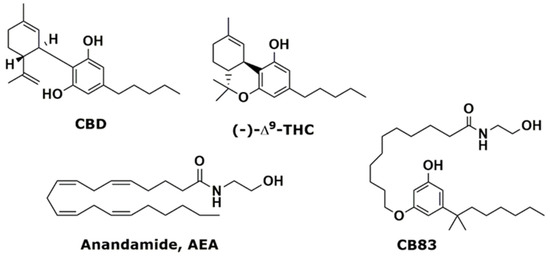
 “Cannabinoids (CBs), analgesic drugs used for thousands of years, were first found in Cannabis sativa, and the multiple CBs used medicinally, such as tetrahydrocannabinol (THC), cannabidiol (CBD) and dozens more, have complex structures. In addition to their production by plants, CBs are naturally present in the nerves and immune systems of humans and animals.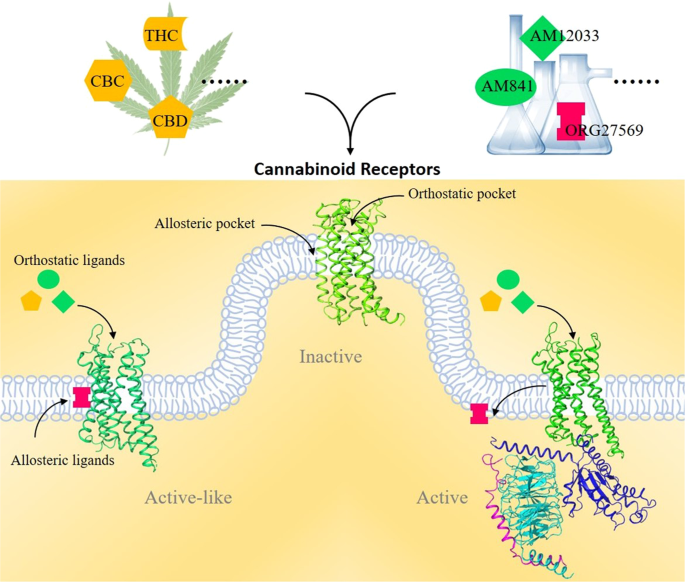
 “HIV/SIV-associated oral mucosal disease/dysfunction (HAOMD) (gingivitis/periodontitis/salivary adenitis) represents a major comorbidity affecting HIV patients on anti-retroviral therapy.