
 “Though known as a medicinal herb for centuries, the recent legalization of cannabinoids across many states has ushered in a new era where cannabinoids have become a popular treatment option amongst clinicians and patients alike. Cannabinoids have demonstrated efficacy in wound healing, reducing inflammation, ameliorating pain, and have shown potential as an anti-tumor agent. As a result, cannabinoids have been rapidly woven into the fabric of modern medicine. However, the utility of cannabinoids in dermatologic surgery has not been explored to date. In this paper, we review the current literature to discuss the potential impact of cannabinoid use in dermatologic surgery.”
Tag Archives: herb
In vivo and in vitro anti-inflammatory activity evaluation of Lebanese Cannabis sativa L. ssp. indica (Lam.)
 “Cannabis sativa L. is an aromatic annual herb belonging to the family Cannabaceae and it is widely distributed worldwide. Cultivation, selling, and consumption of cannabis and cannabis related products, regardless of its use, was prohibited in Lebanon until April 22, 2020. Nevertheless, cannabis oil has been traditionally used unlawfully for many years in Lebanon to treat diseases such as arthritis, diabetes, cancer and few neurological disorders.
Aim of the study: The present study aims to evaluate the phytochemical and anti-inflammatory properties of a cannabis oil preparation that is analogous to the illegally used cannabis oil in Lebanon.
Results: Chemical analysis of COE revealed that cannabidiol (CBD; 59.1%) and tetrahydrocannabinol (THC; 20.2%) were found to be the most abundant cannabinoids.Various monoterpenes (α-Pinene, Camphene, β-Myrecene and D-Limonene) and sesquiterpenes (β-Caryophyllene, α-Bergamotene, α-Humelene, Humulene epoxide II, and Caryophyllene oxide) were identified in the extract. Results showed that COE markedly suppressed the release of TNF-α in LPS-stimulated rat monocytes. Western blot analysis revealed that COE significantly inhibited LPS-induced COX-2 and i-NOS protein expressions and blocked the phosphorylation of MAPKs, specifically that of extracellular signal-regulated kinase (ERK), c-Jun NH2-terminal kinase (JNK) and p38 MAPK. COE displayed a significant inhibition of paw edema in both rat models. Histopathological examination revealed that COE reduced inflammation and edema in chronic paw edema model.
Conclusion: The current findings demonstrate that COE possesses remarkable in vivo and in vitro anti-inflammatory activities which support the traditional use of the Lebanese cannabis oil extract in the treatment of various inflammatory diseases including arthritis.”
https://pubmed.ncbi.nlm.nih.gov/33359187/
https://www.sciencedirect.com/science/article/abs/pii/S037887412033631X?via%3Dihub

Exploiting cannabinoid and vanilloid mechanisms for epilepsy treatment.
 “This review focuses on the possible roles of phytocannabinoids, synthetic cannabinoids, endocannabinoids, and “transient receptor potential cation channel, subfamily V, member 1” (TRPV1) channel blockers in epilepsy treatment.
The phytocannabinoids are compounds produced by the herb Cannabis sativa, from which Δ9-tetrahydrocannabinol (Δ9-THC) is the main active compound. The therapeutic applications of Δ9-THC are limited, whereas cannabidiol (CBD), another phytocannabinoid, induces antiepileptic effects in experimental animals and in patients with refractory epilepsies.
Synthetic CB1 agonists induce mixed effects, which hamper their therapeutic applications. A more promising strategy focuses on compounds that increase the brain levels of anandamide, an endocannabinoid produced on-demand to counteract hyperexcitability. Thus, anandamide hydrolysis inhibitors might represent a future class of antiepileptic drugs. Finally, compounds that block the TRPV1 (“vanilloid”) channel, a possible anandamide target in the brain, have also been investigated.
In conclusion, the therapeutic use of phytocannabinoids (CBD) is already in practice, although its mechanisms of action remain unclear. Endocannabinoid and TRPV1 mechanisms warrant further basic studies to support their potential clinical applications.”
https://www.ncbi.nlm.nih.gov/pubmed/31839498
“Cannabidiol is in clinical use for refractory epilepsies.”
https://www.epilepsybehavior.com/article/S1525-5050(19)30373-7/fulltext
Olivia Newton John says medicinal cannabis is key to her cancer recovery
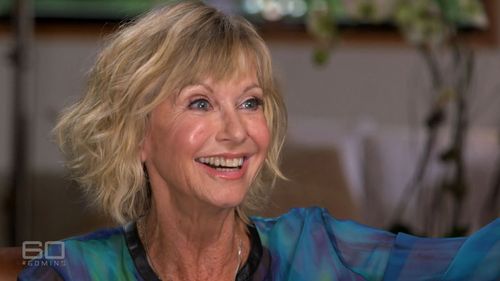
“Newton-John is maintaining her health with a combination of conventional and alternative medicines and remedies. But her husband of ten years, John Easterling, says he’s confident medicinal cannabis is contributing significantly to maintaining her health.
Easterling, who spent years cultivating herbs from the Amazon, has long held a strong belief in the medicinal power of plants. In a greenhouse at the Santa Barbara ranch the couple share in California, he grows various strains of cannabis that he uses to help treat his wife. “Cannabis can be used for so many things,” he told Hayes. “I don’t use the word cure…. but I’m confident. We had MRIs showing a lesser number of tumours, and the majority of the other ones are shrinking.”
“Now a cannabis convert, Newton-John is joining the fight for medicinal cannabis to be legalised. She and Easterling want Australians to have greater access to the plant, like they do in their home state of California – where both medicinal and recreational cannabis is legal. She’s also hoping to break down the stigma surrounding cannabis use.
“It’s not a drug, it’s a herb and a plant,” she told Hayes. “I think when people use the word drug, it’s a misconception as to what it is and it gets people thinking, ‘oh it’s just another drug’, but it’s not.” Doctors at the Olivia Newton-John Research Institute will conduct a clinical trial to determine the effectiveness of medicinal cannabis later this year.”
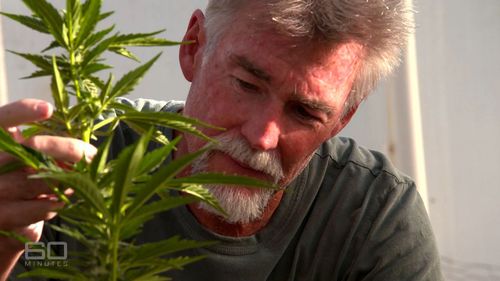
“EXCLUSIVE: Olivia Newton-John and Chloe Lattanzi emotional interview | 60 Minutes Australia” https://www.youtube.com/watch?v=rJtPgpedcFo&feature=share
“Olivia Newton-John: ‘Medicinal cannabis enhanced my quality of life’. For this special 60 Minutes report, Olivia Newton-John tells Liz Hayes that despite her latest diagnosis she was “getting strong again” and that her quality of life had been greatly enhanced by medicinal cannabis, grown for her by her husband John. Olivia and John are strong believers in the power of plants particularly cannabis. “I really believe the cannabis has made a huge difference,” says Olivia. “I’m confident,” John concurs. Olivia, John and Chloe are now cannabis converts, and now want medicinal cannabis legalised as an alternative treatment in Australia.” https://www.9news.com.au/national/olivia-newton-john-60-minutes-medical-cannabis-advocate-after-cancer-treatment-news/da315271-7387-47e0-a14e-c7fbb9a4b18b
“I have to credit again my wonderful husband because he gives me Cannabis oil that he makes for me, grows the plants here. We’re so lucky in California that we can grow our own, and so he’s made me these incredible tinctures that help with my pain and with sleep, and everything.” https://www.today.com/
Olivia Newton-John: “The choices of your treatment is a very personal thing. I can’t tell anyone else what they should do. I’d like to tell you all something that I did that people should know about. I’ve mixed traditional medicine and herbal medicine and homoeopathic medicine and a lot of mind-body spiritual focus. Staying positive and believing I can get well is really important. I’m very fortunate that I have a husband who’s a plant medicine man who helps me with herbs and medicinal cannabis, it’s been a huge part of my journey. I weaned myself off morphine with cannabis and I just want people to know that that is possible and it’s not going to kill you. If we can start teaching people that cannabis can help keep the pain away and not kill you, that’s an important message to get out there. I want to see an end to cancer in my lifetime. I’ve had three bouts with cancer. I am living with it well, and I think I’m going to see an end of it. And that’s my dream, that it will be gone.” https://www.image.ie/life/olivia-newton-john-shares-her-advice-for-women-with-cancer-154470
“”I want to see an end to cancer in my lifetime. And if it could be through cannabis, or helping people with cannabis, the patients, particularly who are in pain, that’s my goal. I want everyone to have access to this amazing plant”” https://www.facebook.com/watch/?v=269501097009373
““I truly believe medicinal cannabis will play a huge part in defeating cancer.”“I absolutely believe all patients should have the right to try. It is a matter of common-sense and it is a compassionate thing to do for people,” she said,” https://starinvesting.com.au/medicinal-cannabis-to-play-huge-role-in-beating-cancer-olivia-newton-john/
“I take medicinal cannabis and I’m doing great.” https://www.telegraph.co.uk/family/life/olivia-newton-john-lucky-cancer-take-medicinal-cannabis-great/
“Olivia Newton-John reveals she’s using marijuana grown by her husband to fight cancer – and says reports she was on death’s door hurt her deeply. Australian singing sensation Olivia Newton-John says she has been using marijuana grown by her husband to help her through her cancer battle. ‘I really believe the cannabis has made a huge difference,'”
“‘It Has Helped Incredibly’. It’s an amazing plant, a maligned plant, but it’s helping so many people.”” https://www.inquisitr.com/
“Olivia Newton-John says she uses cannabis to treat her stage 4 breast cancer… and her husband grows it at home” https://www.dailymail.co.uk/tvshowbiz/article-6782847/Olivia-Newton-John-uses-cannabis-treat-stage-4-breast-cancer.html
‘I use a lot of cannabis in my healing'” https://www.usatoday.com/
“Cannabis has been incredible for me.” https://www.etonline.com/
“I couldn’t have got through this time without it.” https://www.cbs.com/shows/
““I’m Living With Cancer and It’s Going Away!” Olivia Newton John Declares That Her Body is “Winning” Against Stage 4 Cancer” https://
“Mainstream media has reported that the cannabis tincture she takes helps with pain, but Amazon John Easterling eagerly expounds on its many healing properties, including the potential to cause cancer cell death. “Cannabis initiates a number of healing responses that can result in apoptosis, cancer cell death—while healing and strengthening the body,” he detailed. His focus is on the plant as chemovar, a more scientific approach to looking at the many compounds, via terpene and cannabinoid extraction from the whole plant to treat the cancer and the entire body, building the immune system so it can aid in fighting the disease.“ https://
“Medicinal cannabis is a big part of my recovery. I’m living proof that it works. It’s a healing herb.” https://www.facebook.com/watch/?v=1580591005362546
Cannabinoids, Chemical Senses, and Regulation of Feeding Behavior.
 “The herb Cannabis sativa has been traditionally used in many cultures and all over the world for thousands of years as medicine and recreation.
However, because it was brought to the Western world in the late 19th century, its use has been a source of controversy with respect to its physiological effects as well as the generation of specific behaviors. In this regard, the CB1 receptor represents the most relevant target molecule of cannabinoid components on nervous system and whole-body energy homeostasis.
Thus, the promotion of CB1 signaling can increase appetite and stimulate feeding, whereas blockade of CB1 suppresses hunger and induces hypophagia.
Taste and flavor are sensory experiences involving the oral perception of food-derived chemicals and drive a primal sense of acceptable or unacceptable for what is sampled. Therefore, research within the last decades focused on deciphering the effect of cannabinoids on the chemical senses involved in food perception and consequently in the pattern of feeding.
In this review, we summarize the data on the effect of cannabinoids on chemical senses and their influences on food intake control and feeding behavior.”
https://www.ncbi.nlm.nih.gov/pubmed/30481264
“The herb Cannabis sativa has been traditionally used in many cultures and all over the world for thousands of years as medicine and recreation.
However, because it was brought to the Western world in the late 19th century, its use has been a source of controversy with respect to its physiological effects as well as the generation of specific behaviors. In this regard, the CB1 receptor represents the most relevant target molecule of cannabinoid components on nervous system and whole-body energy homeostasis.
Thus, the promotion of CB1 signaling can increase appetite and stimulate feeding, whereas blockade of CB1 suppresses hunger and induces hypophagia.
Taste and flavor are sensory experiences involving the oral perception of food-derived chemicals and drive a primal sense of acceptable or unacceptable for what is sampled. Therefore, research within the last decades focused on deciphering the effect of cannabinoids on the chemical senses involved in food perception and consequently in the pattern of feeding.
In this review, we summarize the data on the effect of cannabinoids on chemical senses and their influences on food intake control and feeding behavior.”
https://www.ncbi.nlm.nih.gov/pubmed/30481264
Cannabis and the Anxiety of Fragmentation-A Systems Approach for Finding an Anxiolytic Cannabis Chemotype.
 “Cannabis sativa is a medicinal herb with a diverse range of chemotypes that can exert both anxiolytic and anxiogenic effects on humans. Medical cannabis patients receiving organically grown cannabis from a single source were surveyed about the effectiveness of cannabis for treating anxiety.
Patients rated cannabis as highly effective overall for treating anxiety with an average score of 8.03 on a Likert scale of 0 to 10 (0 = not effective, 10 = extremely effective).
Patients also identified which strains they found the most or least effective for relieving their symptoms of anxiety. To find correlations between anxiolytic activity and chemotype, the top four strains voted most and least effective were analyzed by HPLC-MS/MS to quantify cannabinoids and GC-MS to quantify terpenes. Tetrahydrocannabinol (THC) and trans-nerolidol have statistically significant correlations with increased anxiolytic activity.
Guiaol, eucalyptol, γ-terpinene, α-phellandrene, 3-carene, and sabinene hydrate all have significant correlations with decreased anxiolytic activity. Further studies are needed to better elucidate the entourage effects that contribute to the anxiolytic properties of cannabis varieties.”
https://www.ncbi.nlm.nih.gov/pubmed/30405331
https://www.frontiersin.org/articles/10.3389/fnins.2018.00730/full
“Cannabis sativa is a medicinal herb with a diverse range of chemotypes that can exert both anxiolytic and anxiogenic effects on humans. Medical cannabis patients receiving organically grown cannabis from a single source were surveyed about the effectiveness of cannabis for treating anxiety.
Patients rated cannabis as highly effective overall for treating anxiety with an average score of 8.03 on a Likert scale of 0 to 10 (0 = not effective, 10 = extremely effective).
Patients also identified which strains they found the most or least effective for relieving their symptoms of anxiety. To find correlations between anxiolytic activity and chemotype, the top four strains voted most and least effective were analyzed by HPLC-MS/MS to quantify cannabinoids and GC-MS to quantify terpenes. Tetrahydrocannabinol (THC) and trans-nerolidol have statistically significant correlations with increased anxiolytic activity.
Guiaol, eucalyptol, γ-terpinene, α-phellandrene, 3-carene, and sabinene hydrate all have significant correlations with decreased anxiolytic activity. Further studies are needed to better elucidate the entourage effects that contribute to the anxiolytic properties of cannabis varieties.”
https://www.ncbi.nlm.nih.gov/pubmed/30405331
https://www.frontiersin.org/articles/10.3389/fnins.2018.00730/full
 “Fifty years after the discovery of Δ9-tetrahydrocannabinol (THC) as the psychoactive component of Cannabis, we are assessing the possibility of translating this herb into clinical treatment of inflammatory bowel diseases (IBDs).
Here, a discussion on the problems associated with a potential treatment is given.
From first surveys and small clinical studies in patients with IBD we have learned that Cannabis is frequently used to alleviate diarrhea, abdominal pain, and loss of appetite.
Single ingredients from Cannabis, such as THC and cannabidiol, commonly described as
“Fifty years after the discovery of Δ9-tetrahydrocannabinol (THC) as the psychoactive component of Cannabis, we are assessing the possibility of translating this herb into clinical treatment of inflammatory bowel diseases (IBDs).
Here, a discussion on the problems associated with a potential treatment is given.
From first surveys and small clinical studies in patients with IBD we have learned that Cannabis is frequently used to alleviate diarrhea, abdominal pain, and loss of appetite.
Single ingredients from Cannabis, such as THC and cannabidiol, commonly described as