Suppression of fibroblast metalloproteinases by ajulemic acid, a nonpsychoactive cannabinoid acid.

Abstract

   “Production of matrix metalloproteinases (MMP) in joint tissue of patients with inflammatory arthritis facilitates cartilage degradation and bone erosion, and leads to joint deformities and crippling. Thus, MMPs are important targets for agents designed to treat inflammatory arthritis. Oral administration of ajulemic acid (AjA), a synthetic, nonpsychoactive cannabinoid acid, prevents joint tissue injury in rats with adjuvant arthritis. AjA binds to and activates PPARgamma directly. Therefore, we investigated the influence of AjA on MMP production in human fibroblast-like synovial cells (FLS), and examined the role of PPARgamma in the mechanism of action of AjA. FLS, treated or not with a PPARgamma antagonist, were treated with AjA then stimulated with TNFalpha or IL-1alpha. Release of MMPs-1, 3, and 9 was measured by ELISA. The influence of AjA on MMP-3 release from stimulated PPARgamma positive (PPAR+/-) and PPARgamma null (PPAR-/-) mouse embryonic fibroblasts (MEF) was also examined. Addition of AjA to FLS suppressed production of MMPs whether or not PPARgamma activation was blocked. Secretion of MMP-3 was also suppressed by AjA in both TNFalpha- and IL-1alpha-stimulated PPARgamma+/- and PPARgamma-/- MEF. Suppression of MMP secretion from FLS by AjA appears to be PPARgamma independent. Prevention by AjA of joint tissue injury and crippling in the rat adjuvant arthritis model may be explained in large part by inhibition of MMPs. These results suggest that AjA may be useful for treatment of patients with rheumatoid arthritis and osteoarthritis.”
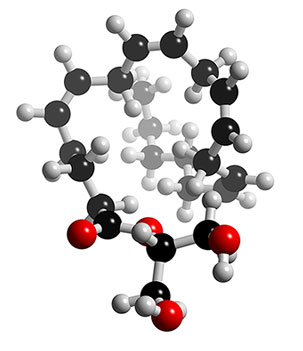
http://www.ncbi.nlm.nih.gov/pubmed/16927387

Ajulemic acid (IP-751): Synthesis, proof of principle, toxicity studies, and clinical trials

Abstract

  “Ajulemic acid (CT-3, IP-751, 1′,1′-dimethylheptyl-Delta8-tetrahydrocannabinol-11-oic acid) (AJA) has a cannabinoid-derived structure; however, there is no evidence that it produces psychotropic actions when given at therapeutic doses. In a variety of animal assays, AJA shows efficacy in models for pain and inflammation. Furthermore, in the rat adjuvant arthritis model, it displayed a remarkable action in preventing the destruction of inflamed joints. A phase-2 human trial with chronic, neuropathic pain patients suggested that AJA could become a useful drug for treating this condition. Its low toxicity, particularly its lack of ulcerogenicity, further suggests that it will have a highly favorable therapeutic index and may replace some of the current anti-inflammatory/analgesic medications. Studies to date indicate a unique mechanism of action for AJA that may explain its lack of adverse side effects.”

http://www.ncbi.nlm.nih.gov/pmc/articles/PMC2751505/

Activation of peripheral cannabinoid CB1 and CB2 receptors suppresses the maintenance of inflammatory nociception: a comparative analysis

“Effects of locally administered agonists and antagonists for cannabinoid CB1 and CB2 receptors on mechanical and thermal hypersensitivity were compared after the establishment of chronic inflammation.”

“Cannabinoids act locally through distinct CB1 and CB2 mechanisms to suppress mechanical hypersensitivity after the establishment of chronic inflammation, at doses that produced modest changes in thermal hyperalgesia. Additive antihyperalgesic effects were observed following prophylactic co-administration of the CB1– and CB2-selective agonists. Our results suggest that peripheral cannabinoid antihyperalgesic actions may be exploited for treatment of inflammatory pain states.”

“In summary, our results demonstrate that selective activation of CB1 or CB2 receptors in the inflamed paw is sufficient to suppress tactile allodynia and mechanical hyperalgesia. This suppression is observed under conditions in which only a partial suppression of thermal hyperalgesia was observed. Collectively, our data suggest that peripheral cannabinoid analgesic mechanisms may be exploited to suppress the tactile hypersensitivity observed in chronic inflammatory pain states.”

http://www.ncbi.nlm.nih.gov/pmc/articles/PMC2042894/

Hippies Vindicated: Human-produced Cannabinoids Have Anti-inflammatory Powers

“Extracts of the hemp plant cannabis are traditionally used as a popular remedy against inflammation. At the beginning of the last century this natural remedy was even available at every chemist’s. But due to the intoxicating effect of the component THC (tetrahydrocannabinol) the plant was taken off the chemist’s shelves in the 1930s.”

“Scientists from the University of Bonn have discovered in experiments with mice that Endocannabinoids play an important role in regulating inflammation processes. In their animal experiments, a solution with an important component made from cannabis reduced allergic reactions of the skin.”

 “When inflammation occurs the endocannabinoids act like someone stepping on the brakes. They prevent the body from doing too much of a good thing and the immune reaction from getting out of control. This is consistent with the fact that at the beginning of the infection the endocannabinoid concentration increased in the mice. ‘Apart from that there are strains of mice in which the breakdown of these active substances produced by the body is malfunction-ing,’ Evelyn Gaffal says. ‘They have an increased endocannabinoid concen-tration in their skin. In our experiments these animals also showed a less marked allergic reaction.'”

“The results open up new options for the treatment of skin allergies and inflammation. Firstly, drugs which prevent the breakdown of endocannabin-oids look promising. But the old household remedy cannabis could also make a comeback as an ointment. In the experiment on mice this approach has already been successful. ‘If we dabbed THC solution on to the animals’ skin shortly before and after applying the allergen, a lot less swelling occurred than normal,’ Professor Thomas Tüting explains. ‘THC attaches itself to cannabin-oid receptors and activates them. In this way the active substance reduces the allergic reaction.’ Incidentally, ointment like this would probably not have an intoxicating effect, for this the amount of THC contained would be much too small.”

http://www.science20.com//news/marijuana_benefit_also_human_produced_cannabinoids_have_anti_inflammatory_powers?fb_action_ids=459596310743682&fb_action_types=og.likes&fb_source=aggregation&fb_aggregation_id=288381481237582


Cannabidiol reduces lipopolysaccharide-induced vascular changes and inflammation in the mouse brain: an intravital microscopy study

  Journal of Neuroinflammation logo

“The phytocannabinoid cannabidiol (CBD) exhibits antioxidant and antiinflammatory properties. The present study was designed to explore its effects in a mouse model of sepsis-related encephalitis by intravenous administration of lipopolysaccharide (LPS).”.

“CBD prevented LPS-induced arteriolar and venular vasodilation as well as leukocyte margination. In addition, CBD abolished LPS-induced increases in tumor necrosis factor-alpha and cyclooxygenase-2 expression as measured by quantitative real time PCR. The expression of the inducible-nitric oxide synthase was also reduced by CBD. Finally, preservation of Blood Brain Barrier integrity was also associated to the treatment with CBD.”

“These data highlight the antiinflammatory and vascular-stabilizing effects of CBD in endotoxic shock and suggest a possible beneficial effect of this natural cannabinoid.”

“Cannabidiol (CBD] is a phytocannabinoid with well-known antiinflammatory and antioxidant properties. El-Remessy et al recently reported that CBD prevented inflammatory and oxidative damage and preserved endothelial integrity in an experimental model of diabetic retinopathy. Furthermore, CBD preserves cerebral circulation in pathological conditions such as brain ischemia. Recent data support the clinical use of CBD for the treatment of a variety of damaging conditions, including nephropathy and diabetic cardiomyopathy. In particular, the antioxidant properties of CBD seem to play a major role in the protective effects of this phytocannabinoid against the oxidative and nitrosative stress induced by chemoterapy agents and by high glucose conditions.”

http://www.ncbi.nlm.nih.gov/pmc/articles/PMC3034694/

https://jneuroinflammation.biomedcentral.com/articles/10.1186/1742-2094-8-5

Prolonged oral cannabinoid administration prevents neuroinflammation, lowers β-amyloid levels and improves cognitive performance in Tg APP 2576 mice

“Background

Alzheimer’s disease (AD) brain shows an ongoing inflammatory condition and non-steroidal anti-inflammatories diminish the risk of suffering the neurologic disease. Cannabinoids are neuroprotective and anti-inflammatory agents with therapeutic potential.”

“… we have shown that chronically administered cannabinoid showed marked beneficial effects concomitant with inflammation reduction and increased Aβ clearance.”

“Cannabinoids, whether plant derived, synthetic or endocannabinoids, interact with two well characterized cannabinoid receptors, CB1 and CB2 . In addition, some cannabinoids may interact with other receptors, such as the TRPV1 receptor or the orphan receptor GPR55. The CB1 receptor is widely distributed, with a particularly high expression in brain, which contrasts with the limited expression of the CB2 receptor, which is characteristic of immune organs and cells. In fact, while CB1 receptors are expressed by all types of cells in the brain (neurons and glial cells), CB2 are mainly localized in microglial cells, the resident immune cell of the brain.”

“We and others have proposed cannabinoids as preventive treatment for AD, based on their neuroprotective and anti-inflammatory effects. Indeed, cannabinoids are able to decrease the release of cytokines and nitric oxide in cultured microglial cells induced by lipopolysacharide and Aβ addition. In several in vitro studies cannabidiol (CBD), the major non-psychotropic constituent of cannabis, has shown to be neuroprotective against β-amyloid (Aβ) addition to cultured cells.”

“Conclusions

In summary, cannabinoid agonists, in particular CB2 selective agonists, interfere with several interconnected events of importance in the pathophysiology of AD. These compounds by directly interacting with cannabinoid receptors, in particular CB2, decrease microglial activation thereby reducing inflammation and its consequences (eg cognitive deficits). At the same time they may indirectly have beneficial effects on microglial activation (eg decrease cytokine release) by lowering brain Aβ levels.”

http://www.ncbi.nlm.nih.gov/pmc/articles/PMC3292807/

Cannabinoids for the treatment of inflammation.

“Cannabinoids are effective at suppressing immune and inflammation functions in leukocytes in vitro, and in animal models of acute inflammation, such as the mouse hind paw, ear and air pouch models, as well as gastrointestinal, pulmonary, myocardial, vascular, periodontal, neural, hepatic, pancreatic and arthritic inflammation models.

The non-psychoactive cannabinoid receptor CB2 is emerging as a critical target for cannabinoid regulation of inflammation, and thus CB2-selective agonists are undergoing intense investigation and research. This review discusses the evidence for cannabinoid regulation of inflammation across a range of models and highlights the most promising drug candidates.”

http://www.ncbi.nlm.nih.gov/pubmed/17520866

Prospects for cannabinoids as anti-inflammatory agents.

Abstract

“The marijuana plant (Cannabis sativa) and preparations derived from it have been used for medicinal purposes for thousands of years. It is likely that the therapeutic benefits of smoked marijuana are due to some combination of its more than 60 cannabinoids and 200-250 non-cannabinoid constituents. Several marijuana constituents, the carboxylic acid metabolites of tetrahydrocannabinol, and synthetic analogs are free of cannabimimetic central nervous system activity, do not produce behavioral changes in humans, and are effective antiinflammatory and analgesic agents. One cannabinoid acid in particular, ajulemic acid, has been studied extensively in in vitro systems and animal models of inflammation and immune responses. This commentary reviews a portion of the work done by investigators interested in separating the medicinal properties of marijuana from its psychoactive effects. Understanding the mechanisms of the therapeutic effects of nonpsychoactive cannabinoids should lead to development of safe effective treatment for several diseases, and may render moot the debate about “medical marijuana”.”

Cannabidiol enhances anandamide signaling and alleviates psychotic symptoms of schizophrenia

“Cannabidiol is a component of marijuana that does not activate cannabinoid receptors, but moderately inhibits the degradation of the endocannabinoid anandamide. We previously reported that an elevation of anandamide levels in cerebrospinal fluid inversely correlated to psychotic symptoms. Furthermore, enhanced anandamide signaling let to a lower transition rate from initial prodromal states into frank psychosis as well as postponed transition. In our translational approach, we performed a double-blind, randomized clinical trial of cannabidiol vs amisulpride, a potent antipsychotic, in acute schizophrenia to evaluate the clinical relevance of our initial findings. Either treatment was safe and led to significant clinical improvement, but cannabidiol displayed a markedly superior side-effect profile. Moreover, cannabidiol treatment was accompanied by a significant increase in serum anandamide levels, which was significantly associated with clinical improvement. The results suggest that inhibition of anandamide deactivation may contribute to the antipsychotic effects of cannabidiol potentially representing a completely new mechanism in the treatment of schizophrenia.”

“Cannabidiol is a non-psychotropic component of marijuana that binds to CB1 receptors with only comparably very low affinity and is devoid of overt cannabimimetic or pro-psychotic properties. Biochemical studies indicate that cannabidiol may enhance endogenous anandamide signaling indirectly, by inhibiting the intracellular degradation of anandamide catalyzed by the enzyme fatty acid amide hydrolase (FAAH).Furthermore, preliminary clinical case reports suggest that cannabidiol might exert antipsychotic effects in schizophrenic patients. In addition, experimental studies show that cannabidiol reduces psychosis-like effects of Δ9-tetrahydrocannabinol and synthetic analogs.

Read more:: http://www.ncbi.nlm.nih.gov/pmc/articles/PMC3316151/

Medical use of cannabis. Cannabidiol: A new light for schizophrenia?

Abstract

“The medical properties of cannabis have been known for many centuries; its first documented use dates back to 2800 BC when it was described for its hallucinogenic and pain-relieving properties. In the first half of the twentieth century, a number of pharmaceutical companies marked cannabis for indications such as asthma and pain, but since then its use has sharply declined, mainly due to its unpredictable effects, but also for socio-political issues. Recently, great attention has been directed to the medical properties of phytocannabinoids present in the cannabis plant alongside the main constituent Δ(9) -Tetrahydrocannabinol (THC); these include cannabinoids such as cannabidiol (CBD), cannabigerol (CBG), and tetrahydrocannabivarin (THCV). Evidence suggests an association between cannabis and schizophrenia: schizophrenics show a higher use of marijuana as compared to the healthy population. Additionally, the use of marijuana can trigger psychotic episodes in schizophrenic patients, and this has been ascribed to THC. Given the need to reduce the side effects of marketed antipsychotics, and their weak efficacy on some schizophrenic symptoms, cannabinoids have been suggested as a possible alternative treatment for schizophrenia. CBD, a non-psychoactive constituent of the Cannabis sativa plant, has been receiving growing attention for its anti-psychotic-like properties. Evidence suggests that CBD can ameliorate positive and negative symptoms of schizophrenia. Behavioural and neurochemical models suggest that CBD has a pharmacological profile similar to that of atypical anti-psychotic drugs and a clinical trial reported that this cannabinoid is a well-tolerated alternative treatment for schizophrenia.”

http://www.ncbi.nlm.nih.gov/pubmed/23109356