
 “This study documents how the changing legal status of marijuana has impacted mortality in the United States over the past two decades.
We use a difference‐in‐difference approach to estimate the effect of medical marijuana laws (MML) and recreational marijuana laws (RML) on fatalities from opioid overdoses, and we find that marijuana access induces sharp reductions in opioid mortality rates.
Our research corroborates prior findings on MMLs and offers the first causal estimates of RML impacts on opioid mortality to date, the latter of which is particularly important given that RMLs are far more expansive in scope and reach than MMLs.
In our preferred econometric specification, we estimate that RMLs reduce annual opioid mortality in the range of 20%–35%, with particularly pronounced effects for synthetic opioids. In further analysis, we demonstrate how RML impacts vary among demographic groups, shedding light on the distributional consequences of these laws.
Our findings are especially important and timely given the scale of the opioid crisis in the United States and simultaneously evolving attitudes and regulations on marijuana use.”
https://onlinelibrary.wiley.com/doi/full/10.1111/ecin.12819
 “Δ9-tetrahydrocannabinol (Δ9-THC), the primary active component in Cannabis sativa preparations such as hashish and marijuana, signals by binding to cell surface receptors. Two types of receptors have been cloned and characterized as cannabinoid (CB) receptors. CB1 receptors (CB1R) are ubiquitously present in the central nervous
  “Combat veterans are at elevated suicide risk. The goal of this study was to test the hypothesis that combat veterans who have made a suicide attempt post-deployment can be distinguished from combat veterans who have never made a suicide attempt based on differences in psychological and biological variables. For the latter, we focused on endogenous cannabinoids, neuroendocrine markers that are associated with stress. Demographic and clinical parameters of suicide attempters and non-attempters were assessed. Blood samples were assayed for anandamide (AEA), 2-arachidonoylglycerol (2-AG), and cortisol. Suicide attempters had higher Scale for Suicidal Ideation (SSI) scores in comparison to non-attempters. Controlling for gender, 2-AG levels were higher among suicide attempters in comparison to non-attempters. Cortisol levels positively correlated with 2-AG levels and negatively correlated with SSI scores among non-attempters but not among attempters. AEA levels negatively correlated with SSI scores among attempters but not among non-attempters. Our results indicate that there are psychological and biological differences between combat veterans with or without a history of suicidal attempt. Our findings also suggest that clinically observed differences between the groups may have a neurobiological basis.”
 “The G-protein coupled cannabinoid receptor 2 (CB2) has been implicated in the regulation of adult neurogenesis in the hippocampus. The contribution of CB2 towards basal levels of proliferation and the number of neural progenitors in the subgranular zone (SGZ) of the dentate gyrus, however, remain unclear. We stained hippocampal brain sections of 16- to 17-week-old wildtype and CB2-deficient mice, for neural progenitor and immature neuron markers doublecortin (DCX) and calretinin (CR) and for the proliferation marker Ki67 and quantified the number of positive cells in the SGZ. The quantification revealed that CB2 deficiency neither altered overall cell proliferation nor the size of the DCX+ or DCX and CR double-positive populations in the SGZ compared to control animals. The results indicate that CB2 might not contribute to basal levels of adult neurogenesis in four-month-old healthy mice. CB2 signaling might be more relevant in conditions where adult neurogenesis is dynamically regulated, such as neuroinflammation.”
 “As the survival of preterm infants has increased significantly, germinal matrix hemorrhage (GMH) has become an important public health issue. Nevertheless, treatment strategies for the direct neuronal injury are still scarce. The present study aims to analyze the neuroprotective properties of
 “Olivia Newton-John says medicinal marijuana is a key part of her treatment for stage four cancer. In an exclusive interview with 60 Minutes reporter Liz Hayes, Newton-John says that not only has cannabis assisted with her pain management, sleep and anxiety – but it’s having affects on her physical health too. “I’m incredibly pro cannabis,” she told Liz Hayes. “If I don’t take the cannabis, I can feel the pain so I know it’s working.”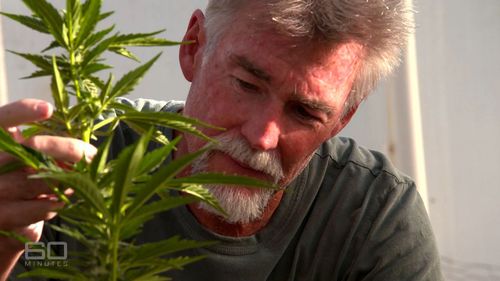
 “Fragile X syndrome (FXS) is characterized by a range of developmental, neuropsychiatric, and behavioral symptoms that cause significant impairment in those with the disorder.
 “β-caryophyllene (BCP) is a cannabinoid receptor 2 (CB2) agonist that tempers inflammation.