
 “Alzheimer’s disease (AD) is a multifactorial neurodegenerative disorder linked to various converging toxic mechanisms. Evidence suggests that hyperglycemia induces oxidative stress, mitochondrial dysfunction, inflammation and excitotoxicity, all of which play important roles in the onset and progression of AD pathogenesis.
The endocannabinoid system (ECS) orchestrates major physiological responses, including neuronal plasticity, neuroprotection, and redox homeostasis, to name a few. The multi-targeted effectiveness of the ECS emerges as a potential approach to treat AD.
Here we characterized the protective properties of the endocannabinoids arachidonylethanolamide (AEA) and 2-arachidonoylglycerol (2-AG), the synthetic cannabinoids CP 55-940 and WIN 55,212-2, and the fatty acid amide hydrolase (FAAH) inhibitor URB597, on a combined hyperglycemia+oligomeric amyloid β peptide (Aβ1-42) neurotoxic model in primary hippocampal neurons which exhibit several AD features.
All agents tested preserved cell viability and stimulated mitochondrial membrane potential, while reducing all the evaluated toxic endpoints in a differential manner, with URB597 showing the highest efficacy. The neuroprotective efficacy of all cannabinoid agents, except for URB597, led to partial recruitment of specific antioxidant activity and Nrf2 pathway regulation.
Our results support the neuroprotective potential of these agents at low concentrations against the damaging effects of GLU+Aβ1-42, affording new potential modalities for the design of AD therapies.”
https://pubmed.ncbi.nlm.nih.gov/32781098/
“All cannabinoid agents prevented the GLU + Aβ1-42 toxicity in a differential manner. All cannabinoid agents recruited Nrf2 signaling to protect cells.”
https://www.sciencedirect.com/science/article/abs/pii/S0197018620302084?via%3Dihub
 “In the last few years research into Cannabis and its constituent phytocannabinoids has burgeoned, particularly in the potential application of novel cannabis phytochemicals for the treatment of diverse illnesses related to neurodegeneration and dementia, including Alzheimer’s (AD), Parkinson’s (PD) and Huntington’s disease (HD). To date, these neurological diseases have mostly relied on symptomatological management. However, with an aging population globally, the search for more efficient and disease-modifying treatments that could delay or mitigate disease progression is imperative. In this context, this review aims to present a state of art in the research with cannabinoids and novel cannabinoid-based drug candidates that have been emerged as novel promising alternatives for drug development and innovation in the therapeutics of a number of diseases, especially those related to CNS-disturbance and impairment.”
 “Deposition of amyloid-beta (Aβ) peptide in the brain is the leading source of the onset and progression of Alzheimer’s disease (AD). Recent studies have suggested that anti-amyloidogenic agents may be a suitable therapeutic strategy for AD.
 “Studies have reported changes in the endocannabinoid system in the brain of patients with Alzheimer’s disease (AD), playing a role in the pathophysiology of AD. Cannabinoids have been shown to have neuroprotective properties, reduce neuroinflammation, and enhance neurogenesis. Evidence suggests that the utilization of marijuana products containing both tetrahydrocannabinol (THC) and cannabidiol (CBD) or CBD alone have been effective and safe for use in older people with agitation associated with dementia.
 “The worldwide prevalence of neurological and neurodegenerative disorders, such as depression or Alzheimer’s disease, has spread extensively throughout the last decades, becoming an enormous health issue.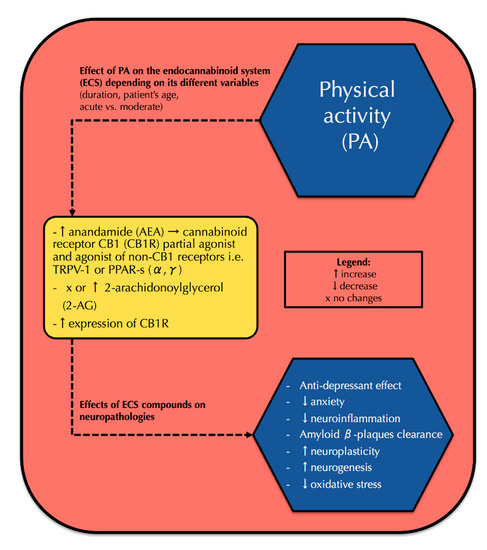
 “Alzheimer’s Dementia (AD) is a devastating neurodegenerative disease that affects approximately 17% of people aged 75-84. Neuropsychiatric symptoms (NPS) such as delusions, agitation, anxiety, and hallucinations are present in up to 95% of patients in all stages of dementia. To date, any approved and effective pharmacological interventions for the treatment of NPS are still not available.
 “Endocannabinoid system activity contributes to the homeostatic defense against aging and thus may counteract the progression of brain aging.
 “Cannabis sativa, commonly known as marijuana, contains a pool of secondary plant metabolites with therapeutic effects.
 “Generally, the development and progression of neurodegenerative diseases are associated with advancing age, so they are usually diagnosed in late adulthood. A primary mechanism underlying the onset of neurodegenerative diseases is neuroinflammation. Based on this background, the concept of “neuroinflammaging” has emerged. In this deregulated neuroinflammatory process, a variety of immune cells participate, especially glial cells, proinflammatory cytokines, receptors, and subcellular organelles including mitochondria, which are mainly responsible for maintaining redox balance at the cellular level. Senescence and autophagic processes also play a crucial role in the neuroinflammatory disease associated with aging.
 “While medical and recreational cannabis use is becoming more frequent among older adults, the neurocognitive consequences of cannabis use in this age group are unclear. The aim of this literature review was to synthesize and evaluate the current knowledge on the association of cannabis use during older-adulthood with cognitive function and brain aging.