
“Background: Relevant data for the prescription and therapeutic effects of medical cannabinoids (CAM) are still missing in everyday medicine especially for elderly and geriatric patients.
Aim of the study: Documentation of prescription (duration, age) of CAM (dronabinol, nabiximols, cannabinoid extracts) and co-medicated opioids in a doctor’s office specializing in pain.
Methods: Analysis of the consumption of opioids (morphine equivalent) and CAM (THC equivalent) for age and gender.
Results: In all, 178 patients with chronic pain were treated for a period of 366 days (median; range 31-2590 days). Median age was 72 years (26-96 years); 115 were women (64.8%). Of these, 34 were younger than 65 years, 42 were 65-80 years and 40 were more than 80 years old. Of the 63 men, 29 were younger than 65 years, 24 were 65-80 years and 10 were older than 80 years. Indications for CAM were chronic pain and the limitations for opioids because of side effects and worsening of quality of life. To total of 1001 CAM were prescribed, 557 (55.6%) dronabinol as liquid, 328 (32.7%) as full spectrum extracts and 66 (6.6%) as oro-mucosal nabiximols spray. 50 prescriptions (5%) contained more than one CAM simultaneously. The daily consumption of dronabinol liquor and extracts were 9.6 mg/day (median), and of spray 13.6 mg. The dosage over time did not change in patients older than 64; in younger patients, there was a non-significant increasing trend. Women requested lower THC dosages compared to men (8.1 mg vs. 14.8 mg). Furthermore, 10 patients (5.6%) stopped CAM because of failing effectivity, 7 (3.9%) because of failing cost coverage and only 5 because of adverse side effects. 115 patients (65%) with CAM also received opioids a median 65 mg/day morphine equivalents. This opioid dosage was significantly reduced in course of time by 24 mg/day morphine equivalents or 50%. This reduction was independent on CAM dosage, age and gender.
Discussion: Patients with chronic pain profit from long-term CAM which safely and significantly lower the consumption of comedicated opioids, even at low dosages (< 7.5 mg/day). For women, low-dose THC may be sufficient. Older patients benefit from CAM, and adverse effects do not limit the (chronic) use and prescription of CAM in the elderly.”
 “In response to the need of more rigorous data on medical cannabis and chronic pain, we conducted a 3-month prospective study incorporating ecological momentary assessment (EMA) to examine the effects of medical cannabis on pain, anxiety/depression, sleep, and quality of life.
 “Pain prevalence among adults in the United States has increased 25% over the past two decades, resulting in high health-care costs and impacts to patient quality of life. In the last 30 years, our understanding of pain circuits and (intra)cellular mechanisms has grown exponentially, but this understanding has not yet resulted in improved therapies. Options for pain management are limited. Many analgesics have poor efficacy and are accompanied by severe side effects such as addiction, resulting in a devastating opioid abuse and overdose epidemic. These problems have encouraged scientists to identify novel molecular targets and develop alternative pain therapeutics.
 “While states are implementing policies to legalize cannabis for medical or recreational purposes, it remains a Schedule 1 controlled substance with no medical uses according to US federal law. The perception of cannabis depends on social and cultural norms that impact political institutions involved in implementing policy. Because of negative social constructions, such as the “gateway hypothesis,” legalization of cannabis has been slow and contentious.
  “Introduction: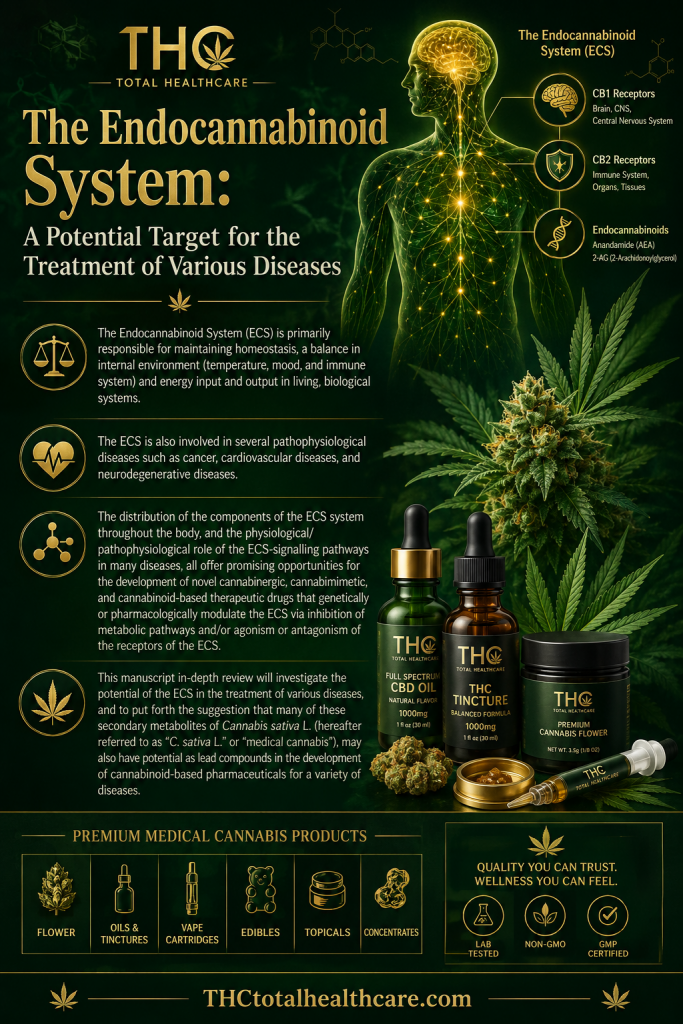
 “The Endocannabinoid System (ECS) is primarily responsible for maintaining homeostasis, a balance in internal environment (temperature, mood, and immune system) and energy input and output in living, biological systems.
 “Objectives:
  “Introduction:
 “Objectives: This article presents findings from a large prospective examination of Canadian medical cannabis patients, with a focus on the impacts of cannabis on prescription opioid use and quality of life over a 6-month period.