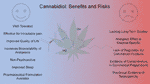
“Over the past decade the phenomenon of cannabis as a legitimate form of treatment for pain has overwhelmed the medical community, especially in the field of pain. From a status of a schedule 1 substance having no currently accepted medical use and being considered to have high potential for abuse, its use has mushroomed to over 50,000 legal medical users per year in Israel alone. There appear to be many reasons behind this phenomenon-medical, sociological, and economical. Thus, what is cannabis? An abusive substance or a medication? Should it be incorporated into current biomedical practice, and how should it be administered? Finally, what is the evidence for the beneficial and detrimental effects of cannabis? This article reviews and discusses the current literature regarding the beneficial and the detrimental effects of medical cannabis in the treatment of pain. We further discuss the problems and challenges facing the medical community in this domain and offer a practical approach to deal with these challenges.”
Category Archives: Chronic Pain
Cannabis and Cannabinoids in the Treatment of Rheumatic Diseases.
“Chronic pain is a common complaint among patients, and rheumatic diseases are a common cause for chronic pain. Current pharmacological interventions for chronic pain are not always useful or safe enough for long-term use.
Cannabis and cannabinoids are currently being studied due to their potential as analgesics. In this review we will discuss current literature regarding cannabinoids and cannabis as treatment for rheumatic diseases.
Fibromyalgia is a prevalent rheumatic disease that causes diffuse pain, fatigue, and sleep disturbances. Treatment of this syndrome is symptomatic, and it has been suggested that cannabis and cannabinoids could potentially alleviate some of the symptoms associated with fibromyalgia. In this review we cite some of the evidence that supports this claim. However, data on long-term efficacy and safety of cannabinoid and cannabis use are still lacking.
Cannabinoids and cannabis are commonly investigated as analgesic agents, but in recent years more evidence has accumulated on their potential immune-modulatory effect, supported by results in animal models of certain rheumatic diseases. While results that demonstrate the same effect in humans are still lacking, cannabinoids and cannabis remain potential drugs to alleviate the pain associated with rheumatic diseases, as they were shown to be safe and to cause limited adverse effects.”
Cannabinoids in the descending pain modulatory circuit: Role in inflammation.
“The legalization of cannabis in some states has intensified interest in the potential for cannabis and its constituents to lead to novel therapeutics for pain.
Our understanding of the cellular mechanisms underlying cannabinoid actions in the brain have lagged behind opioids; however, the current opioid epidemic has also increased attention on the use of cannabinoids as alternatives to opioids for pain, especially chronic pain that requires long-term use.
Endogenous cannabinoids are lipid signaling molecules that have complex roles in modulating neuronal function throughout the brain.
In this review, we discuss cannabinoid functions in the descending pain modulatory pathway, a brain circuit that integrates cognitive and emotional processing of pain to modulate incoming sensory inputs. In addition, we highlight areas where further studies are necessary to understand cannabinoid regulation of descending pain modulation.”
https://www.ncbi.nlm.nih.gov/pubmed/32004514
https://www.sciencedirect.com/science/article/abs/pii/S0163725820300231?via%3Dihub
The Role of Cannabidiol (CBD) in Chronic Pain Management: An Assessment of Current Evidence.
“Given the growing challenges in chronic pain management coupled with the ongoing consequences of the opioid epidemic, pain management practitioners are looking into more effective, innovative, and safer alternatives to treat pain.
Cannabis-based medicine had been described for hundreds of years but only recently have we seen the more scientific, evidence-based approach to its use, and ongoing investigations continue to explore its potential medical benefits.
While historically more attention has been paid to the psychoactive component of the cannabis plant Δ9-tetrahydrocannabinol (THC), there have been fewer scientific studies on the medical use of the cannabidiol (CBD) – a non-psychoactive component of the cannabis plant.
RECENT FINDINGS:
By examining recent literature, we investigated the use of CBD and its potential role in pain management. Since there are currently no approved pharmaceutical products that contain CBD alone for the management of pain, this review focused on nabiximols (which is a combined product of THC/CBD in a 1:1 ratio) as the only pharmaceutical product available that contains CBD and is being used for the management of pain.
It is difficult to definitely attribute the therapeutic properties to CBD alone since it is always administered with THC.
Based on the available literature, it is difficult to make a recommendation for the use of CBD in chronic pain management. It is also important to note that there are many CBD products currently available as supplements, but these products are non-pharmaceuticals and lack the appropriate clinical studies to support their efficacy claims.”
https://www.ncbi.nlm.nih.gov/pubmed/31980957
https://link.springer.com/article/10.1007%2Fs11916-020-0835-4
The Impact of Medical Cannabis on Intermittent and Chronic Opioid Users with Back Pain: How Cannabis Diminished Prescription Opioid Usage
“To determine if cannabis may be used as an alternative or adjunct treatment for intermittent and chronic prescription opioid users.
Design: Retrospective cohort study.
Setting: A single-center cannabis medical practice site in California.
Patients: A total of 180 patients who had a chief complaint of low back pain were identified (International Classification of Diseases, 10th Revision, code M54.5). Sixty-one patients who used prescription opioids were analyzed.
Interventions: Cannabis recommendations were provided to patients as a way to mitigate their low back pain.
Outcome Measures: Number of patients who stopped opioids and change in morphine equivalents.
Results: There were no between-group differences based on demographic, experiential, or attitudinal variables. We found that 50.8% were able to stop all opioid usage, which took a median of 6.4 years (IQR=1.75–11 years) after excluding two patients who transitioned off opioids by utilizing opioid agonists. For those 29 patients (47.5%) who did not stop opioids, 9 (31%) were able to reduce opioid use, 3 (10%) held the same baseline, and 17 (59%) increased their usage. Forty-eight percent of patients subjectively felt like cannabis helped them mitigate their opioid intake but this sentiment did not predict who actually stopped opioid usage. There were no variables that predicted who stopped opioids, except that those who used higher doses of cannabis were more likely to stop, which suggests that some patients might be able to stop opioids by using cannabis, particularly those who are dosed at higher levels.
Conclusions: In this long-term observational study, cannabis use worked as an alternative to prescription opioids in just over half of patients with low back pain and as an adjunct to diminish use in some chronic opioid users.”
The impact of cannabis access laws on opioid prescribing.
“While recent research has shown that cannabis access laws can reduce the use of prescription opioids, the effect of these laws on opioid use is not well understood for all dimensions of use and for the general United States population. Analyzing a dataset of over 1.5 billion individual opioid prescriptions between 2011 and 2018, which were aggregated to the individual provider-year level, we find that recreational and medical cannabis access laws reduce the number of morphine milligram equivalents prescribed each year by 11.8 and 4.2 percent, respectively. These laws also reduce the total days’ supply of opioids prescribed, the total number of patients receiving opioids, and the probability a provider prescribes any opioids net of any offsetting effects. Additionally, we find consistent evidence that cannabis access laws have different effects across types of providers, physician specialties, and payers.”
https://www.ncbi.nlm.nih.gov/pubmed/31865260
“The results of this study suggest that passing cannabis access laws reduces the use of prescription opioids across several different measures of opioid prescriptions. Thus, the passage of Recreational cannabis laws (RCLs) or Medical cannabis laws (MCLs) may be a valid policy option for combating the ongoing opioid epidemic, even if these laws were not originally conceived for that purpose.”
https://www.sciencedirect.com/science/article/pii/S0167629618309020?via%3Dihub
Management of chronic pain with Jalaprakshalana (water-wash) Shodhita (processed) Bhanga (Cannabis sativa L.) in cancer patients with deprived quality of life: An open-label single arm clinical trial.
“Pain is a common and complex symptom of cancer having physical, social, spiritual and psychological aspects. Approximately 70%-80% of cancer patients experiences pain, as reported in India.
Ayurveda recommends use of Shodhita (Processed) Bhanga (Cannabis) for the management of pain but no research yet carried out on its clinical effectiveness.
OBJECTIVE:
To assess the analgesic potential of Jala-Prakshalana (Water-wash) processed Cannabis sativa L. leaves powder in cancer patients with deprived quality of life (QOL) through openlabel single arm clinical trial.
MATERIALS AND METHODS:
Waterwash processed Cannabis leaves powder filled in capsule, was administered in 24 cancer patients with deprived QOL presenting complaints of pain, anxiety or depression; for a period of 4 weeks; in a dose of 250 mg thrice a day; along with 50 ml of cow’s milk and 4 g of crystal sugar. Primary outcome i.e. pain was measured by Wong-Bakers FACES Pain Scale (FACES), Objective Pain Assessment (OPA) scale and Neuropathic Pain Scale (NPS). Secondary outcome namely anxiety was quantified by Hospital Anxiety and Depression Scale (HADS), QOL by FACT-G scale, performance score by Eastern Cooperative Oncology Group (ECOG) and Karnofsky score.
RESULTS:
Significant reduction in pain was found on FACES Pain Scale (P < 0.05), OPA (P < 0.05), NPS (P < 0.001), HADS (P < 0.001), FACT-G scale (P < 0.001), performance status score like ECOG (P < 0.05) and Karnofsky score (P < 0.01).
CONCLUSION:
Jalaprakshalana Shodhita Bhanga powder in a dose of 250 mg thrice per day; relieves cancer induced pain, anxiety and depression significantly and does not cause any major adverse effect and withdrawal symptoms during trial period.”
Orally consumed cannabinoids provide long-lasting relief of allodynia in a mouse model of chronic neuropathic pain.
“Chronic pain affects a significant percentage of the United States population, and available pain medications like opioids have drawbacks that make long-term use untenable.
Cannabinoids show promise in the management of pain, but long-term treatment of pain with cannabinoids has been challenging to implement in preclinical models. We developed a voluntary, gelatin oral self-administration paradigm that allowed male and female mice to consume ∆9-tetrahydrocannabinol, cannabidiol, or morphine ad libitum.
Mice stably consumed these gelatins over 3 weeks, with detectable serum levels. Using a real-time gelatin measurement system, we observed that mice consumed gelatin throughout the light and dark cycles, with animals consuming less THC-gelatin than the other gelatin groups.
Consumption of all three gelatins reduced measures of allodynia in a chronic, neuropathic sciatic nerve injury model, but tolerance to morphine developed after 1 week while THC or CBD reduced allodynia over three weeks. Hyperalgesia gradually developed after sciatic nerve injury, and by the last day of testing, THC significantly reduced hyperalgesia, with a trend effect of CBD, and no effect of morphine. Mouse vocalizations were recorded throughout the experiment, and mice showed a large increase in ultrasonic, broadband clicks after sciatic nerve injury, which was reversed by THC, CBD, and morphine.
This study demonstrates that mice voluntarily consume both cannabinoids and opioids via gelatin, and that cannabinoids provide long-term relief of chronic pain states. In addition, ultrasonic clicks may objectively represent mouse pain status and could be integrated into future pain models.”
Investigation of the Involvement of the Endocannabinoid System in TENS-induced Antinociception.
“Transcutaneous electrical nerve stimulation (TENS) promotes antinociception by activating the descending pain modulation pathway and consequently releasing endogenous analgesic substances.
In addition, recent studies have shown that the endocannabinoid system controls pain. Thus, the present study investigated the involvement of the endocannabinoid system in TENS-induced antinociception of cancer pain using a cancer pain model induced by intraplantar (i.pl.) injections of Ehrlich tumor cells in male Swiss mice.
These results suggest that low- and high-frequency TENS is effective in controlling cancer pain, and the endocannabinoid system is involved in this effect at both the peripheral and central levels.
Perspective: TENS is a non-pharmacological strategy that may be used to control cancer pain. Identification of a new mechanism involved in its analgesic effect could lead to the development of clinical studies as well as an increase in its application, lessening the need for pharmacological treatments.”
https://www.ncbi.nlm.nih.gov/pubmed/31785404
https://www.jpain.org/article/S1526-5900(19)30868-5/fulltext
Cannabis for pain in orthopedics: a systematic review focusing on study methodology
“Medical cannabis use is an emerging topic of interest in orthopedics. Although there is a large amount of literature on medical cannabis use for managing various types of pain, few studies have focused on orthopedic conditions. There is little high-quality evidence in core orthopedic areas. The objective of this study was to summarize the literature on the efficacy of cannabis use for pain related to orthopedic conditions.
METHODS:
We conducted a systematic review of the literature on the use of cannabinoids for pain management in core orthopedic conditions. Two independent reviewers extracted information on reporting quality, risk of bias, drugs, population, control, duration of study, pain outcomes and the authors’ conclusions regarding efficacy for pain outcomes.
RESULTS:
We identified 33 orthopedic studies, including 21 primary studies and 12 reviews. Study quality was generally low to moderate. Six of the included studies had a control group and 15 were noncontrolled studies. Methodologies, drugs and protocols of administration varied greatly across studies. Study conclusions were generally positive in noncontrolled studies and mixed in controlled studies. Studies using higher doses tended to conclude that cannabis use was effective, but the potential for harmful effects may also be increased with higher doses.
CONCLUSION:
Variability in the methodologies used in cannabis research makes it challenging to draw conclusions about dosing, routes and frequency of administration. Most of the existing evidence suggests that medical cannabis use is effective, but this efficacy has been demonstrated only when either there is no comparator or cannabis is compared with placebo. Studies using an active comparator have not demonstrated efficacy. Future research should focus on improving study reporting and methodologic quality so that protocols that optimize pain control while minimizing harmful effects can be determined.”