Cannabimimetic plants: are they new cannabinoidergic modulators?

“Phytochemicals and secondary metabolites able to interact with the endocannabinoid system (Cannabimimetics) have been recently described in a broad range of plants and fruits. These findings can open new alternative avenues to explore for the development of novel therapeutic compounds. The cannabinoids regulate many physiological and pathological functions in both animals and plants. Cannabis sativa is the main plant that produces phytocannabinoids inside resins capable to defend the plant from the aggression of parasites and herbivores. Animals produce anandamide and 2-arachidonoyl glycerol, which thanks to binding with main receptors such as type-1 cannabinoid receptor (CB1R) and the type-2 cannabinoid receptor (CB2R) are involved in inflammation processes and several brain functions. Endogenous cannabinoids, enzymes for synthesis and degradation of cannabinoids, and CB1R and CB2R constitute the endocannabinoid system (ECS). Other plants can produce cannabinoid-like molecules such as perrottetinene extracted from Radula perrottetii, or anandamide and 2-arachidonoyl glycerol extracted from some bryophytes. Moreover, several other secondary metabolites can also interact with the ECS of animals and take the name of cannabimimetics. These phytoextracts not derived from Cannabis sativa can act as receptor agonists or antagonist, or enzyme inhibitors of ECS and can be involved in the inflammation, oxidative stress, cancer, and neuroprotection. Finally, given the evolutionary heterogeneity of the cannabimimetic plants, some authors speculated on the fascinating thesis of the evolutionary convergence between plants and animals regarding biological functions of ECS. The review aims to provide a critical and complete assessment of the botanical, chemical and therapeutic aspects of cannabimimetic plants to evaluate their spread in the world and medicinal potentiality.”

https://www.ncbi.nlm.nih.gov/pubmed/30877436

https://link.springer.com/article/10.1007%2Fs00425-019-03138-x

Analyzing the role of cannabinoids as modulators of Wnt/β-catenin signaling pathway for their use in the management of neuropathic pain.

Bioorganic & Medicinal Chemistry Letters

“Neuropathic pain is a debilitating form of treatment-resistant chronic pain caused by damage to the nervous system. Cannabinoids have been known for suppressing neuropathic pain by modulating the endo cannabinoid system. Since the canonical Wnt/β-catenin signaling has recently been implicated in pain sensation, we investigated the impact of major cannabinoids (1-6) from the leaves of Cannabis sativa and an epoxy derivative of compound 2, here upon referred to as 2a, on modulating Wnt/β-catenin signaling pathway. The results presented in this study show that compound 1, 2 and 2a exhibited potent inhibitory activity against Wnt/β-catenin pathway in a dose-dependent manner. Compound 2a was seen to inhibit this pathway at slightly lower concentrations than its parent molecule 2, under similar conditions. Taken together, compound 1, 2 and 2a, by virtue of their inhibition of Wnt/β-catenin signaling pathway, could be developed as effective neuroprotective agents for the management of neuropathic pain.”

https://www.ncbi.nlm.nih.gov/pubmed/30871771

https://www.sciencedirect.com/science/article/pii/S0960894X19301428?via%3Dihub

Perspectives on the Role of Endocannabinoids in Autism Spectrum Disorders.

 Logo of nihpa

“Autism spectrum disorders (ASDs) are diagnosed on the basis of three behavioral features, namely, (1) deficits in social communication, (2) absence or delay in language and (3) stereotypy. The consensus regarding the neurological pathogenesis of ASDs is aberrant synaptogenesis and synapse function. Further, it is now widely accepted that ASD is neurodevelopmental in nature, placing emphasis on derangements occurring at the level of intra- and intercellular signaling during corticogenesis. At present, there is an ever-growing list of mutations in putative susceptibility genes in affected individuals, preventing effective transformation of knowledge gathered from basic science research to the clinic. In response, the focus of ASD biology has shifted toward the identification of cellular signaling pathways that are common to various ASD-related mutations in hopes that these shared pathways may serve as more promising treatment targets than targeting individual genes or proteins. To this end, the endogenous cannabinoid (endocannabinoid, eCB) system has recently emerged as a promising therapeutic target in the field of ASD research. The eCB system is altered in several neurological disorders, but the role of these bioactive lipids in ASD etiology remains poorly understood. In this perspective, we review current evidence linking eCB signaling to ASDs and put forth the notion that continued focus on eCBs in autism research may provide valuable insight into pathophysiology and treatment strategies. In addition to its role in modulating transmitter release at mature synapses, the eCB signaling system plays important roles in many aspects of cortical development, and disruption of these effects of eCBs may also be related to ASD pathophysiology.”

https://www.ncbi.nlm.nih.gov/pubmed/30854511

“Advances in our understanding of eCB actions will undoubtedly facilitate pharmacological interventions and further, provide patients the best quality of life possible.”

https://www.ncbi.nlm.nih.gov/pmc/articles/PMC6407886/

Members of the endocannabinoid system are distinctly regulated in inflammatory bowel disease and colorectal cancer.

Scientific Reports

“Preclinical studies have demonstrated that the endocannabinoid system (ECS) plays an important role in the protection against intestinal inflammation and colorectal cancer (CRC); however, human data are scarce. We determined members of the ECS and related components of the ‘endocannabinoidome’ in patients with inflammatory bowel disease (IBD) and CRC, and compared them to control subjects. Anandamide (AEA) and oleoylethanolamide (OEA) were increased in plasma of ulcerative colitis (UC) and Crohn’s disease (CD) patients while 2-arachidonoylglycerol (2-AG) was elevated in patients with CD, but not UC. 2-AG, but not AEA, PEA and OEA, was elevated in CRC patients. Lysophosphatidylinositol (LPI) 18:0 showed higher levels in patients with IBD than in control subjects whereas LPI 20:4 was elevated in both CRC and IBD. Gene expression in intestinal mucosal biopsies revealed different profiles in CD and UC. CD, but not UC patients, showed increased gene expression for the 2-AG synthesizing enzyme diacylglycerol lipase alpha. Transcripts of CNR1 and GPR119 were predominantly decreased in CD. Our data show altered plasma levels of endocannabinoids and endocannabinoid-like lipids in IBD and CRC and distinct transcript profiles in UC and CD. We also report alterations for less known components in intestinal inflammation, such as GPR119, OEA and LPI.”

Cannabinoid Signaling in the Skin: Therapeutic Potential of the “C(ut)annabinoid” System.

molecules-logo

“The endocannabinoid system (ECS) has lately been proven to be an important, multifaceted homeostatic regulator, which influences a wide-variety of physiological processes all over the body. Its members, the endocannabinoids (eCBs; e.g., anandamide), the eCB-responsive receptors (e.g., CB₁, CB₂), as well as the complex enzyme and transporter apparatus involved in the metabolism of the ligands were shown to be expressed in several tissues, including the skin. Although the best studied functions over the ECS are related to the central nervous system and to immune processes, experimental efforts over the last two decades have unambiguously confirmed that cutaneous cannabinoid (“c[ut]annabinoid”) signaling is deeply involved in the maintenance of skin homeostasis, barrier formation and regeneration, and its dysregulation was implicated to contribute to several highly prevalent diseases and disorders, e.g., atopic dermatitis, psoriasis, scleroderma, acne, hair growth and pigmentation disorders, keratin diseases, various tumors, and itch. The current review aims to give an overview of the available skin-relevant endo- and phytocannabinoid literature with a special emphasis on the putative translational potential, and to highlight promising future research directions as well as existing challenges.”

https://www.ncbi.nlm.nih.gov/pubmed/30845666

https://www.mdpi.com/1420-3049/24/5/918

Novel protective effect of O-1602 and abnormal cannabidiol, GPR55 agonists, on ER stress-induced apoptosis in pancreatic β-cells.

Biomedicine & Pharmacotherapy

“Insulin resistance and β-cell dysfunction are the main defects in Type 2 Diabetes Mellitus (T2DM), and β-cell dysfunction and apoptosis is the critical determinant in the progression of T2DM. G-protein coupled receptor 55 (GPR55) is an orphan G-protein coupled receptor, which is activated by endocannabinoids and lipid transmitters. Recently, GPR55 was shown to regulate glucose and energy homeostasis, however its role in β-cell apoptosis was not studied. Therefore, in this study, we investigated the novel effect of GPR55 agonists, O-1602 and abnormal cannabidiol (Abn-CBD), on endoplasmic reticulum (ER) stress-induced apoptosis in mouse pancreatic β-cell lines, MIN6 and Beta-TC-6, and its underlying mechanisms. Our results showed that O-1602 and Abn-CBD reduced ER stress-induced apoptosis in MIN6 and Beta-TC-6 cells. This was through the phosphorylation of 3′-5′-cyclic adenosine monophosphate response element-binding protein (CREB) in β-cells, hence activating CREB downstream anti-apoptotic genes, Bcl-2 and Bcl-xL. Moreover, O-1602 and Abn-CBD directly activated kinases, CaMKIV, Erk1/2 and PKA, to induce CREB phosphorylation. Therefore, our results indicated that GPR55 agonists protected from β-cell apoptosis through CREB activation, thus up-regulating anti-apoptotic genes. In conclusion, our study provided a novel protective effect of GPR55 agonists on ER stress-induced apoptosis in β-cells and its underlying mechanisms mediating this protection, therefore we suggested that GPR55 might be a therapeutic target for T2DM.”

https://www.ncbi.nlm.nih.gov/pubmed/30841431

https://www.sciencedirect.com/science/article/pii/S0753332218375668?via%3Dihub

New Insights of Uterine Leiomyoma Pathogenesis: Endocannabinoid System.


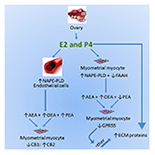
“The aim of this study was to determine if components of the endocannabinoid system are modulated in uterine leiomyomas (fibroids). Components studied included cannabinoid receptors 1 (CB1) and 2 (CB2); the G protein-coupled receptor GPR55; transient potential vanilloid receptor 1 (TRPV1) and the endocannabinoid modulating enzymes N-acylphosphatidylethanolamine-specific phospholipase D (NAPE-PLD) and fatty acid amide hydrolase (FAAH), and their N-acylethanolamine (NAE) ligands: N-arachidonylethanolamine (AEA), N-oleoylethanolamine (OEA), and N-palmityolethanaolamine (PEA). MATERIAL AND METHODS Transcript levels of CB1, CB2, TRPV1, GPR55, NAPE-PLD, and FAAH were measured using RT-PCR and correlated with the tissue levels of the 3 NAEs in myometrial tissues. The tissues studied were: 1) fibroids, 2) myometrium adjacent/juxtaposed to the fibroid lesions, and 3) normal myometrium. Thirty-seven samples were processed for NAE measurements and 28 samples were used for RT-PCR analyses. RESULTS FAAH expression was significantly lower in fibroids, resulting in a NAPE-PLD: FAAH ratio that favors higher AEA levels in pre-menopausal tissues, whilst PEA levels were significantly lower, particularly in post-menopausal women, suggesting PEA protects against fibroid pathogenesis. The CB1: CB2 ratio was lower in fibroids, suggesting that loss of CB1 expression affects the fibroid cell phenotype. Significant correlations between reduced FAAH, CB1, and GPR55 expression and PEA in fibroids indicate that the loss of these endocannabinoid system components are biomarkers of leiomyomata. CONCLUSIONS Loss of expression of CB1, FAAH, GPR55, and PEA production are linked to the pathogenesis of uterine fibroids and further understanding of this might eventually lead to better disease indicators or the development of therapeutic potentials that might eventually be used in the management of uterine fibroids.”

https://www.ncbi.nlm.nih.gov/pubmed/30842391

https://basic.medscimonit.com/abstract/index/idArt/914019

The Endocannabinoid System and Cannabidiol’s Promise for the Treatment of Substance Use Disorder.

 Related image“Substance use disorder is characterized by repeated use of a substance, leading to clinically significant distress, making it a serious public health concern. The endocannabinoid system plays an important role in common neurobiological processes underlying substance use disorder, in particular by mediating the rewarding and motivational effects of substances and substance-related cues. In turn, a number of cannabinoid drugs (e.g., rimonabant, nabiximols) have been suggested for potential pharmacological treatment for substance dependence. Recently, cannabidiol (CBD), a non-psychoactive phytocannabinoid found in the cannabis plant, has also been proposed as a potentially effective treatment for the management of substance use disorder. Animal and human studies suggest that these cannabinoids have the potential to reduce craving and relapse in abstinent substance users, by impairing reconsolidation of drug-reward memory, salience of drug cues, and inhibiting the reward-facilitating effect of drugs. Such functions likely arise through the targeting of the endocannabinoid and serotonergic systems, although the exact mechanism is yet to be elucidated. This article seeks to review the role of the endocannabinoid system in substance use disorder and the proposed pharmacological action supporting cannabinoid drugs’ therapeutic potential in addictions, with a focus on CBD. Subsequently, this article will evaluate the underlying evidence for CBD as a potential treatment for substance use disorder, across a range of substances including nicotine, alcohol, psychostimulants, opioids, and cannabis. While early research supports CBD’s promise, further investigation and validation of CBD’s efficacy, across preclinical and clinical trials will be necessary.”

https://www.ncbi.nlm.nih.gov/pubmed/30837904

https://www.frontiersin.org/articles/10.3389/fpsyt.2019.00063/full

The Relationship between Marijuana Use Prior to Sex and Sexual Function in Women.

Sexual Medicine Open Access - Click here to go back to the homepage

“Scientific research on the effects of marijuana on sexual functioning in women, including libido, arousal, orgasm, and satisfaction, is limited.

AIM:

To evaluate women’s perceptions of the effect of marijuana use before sexual activity.

METHODS:

A cross-sectional design, from March 2016-February 2017, within a single, academic, obstetrics and gynecology practice, was performed. Patients were given a questionnaire at their visit and asked to complete it anonymously and place it in a locked box after their visit.

MAIN OUTCOME MEASURES:

The primary outcome was satisfaction in the sexual domains of drive, orgasm, lubrication, dyspareunia, and overall sexual experience. The secondary outcome was the effect of the frequency of marijuana use on satisfaction.

RESULTS:

Of the 373 participants, 34.0% (n = 127) reported having used marijuana before sexual activity. Most women reported increases in sex drive, improvement in orgasm, decrease in pain, but no change in lubrication. After adjusting for race, women who reported marijuana use before sexual activity had 2.13 higher odds of reporting satisfactory orgasms (adjusted odds ratio = 2.13; 95% CI = 1.05, 4.35) than women who reported no marijuana use. After adjusting for race and age, women with frequent marijuana use, regardless of use before sex or not, had 2.10 times higher odds of reporting satisfactory orgasms than those with infrequent marijuana use (adjusted odds ratio = 2.10; 95% CI = 1.01-4.44).

CONCLUSION:

Marijuana appears to improve satisfaction with orgasm. A better understanding of the role of the endocannabinoid system in women is important, because there is a paucity of literature, and it could help lead to development of treatments for female sexual dysfunction. ”

https://www.ncbi.nlm.nih.gov/pubmed/30833225

https://www.smoa.jsexmed.org/article/S2050-1161(19)30009-1/fulltext

β-Caryophyllene, a natural bicyclic sesquiterpene attenuates doxorubicin-induced cardiotoxicity via activation of myocardial cannabinoid type-2 (CB2) receptors in rats.

Chemico-Biological Interactions

“The cannabinoid type 2 receptor (CB2) has recently emerged as an important therapeutic target for cancer as well as cardiovascular diseases. The CB2 receptor downregulation has been reported in solid tumors and cardiovascular diseases, therefore the CB2receptor activation has been considered as a viable strategy for chemotherapy as well as cardioprotection.

In chemotherapy, doxorubicin (DOX) is an important drug that continues to be the mainstay of chemotherapy in solid tumors, leukemia, and lymphoma. However, the use of DOX is often limited due to its lethal cardiotoxicity. Considering the role of CB2 receptors in cardiovascular diseases and cancer, the activation of CB2 receptors may protect against DOX-induced chronic cardiotoxicity in rats.

In the present study, we investigated the cardioprotective effect of a selective CB2 receptor agonist; β-Caryophyllene (BCP), a natural bicyclic sesquiterpene, against DOX-induced chronic cardiotoxicity in rats. AM630, a CB2 receptor antagonist was administered as a pharmacological challenge prior to BCP treatment to demonstrate CB2 receptor mediated cardioprotective mechanism of BCP. DOX (2.5 mg/kg) was injected intraperitoneally once a week for five weeks to induce chronic cardiotoxicity in rats.

BCP was also injected into rats six days a week for a total duration of five weeks. DOX induced a significant decline in cardiac function and oxidative stress evidenced by the depletion of antioxidant enzymes, glutathione, and increased lipid peroxidation. DOX also triggered activation of nuclear factor kappa B (NF-κB) and increased the levels of pro-inflammatory cytokines (TNF-α, IL-6, and IL-1β) and expression of the inflammatory mediators (iNOS and COX-2) in the heart.

Furthermore, DOX also upregulated the expression of pro-apoptotic markers such as Bax, p53, cleaved PARP, active caspase-3 and downregulated anti-apoptotic marker Bcl-2 in the myocardium. BCP treatment exerted significant cardioprotective effect by salvaging the heart tissues, improving cardiac function, mitigating oxidative stress, inflammation, and apoptosis. The histological and ultrastructural studies also appear in line with our findings of biochemical and molecular parameters.

The CB2 receptor-mediated cardioprotective mechanism was further confirmed by the abrogation of the beneficial effects of BCP with prior administration of the CB2 receptor antagonist; AM630.

Our study revealed the novel mechanism of BCP in cardioprotection against DOX-induced chronic cardiotoxicity by the activation of CB2 receptors.”

https://www.ncbi.nlm.nih.gov/pubmed/30836069

https://www.sciencedirect.com/science/article/pii/S0009279718316284?via%3Dihub

“β-caryophyllene (BCP) is a common constitute of the essential oils of numerous spice, food plants and major component in Cannabis.”   http://www.ncbi.nlm.nih.gov/pubmed/23138934

“Beta-caryophyllene is a dietary cannabinoid.”   https://www.ncbi.nlm.nih.gov/pubmed/18574142