
 “In recent years, and even more since its legalization in several jurisdictions, cannabis and the endocannabinoid system have received an increasing amount of interest related to their potential exploitation in clinical settings. Cannabinoids have been suggested and shown to be effective in the treatment of various conditions. In cancer, the endocannabinoid system is altered in numerous types of tumours and can relate to cancer prognosis and disease outcome. Additionally, cannabinoids display anticancer effects in several models by suppressing the proliferation, migration and/or invasion of cancer cells, as well as tumour angiogenesis. However, the therapeutic use of cannabinoids is currently limited to the treatment of symptoms and pain associated with chemotherapy, while their potential use as cytotoxic drugs in chemotherapy still requires validation in patients. Along with cannabinoids, cannabis contains several other compounds that have also been shown to exert anti-tumorigenic actions. The potential anti-cancer effects of cannabinoids, terpenes and flavonoids, present in cannabis, are explored in this literature review.”
https://pubmed.ncbi.nlm.nih.gov/32708138/
https://www.mdpi.com/2072-6694/12/7/1985
 “The recent announcement of marijuana legalization in Canada spiked many discussions about potential health benefits of Cannabis sativa.
 “In recent years, the endocannabinoid system has received great interest as a potential therapeutic target in numerous pathological conditions.
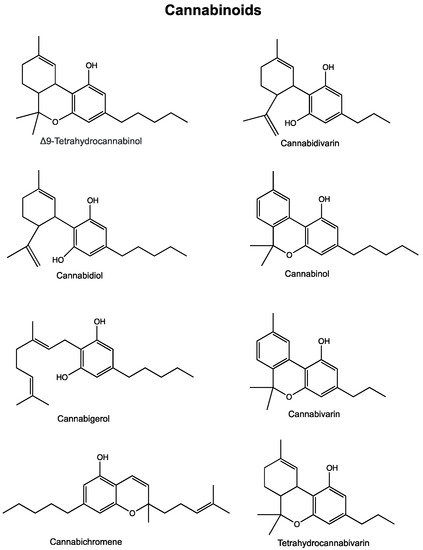
 “Tetrahydrocannabinol (THC), cannabidiol (CBD) and cannabinol (CBN) affect the human endocannabinoid system.


 “Currently, the involvement of the endocannabinoid system in cancer development and possible options for a cancer-regressive effect of
  “The lack of good diagnostic/prognostic biomarkers and the often late presentation of endometrial cancer (EC) hinders the amelioration of the morbidity and mortality rates associated with this primarily estrogen-driven disease, a disease that is becoming more prevalent in the population.
Previous studies on the expression of the classical cannabinoid receptors, CB1 and CB2, suggest these could provide good diagnostic/prognostic biomarkers for EC but those observations have been contradictory. In this study, we sought to resolve the inconsistency of CB1 and CB2 expression levels in different EC studies.
To that end, we used qRT-PCR and immunohistochemistry (IHC) for CB1 and CB2 in endometrial biopsies from women with or without EC and found that transcript levels for both CB1 and CB2 were significantly decreased by 90 and 80%, respectively in EC. These observations were supported by histomorphometric studies where CB1 and CB2 staining intensity was decreased in all types of EC.
These data suggest that the loss of both types of CB receptors is potentially involved in the development of or progression of EC and that CB1 and CB2 receptor expression could serve as useful histological markers and therapeutic targets in the treatment of or prevention of EC.”
“The lack of good diagnostic/prognostic biomarkers and the often late presentation of endometrial cancer (EC) hinders the amelioration of the morbidity and mortality rates associated with this primarily estrogen-driven disease, a disease that is becoming more prevalent in the population.
Previous studies on the expression of the classical cannabinoid receptors, CB1 and CB2, suggest these could provide good diagnostic/prognostic biomarkers for EC but those observations have been contradictory. In this study, we sought to resolve the inconsistency of CB1 and CB2 expression levels in different EC studies.
To that end, we used qRT-PCR and immunohistochemistry (IHC) for CB1 and CB2 in endometrial biopsies from women with or without EC and found that transcript levels for both CB1 and CB2 were significantly decreased by 90 and 80%, respectively in EC. These observations were supported by histomorphometric studies where CB1 and CB2 staining intensity was decreased in all types of EC.
These data suggest that the loss of both types of CB receptors is potentially involved in the development of or progression of EC and that CB1 and CB2 receptor expression could serve as useful histological markers and therapeutic targets in the treatment of or prevention of EC.”
 “The endocannabinoid system has emerged as a considerable target for the treatment of diverse diseases.
In addition to the well-established palliative effects of
“The endocannabinoid system has emerged as a considerable target for the treatment of diverse diseases.
In addition to the well-established palliative effects of