
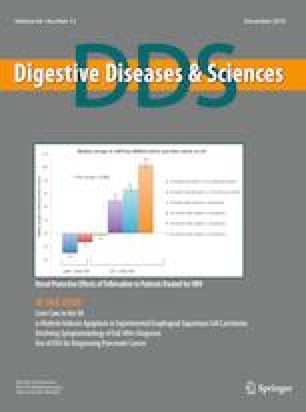
 “Marijuana may be used by some patients with gastroparesis (Gp) for its potential antiemetic, orexigenic, and pain-relieving effects.
The aim of this study was to describe the use of marijuana by patients for symptoms of Gp, assessing prevalence of use, patient characteristics, and patients’ perceived benefit on their symptoms of Gp.
RESULTS:
Fifty-nine of 506 (11.7%) patients with symptoms of Gp reported current marijuana use, being similar among patients with delayed and normal gastric emptying and similar in idiopathic and diabetic patients. Patients using marijuana were younger, more often current tobacco smokers, less likely to be a college graduate, married or have income > $50,000. Patients using marijuana had higher nausea/vomiting subscore (2.7 vs 2.1; p = 0.002), higher upper abdominal pain subscore (3.5 vs 2.9; p = 0.003), more likely to be using promethazine (37 vs 25%; p = 0.05) and dronabinol (17 vs 3%; p < 0.0001). Of patients using marijuana, 51% had been using it for more than 2 years, 47% were using this once or more per day, and 81% of marijuana users rated their benefit from marijuana as better or much better.
CONCLUSIONS:
A subset of patients (12%) with symptoms of Gp use marijuana. Patients with severe nausea and abdominal pain were more likely to use marijuana and perceive it to be beneficial for their symptoms.”
https://www.ncbi.nlm.nih.gov/pubmed/31758430
https://link.springer.com/article/10.1007%2Fs10620-019-05963-2
 “Endocannabinoids are produced within the gastrointestinal (GI) tract and modulate energy homeostasis and food intake, at least in part, via vagally-dependent actions. The recent paper by Christie et al., [Christie, et al. J Physiol, 2019] demonstrate, for the first time, that
  “We have previously reported that endocannabinoids modulate permeability in Caco-2 cells under inflammatory conditions and hypothesised in the present study that endocannabinoids could also modulate permeability in ischemia/reperfusion.
 “Delta-9-tetrahydrocannabinol (THC) is the primary psychoactive compound in
 “Complementary therapies for inflammatory bowel disease (IBD) have earned growing interest from patients and investigators alike, with a dynamic landscape of research in this area. In this article, we review results of the most recent studies evaluating the role of cannabis and turmeric for the treatment of IBD and other intestinal illnesses.
 “The endocannabinoid system (ECS) is composed of cannabinoid receptors, their endogenous ligands, and the enzymes involved in endocannabinoid turnover.
Modulating the activity of the ECS may influence a variety of physiological and pathophysiological processes.
A growing body of evidence indicates that activation of cannabinoid receptors by endogenous, plant-derived, or synthetic cannabinoids may exert beneficial effects on gastrointestinal inflammation and visceral pain.
The present ex vivo study aimed to investigate immunohistochemically the distribution of cannabinoid receptors CB1, CB2, G protein-coupled receptor 55 (GPR55), and peroxisome proliferation activation receptor alpha (PPARα) in the canine gastrointestinal tract.
Cannabinoid receptors showed a wide distribution in the gastrointestinal tract of the dog.
Since cannabinoid receptors have a protective role in inflammatory bowel disease, the present research provides an anatomical basis supporting the therapeutic use of cannabinoid receptor agonists in relieving motility disorders and visceral hypersensitivity in canine acute or chronic enteropathies.”
“The endocannabinoid system (ECS) is composed of cannabinoid receptors, their endogenous ligands, and the enzymes involved in endocannabinoid turnover.
Modulating the activity of the ECS may influence a variety of physiological and pathophysiological processes.
A growing body of evidence indicates that activation of cannabinoid receptors by endogenous, plant-derived, or synthetic cannabinoids may exert beneficial effects on gastrointestinal inflammation and visceral pain.
The present ex vivo study aimed to investigate immunohistochemically the distribution of cannabinoid receptors CB1, CB2, G protein-coupled receptor 55 (GPR55), and peroxisome proliferation activation receptor alpha (PPARα) in the canine gastrointestinal tract.
Cannabinoid receptors showed a wide distribution in the gastrointestinal tract of the dog.
Since cannabinoid receptors have a protective role in inflammatory bowel disease, the present research provides an anatomical basis supporting the therapeutic use of cannabinoid receptor agonists in relieving motility disorders and visceral hypersensitivity in canine acute or chronic enteropathies.”