Cannabinoid receptors in acute and chronic complications of atherosclerosis

“Atherosclerosis is a chronic inflammatory disease that is the primary cause of myocardial infarction and stroke, which occur after sudden thrombotic occlusion of an artery.

A growing body of evidence suggests that cannabinoid signalling plays a fundamental role in atherosclerosis development and its clinical manifestations. Thus, CB2 receptors are protective in myocardial ischaemia/reperfusion and implicated in the modulation of chemotaxis, which is crucial for the recruitment of leukocytes during inflammation.

Delta-9-Tetrahydrocannabinol (THC)-mediated activation has been shown to inhibit atherosclerotic plaque progression in a CB2 dependent manner.

It is tempting to suggest that pharmacological modulation of the endocannabinoid system is a potential novel therapeutic strategy in the treatment of atherosclerosis.”

http://www.ncbi.nlm.nih.gov/pmc/articles/PMC2219535/

Activation of cannabinoid CB2 receptor ameliorates atherosclerosis associated with suppression of adhesion molecules.

“Adhesion molecules have been implicated in the development and progression of atherosclerosis. Cannabinoids have been reported to modulate the migration and adhesion molecules expression of various cell types.

Here we examined the effects of WIN55212-2, a cannabinoid receptor 1 (CB1-R)/cannabinoid receptor 2 (CB2-R) agonist on the development of atherosclerotic lesions…

WIN55212-2 seems to have direct anti-atherosclerotic effects in an animal model of atherosclerosis… these beneficial effects of WIN55212-2 may be mediated through the CB2 receptor.”

http://www.ncbi.nlm.nih.gov/pubmed/20075743

Towards a therapeutic use of selective CB2 cannabinoid receptor ligands for atherosclerosis.

“Atherosclerosis remains the primary cause of heart disease and stroke, causing approximately 50% of all deaths in Western countries. The identification of promising novel anti-atherosclerotic therapies is therefore of great interest and represents a continued challenge to the medical community.

Cannabinoids, such as Delta9-tetrahydrocannabinol (THC), which is the major psychoactive compound of marijuana, modulate immune functions and might therefore be of therapeutic use for the treatment of inflammatory diseases.

The authors have demonstrated recently that oral treatment with low dose THC inhibits atherosclerosis progression in mice through pleiotropic immunomodulatory effects on inflammatory cells. All these effects were mediated via the cannabinoid receptor CB(2), the main cannabinoid receptor expressed on immune cells.

The identification and characterization of cannabinoid derivative that selectively activate CB(2) receptors and are devoid of adverse effects might offer a novel therapeutic strategy for the treatment of atherosclerosis.”
http://www.ncbi.nlm.nih.gov/pubmed/19804131

https://www.futuremedicine.com/doi/abs/10.2217/14796678.2.1.49

“Researchers suggest that THC and other cannabinoids, which are active at CB2, the cannabinoid receptor expressed on immune cells, may be valuable in treating atherosclerosis.” https://www.medscape.com/viewarticle/787468

Low dose oral cannabinoid therapy reduces progression of atherosclerosis in mice

Figure 1 : The cannabinoid receptor CB2 is expressed in human and mouse atherosclerotic plaques. Unfortunately we are unable to provide accessible alternative text for this. If you require assistance to access this image, or to obtain a text description, please contact npg@nature.com

“Atherosclerosis is a chronic inflammatory disease… Derivatives of cannabinoids such as delta-9-tetrahydrocannabinol (THC) modulate immune functions and therefore have potential for the treatment of inflammatory diseases.

We investigated the effects of THC in a murine model of established atherosclerosis.

Oral administration of THC resulted in significant inhibition of disease progression.

Our data demonstrate that oral treatment with a low dose of THC inhibits atherosclerosis progression in the apolipoprotein E knockout mouse model, through pleiotropic immunomodulatory effects on lymphoid and myeloid cells.

Thus, THC or cannabinoids with activity at the CB2 receptor may be valuable targets for treating atherosclerosis.”

http://www.nature.com/nature/journal/v434/n7034/full/nature03389.html

http://www.ncbi.nlm.nih.gov/pubmed/15815632


Marijuana Chemical Fights Hardened Arteries – WebMD

WebMD: Better information. Better health.

“The active ingredient in marijuana that produces changes in brain messages appears to fight atherosclerosis — a hardening of the arteries.

It takes a very specific amount of THC — marijuana’s key chemical — to help the arteries. That dose is too low to produce mood-altering effects in the brain, according to the new study.

“It would be difficult to achieve such specific concentrations in the blood by smoking marijuana,” Roth explains in a Nature editorial.”

http://www.webmd.com/heart-disease/news/20050406/marijuana-chemical-fights-hardened-arteries

“Low dose oral cannabinoid therapy reduces progression of atherosclerosis in mice” http://www.nature.com/nature/journal/v434/n7034/full/nature03389.html

 http://www.thctotalhealthcare.com/category/atherosclerosis-2/

Δ8-Tetrahydrocannabivarin prevents hepatic ischaemia/reperfusion injury by decreasing oxidative stress and inflammatory responses through cannabinoid CB2 receptors.

“Activation of cannabinoid CB(2) receptors protects against various forms of ischaemia-reperfusion (I/R) injury.

Δ(8) -Tetrahydrocannabivarin (Δ(8) -THCV) is a synthetic analogue of the plant cannabinoid Δ(9) -tetrahydrocannabivarin, which exhibits anti-inflammatory effects in rodents involving activation of CB(2) receptors. Here, we assessed effects of Δ(8) -THCV and its metabolite 11-OH-Δ(8) -THCV on CB(2) receptors and against hepatic I/R injury.

CONCLUSIONS AND IMPLICATIONS:

Δ(8) -THCV activated CB(2) receptors in vitro, and decreased tissue injury and inflammation in vivo, associated with I/R partly via CB(2) receptor activation.”

http://www.ncbi.nlm.nih.gov/pmc/articles/PMC3423240/

The plant cannabinoid Delta9-tetrahydrocannabivarin can decrease signs of inflammation and inflammatory pain in mice.

An external file that holds a picture, illustration, etc.<br /><br />
Object name is bph0160-0677-f1.jpg

“The phytocannabinoid, Delta(9)-tetrahydrocannabivarin (THCV), can block cannabinoid CB(1) receptors… THCV can activate CB(2) receptors… THCV can activate CB2 receptors and decrease signs of inflammation and inflammatory pain in mice partly via CB1 and/or CB2 receptor activation…

Because there is evidence that THCV can behave as a CB1 receptor antagonist in vivo, it would also be of interest to explore the possibility that this compound can suppress unwanted symptoms in animal models of disorders in which symptoms can be ameliorated by a combination of CB2 receptor activation and CB1 receptor blockade…”  http://www.ncbi.nlm.nih.gov/pmc/articles/PMC2931567/

Potential Cure for Epilepsy: Cannabis Vastly Reduces Seizures in Boy with Dravet Syndrome

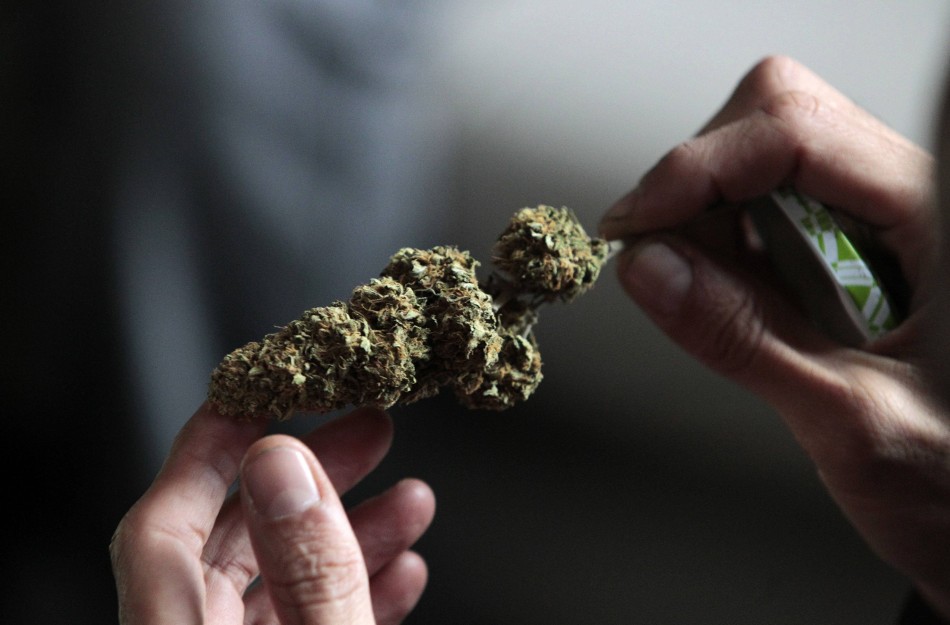
A judge checks on a marijuana sample during a judging session at Uruguay's second

“Scientists are looking at the potential use of cannabis to treat and potentially cure severe forms of epilepsy.

The medical benefits of medical marijuana for neurological conditions like epilepsy are highly debated.

Examining the potential use of the drug, a series of articles in the journal Epilepsia, a journal of the International League Against Epilepsy, looks at its potential use for treating the syndrome.

Edward Maa, from the Comprehensive Epilepsy Program at Denver Health in Denver, Colorado, looks at a case study of a child with Dravet syndrome – a very severe form of epilepsy.

In the case, a mother provided her child with a strain of medical marijuana high in Cannabidiol (CBD) and tetrahydrocannabinol (THC) known as Charlotte’s Web.

When used with the child’s normal drug regime, seizures dropped from 50 convulsions per day to just two or three per month.”

http://www.ibtimes.co.uk/potential-cure-epilepsy-cannabis-vastly-reduces-seizures-boy-dravet-syndrome-1449505

http://www.thctotalhealthcare.com/category/dravet-syndome/


Marijuana Effectively Reduces Seizures in Epilepsy Patients

marijuanas

“Medicinal uses of marijuana have been a matter for heated debate for quite some time now. A review by American Academy of neurology collated all available information on marijuana use for brain disease treatment and concluded that except for treating symptoms of multiple sclerosis, there is no hard evidence in favor of medical usage of marijuana.

But now some articles have been published in the journal Epilepsia that contradicts the earlier review. One of these articles is a case study of a family living in Denver, CO. The child in the family suffers from a severe form of epilepsy known as Dravet Syndrome and used to have frequent seizures, as many as 50 convulsions a day. But the child was given “Charlotte’s Web”- a marijuana strain with high levels of cannabidiol (CBD) and tetrahydrocannabinol (THC). Reportedly, the seizures decreased considerably and now the child suffers from only 2 or 3 seizures each month.

According to the author of the article, Dr. Edward Maa, “As medical professionals it is important that we further the evidence of whether CBD in cannabis is an effective antiepileptic therapy.””

http://www.newsonwellness.com/2014/05/marijuana-effectively-reduces-seizures-epilepsy-patients/

http://www.thctotalhealthcare.com/category/epilepsy-2/

Δ9-tetrahydrocannabinol prevents methamphetamine-induced neurotoxicity.

“Methamphetamine (METH) is a potent psychostimulant with neurotoxic properties…

Preclinical studies have shown that natural (Δ9-tetrahydrocannabinol, Δ9-THC) and synthetic cannabinoid CB1 and CB2 receptor agonists exert neuroprotective effects on different models of cerebral damage. Here, we investigated the neuroprotective effect of Δ9-THC on METH-induced neurotoxicity…

Our results indicate that Δ9-THC reduces METH-induced brain damage via inhibition of nNOS expression and astrocyte activation through CB1-dependent and independent mechanisms, respectively.”

http://www.ncbi.nlm.nih.gov/pubmed/24844285

Full-text: http://www.ncbi.nlm.nih.gov/pmc/articles/PMC4028295/