Cannabinoids Decrease the Th17 Inflammatory Autoimmune Phenotype.

“Cannabinoids, the Cannabis constituents, are known to possess anti-inflammatory properties but the mechanisms involved are not understood. Here we show that the main psychoactive cannabinoid, Δ-9-tetrahydrocannabinol (THC), and the main nonpsychoactive cannabinoid, cannabidiol (CBD), markedly reduce the Th17 phenotype which is known to be increased in inflammatory autoimmune pathologies such as Multiple Sclerosis…

Pretreatment with CBD also resulted in increased levels of the anti-inflammatory cytokine IL-10. Interestingly, CBD and THC did not affect the levels of TNFα and IFNγ. The downregulation of IL-17 secretion by these cannabinoids does not seem to involve the CB1, CB2, PPARγ, 5-HT1A or TRPV1 receptors…

In conclusion, the results show a unique cannabinoid modulation of the autoimmune cytokine milieu combining suppression of the pathogenic IL-17 and IL-6 cytokines along with boosting the expression of the anti-inflammatory cytokine IL-10.”
http://www.ncbi.nlm.nih.gov/pubmed/23892791

The use of cannabinoids in chronic pain.

“We present the case of a 56-year-old man who developed chronic pain following the excision of a facial cancer that was poorly controlled despite multiple analgesic medications. Following the starting of nabilone (a synthetic cannabinoid) his pain control was greatly improved and this had a huge impact on his quality of life.

We also managed to significantly reduce his doses of opioid analgesia and ketamine.

We review the current literature regarding the medicinal use of cannabinoids, with an emphasis on chronic pain, in an attempt to clarify their role and how to select patients who may benefit from this treatment.”

http://www.ncbi.nlm.nih.gov/pubmed/23893276

The Hypocretin/Orexin Receptor-1 as a Novel Target to Modulate Cannabinoid Reward.

“Although there is a high prevalence of users who seek treatment for cannabis dependence, no accepted pharmacologic treatment is available to facilitate and maintain abstinence.

 The hypocretin/orexin system plays a critical role in drug addiction, but the potential participation of this system in the addictive properties of cannabinoids is unknown.

 We investigated…  studies were performed to evaluate dopamine extracellular levels in the nucleus accumbens after acute Δ9-tetrahydrocannabinol administration..

… role of Hcrtr-1 in the reinforcing and motivational properties of WIN55,212-2 (THC) was confirmed…

CONCLUSIONS:

These findings demonstrate that Hcrtr-1 modulates the reinforcing properties of cannabinoids, which could have a clear therapeutic interest.”

http://www.ncbi.nlm.nih.gov/pubmed/23896204

Palmitoylethanolamide: From endogenous cannabimimetic substance to innovative medicine for the treatment of cannabis dependence.

“Palmitoylethanolamide (PEA) is a fatty acid amide showing some pharmacodynamic similarities with Δ9-tetrahydrocannabinol, the principal psychoactive compound present in the cannabis plant.

Like Δ9-tetrahydrocannabinol, PEA can produce a direct or indirect activation of cannabinoid receptors.

 Furthermore, it acts as an agonist at TRPV1 receptor.

The hypothesis is that PEA has anti-craving effects in cannabis dependent patients, is efficacious in the treatment of withdrawal symptoms, produces a reduction of cannabis consumption and is effective in the prevention of cannabis induced neurotoxicity and neuro-psychiatric disorders.”

http://www.ncbi.nlm.nih.gov/pubmed/23896215

Analysis of THCA synthase gene expression in cannabis: A preliminary study by real-time quantitative PCR.

“In this paper we describe analyses performed by Real-Time Reverse-Transcriptase Polymerase Chain Reaction (real-time RT-PCR) on RNA of 12 samples, carried out for forensic purposes to investigate a correlation between tetrahydrocannabinol (THC) concentration in Cannabis and the tetrahydrocannabinol acid synthase (THCAS) gene expression. Samples were obtained from an experimental cultivation of declared potency Cannabis variety seeds and from seizures. The Rubisco gene and the 26S ribosomal RNA gene were used as internal control genes for their constant expression and stability. As results we found minor gene expression in samples from leaves of young plants. Further, grouping results for cannabis samples with similar characteristics, we have found an increased relative expression in samples with the highest percentage of THC coming from seized sample and adult plants.”

http://www.ncbi.nlm.nih.gov/pubmed/23890639

Anti-inflammatory activity of topical THC in DNFB-mediated mouse allergic contact dermatitis independent of CB1 and CB2 receptors.

“∆9 -Tetrahydrocannabinol (THC), the active constituent of Cannabis sativa, exerts its biological effects in part through the G-protein-coupled CB1 and CB2 receptors, which were initially discovered in brain and spleen tissue, respectively. However, THC also has CB1/2 receptor-independent effects. Because of its immune-inhibitory potential, THC and related cannabinoids are being considered for the treatment of inflammatory skin diseases.

Here we investigated the mechanism of the anti-inflammatory activity of THC and the role of CB1 and CB2 receptors…

CONCLUSIONS:

Topically applied THC can effectively attenuate contact allergic inflammation by decreasing keratinocyte-derived pro-inflammatory mediators that orchestrate myeloid immune cell infiltration independent of CB1/2 receptors.

This has important implications for the future development of strategies to harness cannabinoids for the treatment of inflammatory skin diseases.”

http://www.ncbi.nlm.nih.gov/pubmed/23889474

Anti-cancer effects of curcumin (CUR) and tetrahydrocurcumin (THC) – Science

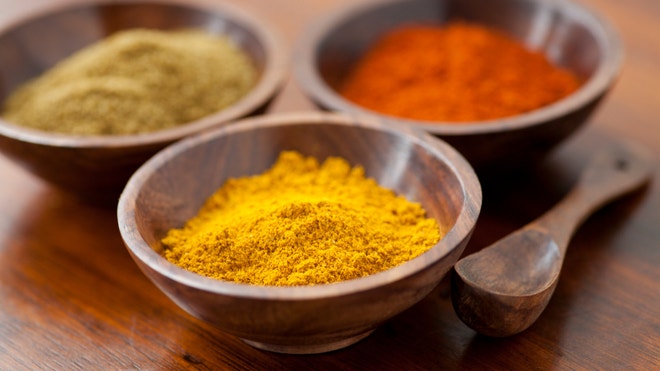
Curry Powder.jpg
 

“Anticancer potential of curcumin: preclinical and clinical studies.” http://www.ncbi.nlm.nih.gov/pubmed/12680238

“Tetrahydrocurcumin is more effective than curcumin in preventing… colon carcinogenesis. Tetrahydrocurcumin (THC), a major metabolite of curcumin (CUR), has been demonstrated to be anti-cancerogenic and anti-angiogenic…these results demonstrated for the first time the in vivo chemopreventive efficacy and molecular mechanisms of dietary THC…”  http://www.ncbi.nlm.nih.gov/pubmed/21887819

“Tetrahydrocurcumin inhibits HT1080 cell migration and invasion via downregulation of MMPs and uPA.” http://www.ncbi.nlm.nih.gov/pubmed/18565284

“Plant-derived anticancer agents – curcumin in cancer prevention and treatment.”  http://www.ncbi.nlm.nih.gov/pubmed/23700916

“Anti-cancer and anti-angiogenic effects of curcumin and tetrahydrocurcumin on implanted hepatocellular carcinoma in nude mice” http://www.ncbi.nlm.nih.gov/pmc/articles/PMC2701520/

“Mechanisms of cancer chemoprevention by curcumin.” http://www.ncbi.nlm.nih.gov/pubmed/11370761 

“Tetrahydrocurcumin, a major metabolite of curcumin, induced autophagic cell death through coordinative modulation of PI3K/Akt-mTOR and MAPK signaling pathways in human leukemia HL-60 cells.” http://www.ncbi.nlm.nih.gov/pubmed/21928294

 “Synergistic anticancer activity of curcumin and catechin: an in vitro study using human cancer cell lines.” http://www.ncbi.nlm.nih.gov/pubmed/21780253 

“Synergistic anticancer effects of curcumin and resveratrol in Hepa1-6 hepatocellular carcinoma cells.” http://www.ncbi.nlm.nih.gov/pubmed/23446753

“Curcumin enhances the anticancer effects of trichostatin a in breast cancer cells.” http://www.ncbi.nlm.nih.gov/pubmed/22290509

 “Curcumin polymers as anticancer conjugates.” http://www.ncbi.nlm.nih.gov/pubmed/20591475

“Curcumin Potentiates The Ability of Sunitinib to Eliminate the VHL-lacking Renal Cancer Cells 786-O: Rapid Inhibition of Rb Phosphorylation as a Preamble to Cyclin D1 Inhibition.” http://www.ncbi.nlm.nih.gov/pubmed/23848205

 “RL66 a second-generation curcumin analog has potent in vivo and in vitro anticancer activity in ER‑negative breast cancer models.” http://www.ncbi.nlm.nih.gov/pubmed/22971638

“ApoE3 mediated polymeric nanoparticles containing curcumin: apoptosis induced in vitro anticancer activity against neuroblastoma cells.” http://www.ncbi.nlm.nih.gov/pubmed/22890189

 “Inclusion complex of novel curcumin analogue CDF and β-cyclodextrin (1:2) and its enhanced in vivo anticancer activity against pancreatic cancer.” http://www.ncbi.nlm.nih.gov/pubmed/22322899

“Water-soluble antioxidants improve the antioxidant and anticancer activity of low concentrations of curcumin in human leukemia cells.” http://www.ncbi.nlm.nih.gov/pubmed/15700780

“Superior anticancer efficacy of curcumin-loaded nanoparticles against lung cancer.” http://www.ncbi.nlm.nih.gov/pubmed/23786839

“Dose-escalation and pharmacokinetic study of nanoparticle curcumin, a potential anticancer agent with improved bioavailability, in healthy human volunteers.” http://www.ncbi.nlm.nih.gov/pubmed/21603867

“Apigenin shows synergistic anticancer activity with curcumin by binding at different sites of tubulin.” http://www.ncbi.nlm.nih.gov/pubmed/23485682

 “Anticancer and carcinogenic properties of curcumin: considerations for its clinical development as a cancer chemopreventive and chemotherapeutic agent.” http://www.ncbi.nlm.nih.gov/pubmed/18496811

“Curcumin-free turmeric exhibits anti-inflammatory and anticancer activities: Identification of novel components of turmeric.” http://www.ncbi.nlm.nih.gov/pubmed/23847105

“Perspectives on new synthetic curcumin analogs and their potential anticancer properties.” http://www.ncbi.nlm.nih.gov/pubmed/23116312

“Synthesis and evaluation of curcumin-related compounds for anticancer activity.” http://www.ncbi.nlm.nih.gov/pubmed/22551677

 “Curcumin and its analogues: potential anticancer agents.” http://www.ncbi.nlm.nih.gov/pubmed/20027668

“Safe and targeted anticancer therapy for ovarian cancer using a novel class of curcumin analogs.” http://www.ncbi.nlm.nih.gov/pmc/articles/PMC3665575/

“Highly active anticancer curcumin analogues.” http://www.ncbi.nlm.nih.gov/pubmed/17569206 

Kurkumina

Medicinal Cannabis Does Not Influence the Clinical Pharmacokinetics of Irinotecan and Docetaxel

“For the past 4,000 years, patients and doctors of each era have resorted to cannabis when conventional treatments were ineffective or lacking. Indeed, in oncology beneficial effects have been reported for cancer-associated anorexia, chemotherapy-induced nausea and vomiting, and palliation…

The only U.S. Food and Drug Administration (FDA)-approved medicinal cannabis products are an oral formulation containing dronabinol (Marinol®)… the synthetic version of delta9-tetrahydrocannabinol (THC), the main pharmacologically active cannabinoid, and capsules containing nabilone, an analog of dronabinol (Cesamet®)…

…many patients claim (subjectively) that a whole or partially purified extract of Cannabis sativa L. offers advantages over a single isolated ingredient…

We anticipated an increased use of medicinal cannabis concurrent with anticancer drugs, and undertook a drug-interaction study to evaluate the effect of concomitant medicinal cannabis on the pharmacokinetics of irinotecan and docetaxel…

Conclusion. Coadministration of medicinal cannabis, as herbal tea, in cancer patients treated with irinotecan or docetaxel does not significantly influence the plasma pharmacokinetics of these drugs. The evaluated variety of medicinal cannabis can be administered concomitantly with both anticancer agents without dose adjustments.”

Full text: http://theoncologist.alphamedpress.org/content/12/3/291.long

Marijuana for migraines – USAToday

“Does marijuana have medicinal value for migraine headaches and other maladies?

“There is no question that cannabis is beneficial medicinally,” Bearman says. With migraines, “some people say it makes the pain go completely away or can prevent migraines from coming on. Others say it lessens the pain and allows them to focus on other things to get their work done.”

What cannabis does to alleviate migraines is complicated and not completely understood. “But it works on serotonin and dopamine receptors, and has anti-inflammatory activity,” says Russo, who is just finishing a paper for the Journal of Cannabis Therapeutics.

“Basically, it is a multi-modality agent that works on various aspects of migraine in a way that’s really unique. And it’s not just the THC — tetrahydrocannabinol, the psychoactive chemical — that does it. It appears now that it’s the result of the interaction of a combination of other cannabinoids and also the essential oils in the plant.”

Unlike most headache medications, cannabis is unique in that it works as both a preventive agent and an analgesic. “At any point in the migraine, they could use cannabis by smoking, vaporizer, etc., and about 80% of these people get significant or total relief,” he says. “And, if someone has a chronic migraine, daily use in whatever form will often lead to a complete remission.””

http://usatoday30.usatoday.com/life/health/doctor/lhdoc227.htm

The Use of Marijuana or Synthetic Cannabinoids for the Treatment of Headache – MedScape

“Pharmacological preparations of cannabinoid compounds have a variety of therapeutic uses in medicine, including different pain syndromes, but have not been previously reported as beneficial for cluster headache.We present a patient with cluster headache who was refractory to multiple acute and preventive medications but successfully aborted his attacks with recreational marijuana use; subsequent use of dronabinol provided equally effective pain relief. The beneficial effect may be related to the high concentration of cannabinoid receptors in the hypothalamus, which has been implicated as a site of dysfunction in neuroimaging studies of patients with cluster headache.

The plant Cannabis sativa has a long history of medical use in the treatment of pain and spasms, the promotion of sleep, and the suppression of nausea and vomiting. However, in the early 1970s cannabis was classified in the Narcotic Acts in countries all over the world as having no therapeutic benefit; therefore, it cannot be prescribed by physicians or dispensed by pharmacists. In the light of this contradictory situation, an increasing number of patients practice a self-prescription with cannabis products for relieving a variety of symptoms.

  The majority of patients used natural cannabis products such as marihuana, hashish, and an alcoholic tincture; in just 5 cases dronabinol (Marinol) was taken by prescription…

 …this survey demonstrates a successful use of cannabis products for the treatment of a multitude of various illnesses and symptoms. This use was usually accompanied only by slight and in general acceptable side effects…”

http://www.medscape.com/viewarticle/738529