“Background/objectives: Use of cannabis is increasing in a variety of populations in the United States; however, few investigations about how and for what reasons cannabis is used in older populations exist.
Design: Anonymous survey.
Setting: Geriatrics clinic.
Participants: A total of 568 adults 65 years and older.
Intervention: Not applicable.
Measurements: Survey assessing characteristics of cannabis use.
Results: Approximately 15% (N = 83) of survey responders reported using cannabis within the past 3 years. Half (53%) reported using cannabis regularly on a daily or weekly basis, and reported using cannabidiol-only products (46%).
The majority (78%) used cannabis for medical purposes only, with the most common targeted conditions/symptoms being pain/arthritis (73%), sleep disturbance (29%), anxiety (24%), and depression (17%). Just over three-quarters reported cannabis “somewhat” or “extremely” helpful in managing one of these conditions, with few adverse effects.
Just over half obtained cannabis via a dispensary, and lotions (35%), tinctures (35%), and smoking (30%) were the most common administration forms. Most indicated family members (94%) knew about their cannabis use, about half reported their friends knew, and 41% reported their healthcare provider knowing. Sixty-one percent used cannabis for the first time as older adults (aged ≥61 years), and these users overall engaged in less risky use patterns (e.g., more likely to use for medical purposes, less likely to consume via smoking).
Conclusion: Most older adults in the sample initiated cannabis use after the age of 60 years and used it primarily for medical purposes to treat pain, sleep disturbance, anxiety, and/or depression. Cannabis use by older adults is likely to increase due to medical need, favorable legalization, and attitudes.”
https://pubmed.ncbi.nlm.nih.gov/33026117/
https://onlinelibrary.wiley.com/doi/10.1111/jgs.16833
“Study Finds Older Adults Using Cannabis to Treat Common Health Conditions” https://health.ucsd.edu/news/releases/Pages/2020-10-07-study-finds-older-adults-using-cannabis-to-treat-common-health-conditions.aspx
 “∆ 9 -Tetrahydrocannabinol (∆9 -THC), the active phytocannabinoid in cannabis, is virtually an adjunct to the endogenous endocannabinoid signaling system.
 “Cannabidiol (CBD), a natural occurring phytocannabinoid, is used extensively in consumer products ranging from foods to shampoos, topical oils and lotions.
 “Δ9 -Tetrahydrocannabinol (THC), the main bioactive compound found in the plant Cannabis sativa, exerts its effects by activating cannabinoid receptors present in many neural cells.
 “In the absence of effective antivirals and vaccination, the pandemic of COVID-19 remains the most significant challenge to our health care system in decades. There is an urgent need for definitive therapeutic intervention.
 “In the present study, the antimicrobial effect of Cannabis sativa Futura 75 was evaluated both in vitro against foodborne bacterial pathogens, and on food against naturally occurring microbial groups of minced meat stored for 8 days at 4°C.
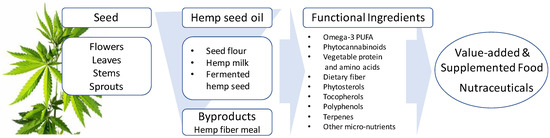
 “Hemp (Cannabis sativa L.) seed contains high contents of various nutrients, including fatty acids and proteins.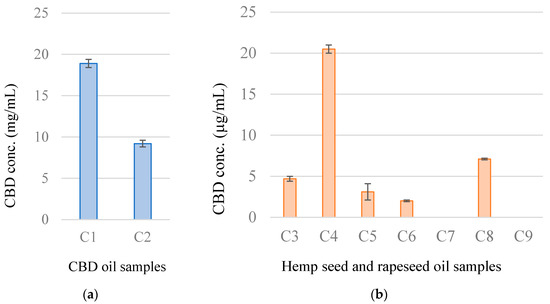
 “Cannabis products have been used for centuries by humans for recreational and medical purposes. Resent research, proposed the promising therapeutic potential of cannabis and related cannabinoids for a wide range of medical conditions, including psychiatric and neurological diseases.
 “Cannabis and cannabinoid-based extracts have long been utilized for their perceived therapeutic value, and support for the legalization of cannabis for medicinal purposes continues to increase worldwide.
 “Industrial hemp (Cannabis sativa L., Cannabaceae) is an ancient cultivated plant originating from Central Asia and historically has been a multi-use crop valued for its fiber, food, and medicinal uses. Various oriental and Asian cultures kept records of its production and numerous uses.