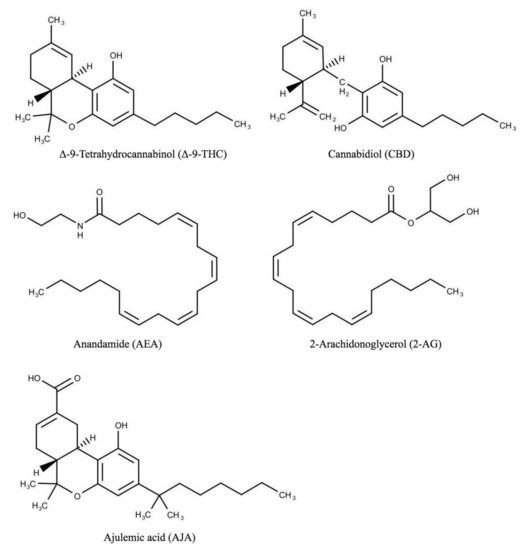
 “Cannabis sativa L. turned out to be a valuable source of chemical compounds of various structures, showing pharmacological activity. The most important groups of compounds include phytocannabinoids and terpenes.
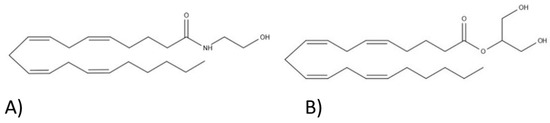
The pharmacological activity of Cannabis (in epilepsy, sclerosis multiplex (SM), vomiting and nausea, pain, appetite loss, inflammatory bowel diseases (IBDs), Parkinson’s disease, Tourette’s syndrome, schizophrenia, glaucoma, and coronavirus disease 2019 (COVID-19)), which has been proven so far, results from the affinity of these compounds predominantly for the receptors of the endocannabinoid system (the cannabinoid receptor type 1 (CB1), type two (CB2), and the G protein-coupled receptor 55 (GPR55)) but, also, for peroxisome proliferator-activated receptor (PPAR), glycine receptors, serotonin receptors (5-HT), transient receptor potential channels (TRP), and GPR, opioid receptors.
The synergism of action of phytochemicals present in Cannabis sp. raw material is also expressed in their increased bioavailability and penetration through the blood-brain barrier. This review provides an overview of phytochemistry and pharmacology of compounds present in Cannabis extracts in the context of the current knowledge about their synergistic actions and the implications of clinical use in the treatment of selected diseases.”
https://www.mdpi.com/1422-0067/22/2/778
“The history of many drugs currently used in medicine has its origins in plant raw materials.”
“Cannabis sativa L. is one of the most ancient plant species used by humans for many purposes. Besides medicinal use, it also serves as a fiber; food; and is an important raw material for the production of rope, textiles, and paper.”
“The various pharmacological actions for selected combinations of chemical compounds present in Cannabis presented in this review constitute an argument for clinical effectiveness based on a multi-fragment affinity for multiple receptors. Therefore, the necessity to search for new indications of the pharmacological application of Cannabis products is justified with regards to the search for target points within the endocannabinoid system and outside of it.”
“The Endocannabinoid System: A Potential Target for the Treatment of Various Diseases”
 “The Cannabis sativa plant has been used medicinally and recreationally for thousands of years, but recently only relatively some of its constituents have been identified.
  “α-Pinene represents a member of the monoterpene class and is highly distributed in higher plants like conifers, Juniper ssp. and Cannabis ssp.
 “Introduction: Cannabis sativa L. (C. sativa) is used since ancient times to produce fabrics, baskets, and cords. Later, different ethnic groups used to burn the leaves and flowers of psychotropic cultivars with high Δ9-tetrahydrocannabinol (D9-THC) levels, during the religious or propitiatory rites to alter the state of consciousness. To date, it is not known whether also nonpsychotropic cultivars of C. sativa were used during these rites, and whether these varieties could have an effect on human behavior.
 “Neoechinulins are diketopiperazine type indole alkaloids that demonstrate radical scavenging, anti-inflammatory, antiviral, anti-neurodegenerative, neurotrophic factor-like, anticancer, pro-apoptotic, and anti-apoptotic properties.
  “Oral ulcer is a common oral inflammatory lesion accompanied by severe pain but with few effective treatments. Cannabidiol (CBD) is recently emerging for its therapeutic potential in a range of diseases, including inflammatory conditions and cancers.
 “The use of cannabis for skin diseases and hair regrowth is at the preliminary stage.
 “Significant growth of interest in cannabis (