
 “With the current COVID-19 pandemic, caused by the severe acute respiratory syndrome coronavirus 2 (SARS-CoV-2), there is an urgent need for new therapies and prevention strategies that can help curtail disease spread and reduce mortality.
The inhibition of viral entry and thus spread is a plausible therapeutic avenue. SARS-CoV-2 uses receptor-mediated entry into a human host via the angiotensin-converting enzyme 2 (ACE2), which is expressed in lung tissue as well as the oral and nasal mucosa, kidney, testes and gastrointestinal tract. The modulation of ACE2 levels in these gateway tissues may be an effective strategy for decreasing disease susceptibility.
Cannabis sativa, especially those high in the anti-inflammatory cannabinoid cannabidiol (CBD), has been found to alter gene expression and inflammation and harbour anti-cancer and anti-inflammatory properties. However, its effects on ACE2 expression remain unknown.
Working under a Health Canada research license, we developed over 800 new C. sativa cultivars and hypothesized that high-CBD C. sativa extracts may be used to down-regulate ACE2 expression in target COVID-19 tissues. Using artificial 3D human models of oral, airway and intestinal tissues, we identified 13 high-CBD C. sativa extracts that decrease ACE2 protein levels. Some C. sativa extracts down-regulate serine protease TMPRSS2, another critical protein required for SARS-CoV-2 entry into host cells.
While our most effective extracts require further large-scale validation, our study is important for future analyses of the effects of medical cannabis on COVID-19. The extracts of our most successful novel high-CBD C. sativa lines, pending further investigation, may become a useful and safe addition to the prevention/treatment of COVID-19 as an adjunct therapy.”
 “Objectives: To assess the motivation of cancer survivors to consume medical cannabis and to assess the patterns of use, perceived efficacy, as well as side and adverse effects.
 “The COVID-19 pandemic caused by SARS-CoV-2 is a deadly disease afflicting millions. The pandemic continues affecting population due to nonavailability of drugs and vaccines. The pathogenesis and complications of infection mainly involve hyperimmune-inflammatory responses. Thus, therapeutic strategies rely on repurposing of drugs aimed at reducing infectivity and inflammation and modulate immunity favourably.
 “Background: Frontotemporal dementia (FTD) is characterized by progressive deterioration in behaviors, executive function and/or language. The behavioral variant (Bv) is characterized by disinhibition and obsessive/compulsive behaviors. These symptoms are sometimes resistant to medications. This series examines patients suffering with treatment-resistant Bv-FTD who were prescribed cannabinoid and related compounds for other indications.
 “The increasing legalization of Cannabis for recreational and medicinal purposes in the United States has spurred renewed interest in the therapeutic potential of cannabinoids (CBs) for human disease.
 “The ability of hemp (Cannabis sativa L.) inflorescence extract to counteract lipid oxidation was studied in stripped linseed oil.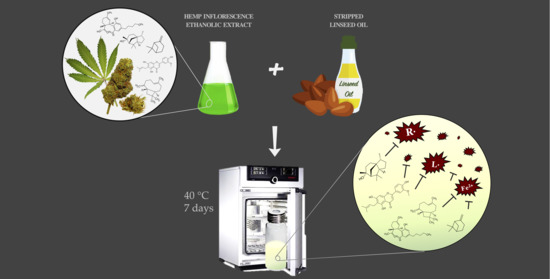
 “Cannabis has been used as a medicine for millennia. Prohibition in the mid-20th century precluded early scientific investigation.
 “A large number of cannabinoids have been discovered that could play a role in mitigating cardiac affections. However, none of them has been as widely studied as cannabidiol (CBD), most likely because, individually, the others offer only partial effects or can activate potential harmful pathways.
 “Medical cannabis and individual cannabinoids, such as tetrahydrocannabinol (THC) and cannabidiol (CBD), are receiving growing attention in both the media and the scientific literature. The Cannabis plant, however, produces over 100 different cannabinoids, and cannabigerol (CBG) serves as the precursor molecule for the most abundant phytocannabinoids.
 “The endocannabinoid (eCB) system encompasses the eCBs anandamide and 2-arachidonoylglycerol, their anabolic/catabolic enzymes, and the cannabinoid CB1 and CB2 receptors. Its expansion to include several eCB-like lipid mediators, their metabolic enzymes, and their molecular targets, forms the endocannabinoidome (eCBome).