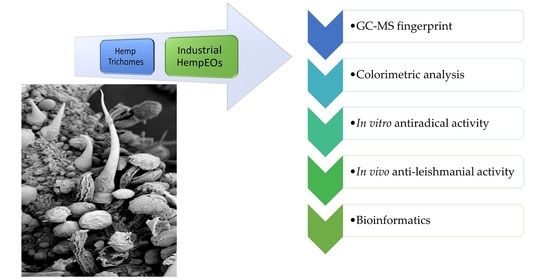
 “Industrial hemp is a multiuse crop that has been widely cultivated to produce fibers and nutrients. The capability of the essential oil (EO) from inflorescences as antimicrobial agent has been reported. However, literature data are still lacking about the hemp EO antiprotozoal efficacy in vivo.
The present study aims to unravel this concern through the evaluation of the efficacy of hemp EOs (2.5 mL/kg, intraperitoneally) of three different cultivars, namely Futura 75, Carmagnola selezionata and Eletta campana, in mice intraperitoneally infected with Leishmania tropica. A detailed description of EO composition and targets-components analysis is reported.
Myrcene, α-pinene and E-caryophyllene were the main components of the EOs, as indicated by the gas-chromatographic analysis. However, a prominent position in the scenario of the theoretical interactions underlying the bio-pharmacological activity was also occupied by selina-3,7(11)-diene, which displayed affinities in the micromolar range (5.4-28.9) towards proliferator-activated receptor α, cannabinoid CB2 receptor and acetylcholinesterase. The content of this compound was higher in Futura 75 and Eletta campana, in accordance with their higher scavenging/reducing properties and efficacy against the tissue wound, induced by L. tropica.
Overall, the present study recommends hemp female inflorescences, as sources of biomolecules with potential pharmacological applications, especially towards infective diseases.”
https://pubmed.ncbi.nlm.nih.gov/33673274/
https://www.mdpi.com/2218-273X/11/2/272

 “Cannabinoids are a family of heterogeneous compounds that mostly interact with receptors eliciting several physiological effects both in the central and peripheral nervous systems and in peripheral organs. They exert anticancer action by modulating signaling pathways involved in cancer progression; furthermore, the effects induced by their use depend on both the type of tumor and their action on the components of the endocannabinoid system. This review will explore the mechanism of action of the cannabinoids in signaling pathways involved in cancer proliferation, neovascularisation, migration, invasion, metastasis, and tumor angiogenesis.”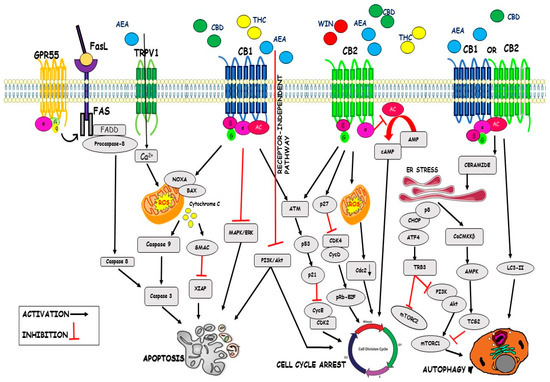
 “Agents targeting the endocannabinoid system (ECS) have gained attention as potential cancer treatments. Given recent evidence that cannabinoid receptor 2 (CB2R) regulates lymphocyte development and inflammation, we performed studies on CB2R in the immune response against melanoma. Analysis of The Cancer Genome Atlas (TCGA) data revealed a strong positive correlation between CB2R expression and survival, as well as B cell infiltration in human melanoma. In a murine melanoma model, CB2R expression reduced the growth of melanoma as well as the B cell frequencies in the tumor microenvironment (TME), compared to CB2R-deficient mice. In depth analysis of tumor-infiltrating B cells using single-cell RNA sequencing suggested a less differentiated phenotype in tumors from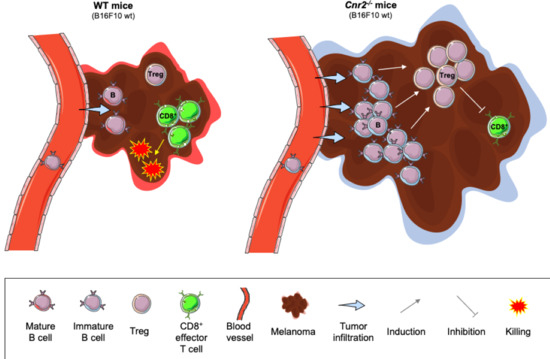
 “Colorectal cancer (CRC) is between the top three occurring cancers worldwide. The anticancer effects of Cannabinoid receptor 2 (CB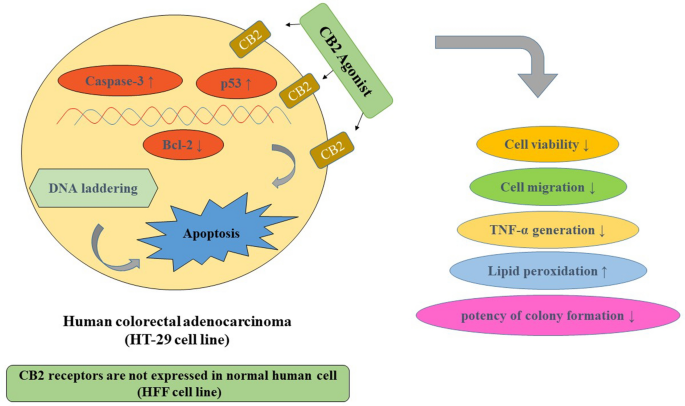
 “
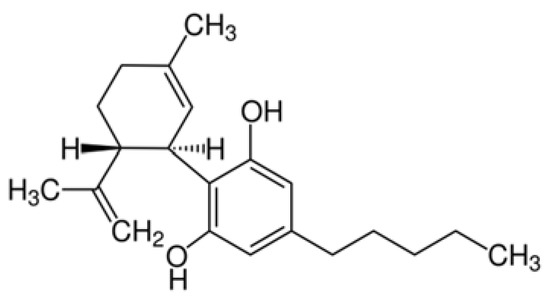
“ “We previously reported that cannabidiol (CBD), a cannabinoid with a low toxicity profile, downregulated the expression of the prometastatic gene inhibitor of DNA binding 1 (
 “The transcription factor NFκB drives neoplastic progression of many cancers including primary brain tumors (glioblastoma; GBM). Precise therapeutic modulation of NFκB activity can suppress central oncogenic signalling pathways in GBM, but clinically applicable compounds to achieve this goal have remained elusive.