Cannabis and Neuropsychiatric Disorders: An Updated Review.

 Image result for Acta Neurol Taiwan. journal“Cannabis plant has the scientific name called Cannabis sativa L. Cannabis plant has many species, but there are three main species including Cannabis sativa, Cannabis indica and Cannabis ruderalis. Over 70 compounds isolated from cannabis species are called cannabinoids (CBN).

Cannabinoids produce over 100 naturally occurring chemicals. The most abundant chemicals are delta-9-tetrahydrocannabinol (THC) and Cannabidiol (CBD). THC is psychotropic chemical that makes people feel “high” while CBD is nonpsychotropic chemical. However, cannabinoid chemicals are not found only in the cannabis plant, they are also produced by the mammalian body, called endocannabinoids and in the laboratory, called synthesized cannabinoids.

Endocannabinoids are endogenous lipid-based retrograde neurotransmitters that bind to cannabinoid receptors, and cannabinoid receptor proteins that are expressed throughout the mammalian central nervous system including brain and peripheral nervous system. There are at least two types of endocannabinoid receptors (CB1 and CB2) which are G-protein coupled receptors.

CB1 receptors are particularly abundant in the frontal cortex, hippocampus, basal ganglia, hypothalamus and cerebellum, spinal cord and peripheral nervous system. They are present in inhibitory GABA-ergic neurons and excitatory glutamatergic neurons. CB2 receptor is most abundantly found on cells of the immune system, hematopoietic cells and glia cells. CB2 is mainly expressed in the periphery under normal healthy condition, but in conditions of disease or injury, this upregulation occurs within the brain, and CB2 is therefore expressed in the brain in unhealthy states.

Cannabis and cannabinoid are studied in different medical conditions. The therapeutic potentials of both cannabis and cannabinoid are related to the effects of THC, CBD and other cannabinoid compounds. However, the “high” effect of THC in cannabis and cannabinoid may limit the clinical use, particularly, the study on the therapeutic potential of THC alone is more limited.

This review emphasizes the therapeutic potential of CBD and CBD with THC. CBD has shown to have benefit in a variety of neuropsychiatric disorders including autism spectrum disorder, anxiety, psychosis, neuropathic pain, cancer pain, HIV, migraine, multiple sclerosis, Alzheimer disease, Parkinson disease, Huntington disease, hypoxic-ischemic injury and epilepsy. CBD is generally well tolerated. Most common adverse events are diarrhea and somnolence. CBD also shows significantly low abuse potential.”

https://www.ncbi.nlm.nih.gov/pubmed/31867704

Use of cannabidiol in anxiety and anxiety-related disorders.

“Cannabidiol (CBD) has a proposed novel role in the management of anxiety owing to its actions on the endocannabinoid system.

The purpose of this systematic review was to evaluate the current evidence on the safety and efficacy of CBD in anxiety and anxiety-related disorders.

RESULTS:

Eight articles were included in the review: 6 small, randomized controlled trials; 1 case series; and 1 case report. These studies examined the role of CBD in the anxiety response of healthy volunteers; in generalized anxiety disorder; in social anxiety disorder; and in the anxiety component of posttraumatic stress syndrome. No articles that evaluated CBD in panic disorder, specific phobia, separation anxiety, and obsessive-compulsive disorder were identified. In the studies, CBD was administered orally as a capsule or as a sublingual spray and as either monotherapy or adjunctive therapy. Doses varied widely, with studies employing fixed CBD doses ranging from 6 mg to 400 mg per dose. Various anxiety assessment scales were used in the studies to assess efficacy, with CBD demonstrating improved clinical outcomes among the instruments. In general, CBD was well-tolerated and associated with minimal adverse effects, with the most commonly noted adverse effects being fatigue and sedation.

CONCLUSION:

CBD has a promising role as alternative therapy in the management of anxiety disorders. However, more studies with standardized approaches to dosing and clinical outcome measurements are needed to determine the appropriate dosing strategy for CBD and its place in therapy.”

https://www.ncbi.nlm.nih.gov/pubmed/31866386

https://www.japha.org/article/S1544-3191(19)30514-X/fulltext

Endocannabinoid system and adult neurogenesis: a focused review.

Current Opinion in Pharmacology“The endocannabinoid system (eCB) is a ubiquitous lipid signaling system composed of at least two receptors, their endogenous ligands, and the enzymes responsible for their synthesis and degradation. Within the brain, the eCB system is highly expressed in the hippocampus and controls basic biological processes, including neuronal proliferation, migration and differentiation, which are intimately linked with embryonal neurogenesis. Accumulated preclinical evidence has indicated that eCBs play a major role also in regulating adult neurogenesis. Increased cannabinoid receptor activity, either by increased eCB content or by pharmacological blockade of their degradation, produces neurogenic effects alongside rescue of phenotypes in animal models of different psychiatric and neurological disorders. Therefore, in the light of the higher therapeutic potential of adult neurogenesis compared to the embryonic one, here we sought to summarize the most recent evidence pointing towards a neurogenic role for eCBs in the adult brain, both under normal and pathological conditions.”

https://www.ncbi.nlm.nih.gov/pubmed/31864101

“The endocannabinoid system is involved in all aspects of the biology of neural stem cells. Selective CB1 and CB2 agonism produces pro-neurogenic effects in different models of brain insults. Further research is needed to characterize the eCB system as a new druggable target for neurogenesis-related diseases.”

https://www.sciencedirect.com/science/article/pii/S1471489219301122?via%3Dihub

Cannabis-based products for pediatric epilepsy: An updated systematic review.

Seizure - European Journal of Epilepsy Home“To provide an up-to-date summary of the benefits and harms of cannabis-based products for epilepsy in children.

METHODS:

We updated our earlier systematic review, by searching for studies published up to May 2019. We included randomized controlled trials (RCTs) and non-randomized studies (NRS) involving cannabis-based products administered to children with epilepsy. Outcomes were seizure freedom, seizure frequency, quality of life, sleep, status epilepticus, death, gastrointestinal adverse events, and emergency room visits.

RESULTS:

Thirty-five studies, including four RCTs, have assessed the benefits and harms of cannabis-based products in pediatric epilepsy (12 since April 2018). All involved cannabis-based products as adjunctive treatment, and most involved cannabidiol. In the RCTs, there was no statistically significant difference between cannabidiol and placebo for seizure freedom (relative risk 6.77, 95 % confidence interval [CI] 0.36-128.38), quality of life (mean difference [MD] 0.6, 95 %CI -2.6 to 3.9), or sleep disruption (MD -0.3, 95 %CI -0.8 to 0.2). Data from both RCTs and NRS suggest that cannabidiol reduces seizure frequency and increases treatment response; however, there is an increased risk of gastrointestinal adverse events.

CONCLUSION:

Newly available evidence supports earlier findings that cannabidiol probably reduces the frequency of seizures among children with drug-resistant epilepsy.”

https://www.ncbi.nlm.nih.gov/pubmed/31865133

https://www.seizure-journal.com/article/S1059-1311(19)30733-2/fulltext

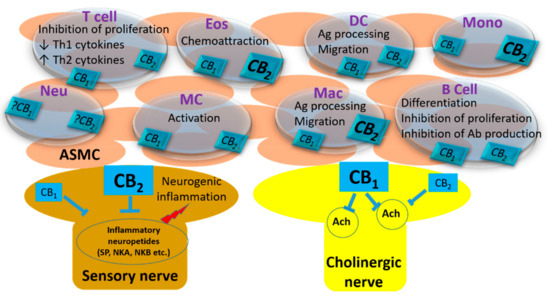
Endocannabinoid System in the Airways.

molecules-logo“Cannabinoids and the mammalian endocannabinoid system is an important research area of interest and attracted many researchers because of their widespread biological effects. The significant immune-modulatory role of cannabinoids has suggested their therapeutic use in several inflammatory conditions. Airways are prone to environmental irritants and stimulants, and increased inflammation is an important process in most of the respiratory diseases. Therefore, the main strategies for treating airway diseases are suppression of inflammation and producing bronchodilation. The ability of cannabinoids to induce bronchodilation and modify inflammation indicates their importance for airway physiology and pathologies. In this review, the contribution of cannabinoids and the endocannabinoid system in the airways are discussed, and the existing data for their therapeutic use in airway diseases are presented.”

https://www.ncbi.nlm.nih.gov/pubmed/31861200

https://www.mdpi.com/1420-3049/24/24/4626

Antidepressant-like effects of β-caryophyllene on restraint plus stress-induced depression.

Behavioural Brain Research“Chronic stress is depressogenic by altering neurotrophic and neuroinflammatory environments of the organism. The endocannabinoid system controls cognitive and emotional responses related with stress through the interaction with endocannabinoid receptors. β-Caryophyllene (BCP) is a CB2 agonist that exhibited anti-inflammatory, analgesic effects but minimal psychoactive effects. To test if BCP exhibits antidepressant-like action, animals were chronically restrained with additional stressors for 28 days, and BCP (25, 50, 100 mg/kg) was intraperitoneally injected once a day during the stress inflicting period. Then despair related behaviors and hippocampal expression of neurotrophic, inflammatory and cannabinoid receptor levels were measured. To test the effect of BCP on long-term depression, field potentials were measured during the application of lipopolysaccharide and low frequency stimulation. In the tail suspension test and forced swim test, chronic stress-induced despair behaviors were reduced by BCP. Also BCP improved the stress-related changes in the hippocampal expression of COX-2, BDNF, and CB2 receptor expression. In organotypic hippocampal slices, BCP reduced the lipopolysaccharide-induced intensification of the long-term depression. In conclusion, BCP improved chronic stress related behavioral and biochemical changes. These results suggest that BCP may be effective in treating depression and stress related mental illnesses.”

https://www.ncbi.nlm.nih.gov/pubmed/31862467

https://linkinghub.elsevier.com/retrieve/pii/S0166432819313348

“β-caryophyllene (BCP) is a common constitute of the essential oils of numerous spice, food plants and major component in Cannabis.”   http://www.ncbi.nlm.nih.gov/pubmed/23138934

“Beta-caryophyllene is a dietary cannabinoid.”    https://www.ncbi.nlm.nih.gov/pubmed/18574142

The impact of cannabis access laws on opioid prescribing.

Journal of Health Economics“While recent research has shown that cannabis access laws can reduce the use of prescription opioids, the effect of these laws on opioid use is not well understood for all dimensions of use and for the general United States population. Analyzing a dataset of over 1.5 billion individual opioid prescriptions between 2011 and 2018, which were aggregated to the individual provider-year level, we find that recreational and medical cannabis access laws reduce the number of morphine milligram equivalents prescribed each year by 11.8 and 4.2 percent, respectively. These laws also reduce the total days’ supply of opioids prescribed, the total number of patients receiving opioids, and the probability a provider prescribes any opioids net of any offsetting effects. Additionally, we find consistent evidence that cannabis access laws have different effects across types of providers, physician specialties, and payers.”

https://www.ncbi.nlm.nih.gov/pubmed/31865260

“The results of this study suggest that passing cannabis access laws reduces the use of prescription opioids across several different measures of opioid prescriptions. Thus, the passage of Recreational cannabis laws (RCLs) or Medical cannabis laws (MCLs) may be a valid policy option for combating the ongoing opioid epidemic, even if these laws were not originally conceived for that purpose.”

https://www.sciencedirect.com/science/article/pii/S0167629618309020?via%3Dihub

THC exposure during adolescence does not modify nicotine reinforcing effects and relapse in adult male mice.

 This study investigated the effects of adolescent exposure to the main psychoactive component of cannabis, ∆9-tetrahydrocannabinol (THC), in the reinforcing properties of nicotine in adult male mice. Possible alterations in relapse to nicotine-seeking behaviour in adult animals due to THC adolescent exposure were also evaluated.

RESULTS:

Adolescent THC treatment did not modify acquisition and extinction of nicotine self-administration in adulthood. Moreover, THC exposure did not alter relapse to nicotine seeking induced by stress or nicotine-associated cues.

CONCLUSIONS:

These results suggest that a history of exposure to THC during adolescence under these particular conditions does not modify the reinforcing effects and seeking behaviour of nicotine in the adult period.”

https://www.ncbi.nlm.nih.gov/pubmed/31858159

https://link.springer.com/article/10.1007%2Fs00213-019-05416-8

Stress-induced modulation of endocannabinoid signaling leads to delayed strengthening of synaptic connectivity in the amygdala.

Image result for pnas“Even a brief exposure to severe stress strengthens synaptic connectivity days later in the amygdala, a brain area implicated in the affective symptoms of stress-related psychiatric disorders. However, little is known about the synaptic signaling mechanisms during stress that eventually culminate in its delayed impact on the amygdala. Hence, we investigated early stress-induced changes in amygdalar synaptic signaling in order to prevent its delayed effects.
Whole-cell recordings in basolateral amygdala (BLA) slices from rats revealed higher frequency of miniature excitatory postsynaptic currents (mEPSCs) immediately after 2-h immobilization stress. This was replicated by inhibition of cannabinoid receptors (CB1R), suggesting a role for endocannabinoid (eCB) signaling.

Stress also reduced N-arachidonoylethanolamine (AEA), an endogenous ligand of CB1R. Since stress-induced activation of fatty acid amide hydrolase (FAAH) reduces AEA, we confirmed that oral administration of an FAAH inhibitor during stress prevents the increase in synaptic excitation in the BLA soon after stress.

Although stress also caused an immediate reduction in synaptic inhibition, this was not prevented by FAAH inhibition. Strikingly, FAAH inhibition during the traumatic stressor was also effective 10 d later on the delayed manifestation of synaptic strengthening in BLA neurons, preventing both enhanced mEPSC frequency and increased dendritic spine-density.

Thus, oral administration of an FAAH inhibitor during a brief stress prevents the early synaptic changes that eventually build up to hyperexcitability in the amygdala. This framework is of therapeutic relevance because of growing interest in targeting eCB signaling to prevent the gradual development of emotional symptoms and underlying amygdalar dysfunction triggered by traumatic stress.”

https://www.ncbi.nlm.nih.gov/pubmed/31843894

https://www.pnas.org/content/early/2019/12/13/1910322116

Cannabinoids and dystonia: an issue yet to be defined.

 “Dystonia is a movement disorder characterized by sustained or intermittent muscle contractions causing abnormal movements and postures. Besides motor manifestations, patients with dystonia also display non-motor signs and symptoms including psychiatric and sensory disturbances.

Symptomatic treatment of motor signs in dystonia largely relies on intramuscular botulinum toxin injections and, in selected cases, on deep brain stimulation. Oral medications and physical therapy offer a few benefits only in a minority of patients.

Cannabinoids have been shown to be a complementary treatment in several neurological disorders but their usefulness in dystonia have not been systematically assessed. Given recent policy changes in favor of cannabis use in clinical practice and the request for alternative treatments, it is important to understand how cannabinoids may impact people with dystonia.

Reviewing the evidence so far available and our own experience, cannabinoids seem to be effective in single cases but further studies are required to improve our understanding on their role as complementary treatment in dystonia.”

https://www.ncbi.nlm.nih.gov/pubmed/31848779

https://link.springer.com/article/10.1007%2Fs10072-019-04196-5