
“Cannabis is listed as a Schedule I substance under the Controlled Substances Act of 1970, meaning the US federal government defines it as an illegal drug that has high potential for abuse and no established medical use; however, half of the states in the nation have enacted “medical marijuana” (MM) laws. Clinicians must be aware of the evidence for and against the use of MM in their patients who may consider using this substance.
RESULTS:
Publications were identified that included patients with dementia, multiple sclerosis, Parkinson disease, Huntington disease, schizophrenia, social anxiety disorder, depression, tobacco use disorder, and neuropathic pain.
DISCUSSION:
There is great variety concerning which medical conditions are approved for treatment with MM for either palliative or therapeutic benefit, depending on the state law. It is important to keep an evidence-based approach in mind, even with substances considered to be illegal under US federal law. Clinicians must weigh risks and benefits of the use of MM in their patients and should ensure that patients have tried other treatment modalities with higher levels of evidence for use when available and appropriate.”
https://www.ncbi.nlm.nih.gov/pubmed/29955495
““Medical marijuana” encompasses everything from whole-plant cannabis to synthetic cannabinoids available for commercial use approved by regulatory agencies. In determining whether MM is of clinical utility to our patients, it is important to keep in mind chemical constituents, dose, delivery, and indication. Selection of the patient appropriate for MM must be carefully considered because clinical guidelines and treatment options with stronger levels of evidence should be exhausted first in most cases. There seems to be strongest evidence for the use of MM in patients with MS and in patients with neuropathic pain; moderate evidence exists to support further research in social anxiety disorder, schizophrenia, PD, and tobacco use disorder; evidence is limited for use in patients with dementia, Huntington disease, depression, and anorexia.”
http://mhc.cpnp.org/doi/10.9740/mhc.2017.01.029?code=cpnp-site]]>


 “The pathogenesis of Alzheimer’s disease (AD) is somewhat complex and has yet to be fully understood. As the effectiveness of the therapy currently available for AD has proved to be limited, the need for new drugs has become increasingly urgent.
The modulation of the endogenous
“The pathogenesis of Alzheimer’s disease (AD) is somewhat complex and has yet to be fully understood. As the effectiveness of the therapy currently available for AD has proved to be limited, the need for new drugs has become increasingly urgent.
The modulation of the endogenous  “We hypothesized that the
  “Multiple sclerosis (MS) is the most frequent neuroinflammatory disease of the central nervous system and is commonly associated with lower urinary tract (LUT) dysfunction. As a consequence, health-related quality of life is often impaired and the upper urinary tract might be at risk for damage. The aim of this review is to give an overview of current treatment options for LUT dysfunction in patients with MS.
 “The endocannabinoid (eCB) signaling system is one of the most extensive of the mammalian brain. Despite the involvement of only few specific ligands and receptors, the system encompasses a vast diversity of triggered mechanisms and driven effects. It mediates a wide range of phenomena, including the regulation of transmitter release, neural excitability, synaptic plasticity, impulse spread, long-term neuronal potentiation, neurogenesis, cell death, lineage segregation, cell migration, inflammation, oxidative stress, nociception and the sleep cycle. It is also known to be involved in the processes of learning and memory formation. This extensive scope of action is attained by combining numerous variables. In a properly functioning brain, the correlations of these variables are kept in a strictly controlled balance; however, this balance is disrupted in many pathological conditions. However, while this balance is known to be disrupted by drugs in the case of addicts, the stimuli and mechanisms influencing the neurodegenerating brain remain elusive. This review examines the multiple factors and phenomena affecting the eCB signaling system in the brain. It evaluates techniques of controlling the eCB system to identify the obstacles in their applications and highlights the crucial interdependent variables that may influence biomedical research outcomes.”
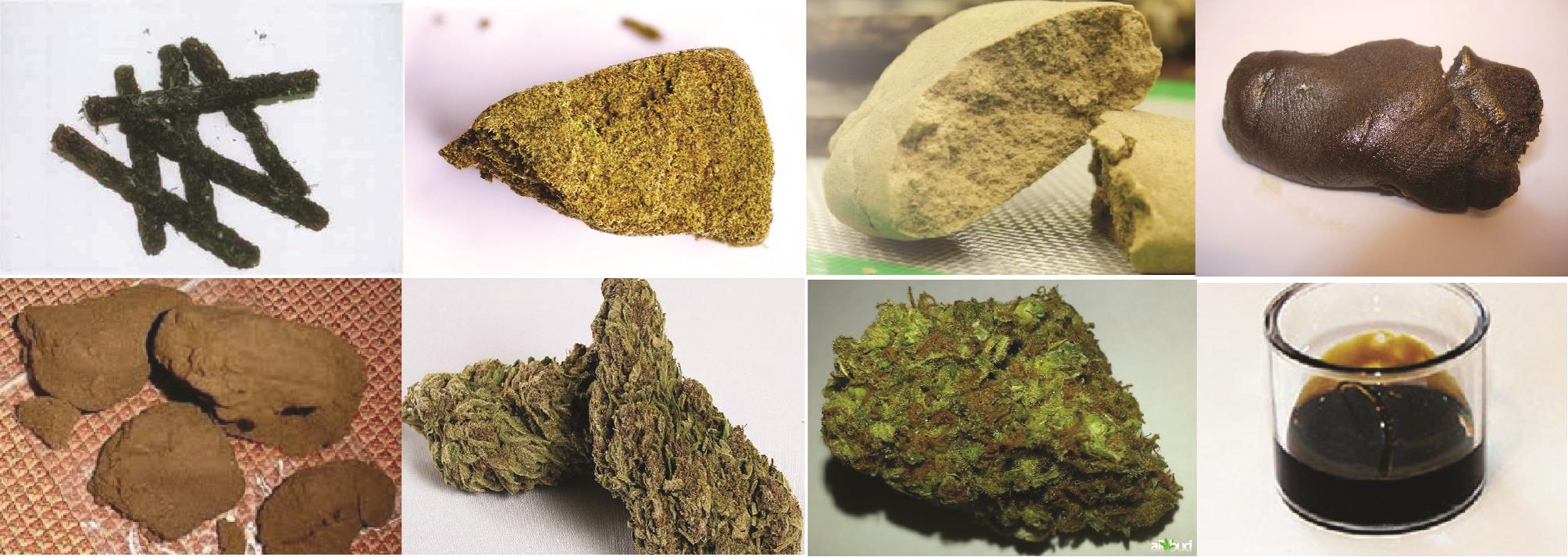 “Cannabis products. First row, left to right: Indian, Lebanese, Turkish and Pakistani hashish. Second row, left to right: Swiss hashish, Zairean marijuana, Swiss marijuana, Moroccan hash oil.”]]>
  “Vascular dementia (VaD) is characteristic of chronic brain ischemia and progressive memory decline, which has a high incidence in the elderly. However, there are no effective treatments for VaD, and the underlying mechanism of its pathogenesis remains unclear.
This study investigated the effects of a synthetic
“Vascular dementia (VaD) is characteristic of chronic brain ischemia and progressive memory decline, which has a high incidence in the elderly. However, there are no effective treatments for VaD, and the underlying mechanism of its pathogenesis remains unclear.
This study investigated the effects of a synthetic  “The G protein-coupled receptors 3, 6, and 12 (GPR3, GPR6, and GPR12) comprise a family of closely related orphan receptors with no confirmed endogenous ligands. These receptors are constitutively active and capable of signaling through G protein-mediated and non-G protein-mediated mechanisms. These orphan receptors have previously been reported to play important roles in many normal physiological functions and to be involved in a variety of pathological conditions.
Although they are orphans, GPR3, GPR6, and GPR12 are phylogenetically most closely related to the
“The G protein-coupled receptors 3, 6, and 12 (GPR3, GPR6, and GPR12) comprise a family of closely related orphan receptors with no confirmed endogenous ligands. These receptors are constitutively active and capable of signaling through G protein-mediated and non-G protein-mediated mechanisms. These orphan receptors have previously been reported to play important roles in many normal physiological functions and to be involved in a variety of pathological conditions.
Although they are orphans, GPR3, GPR6, and GPR12 are phylogenetically most closely related to the