
It Is Our Turn to Get Cannabis High: Put Cannabinoids in Food and Health Baskets

molecules-logo“Cannabis is an annual plant with a long history of use as food, feed, fiber, oil, medicine, and narcotics. Despite realizing its true value, it has not yet found its true place. Cannabis has had a long history with many ups and downs, and now it is our turn to promote it.

Cannabis contains approximately 600 identified and many yet unidentified potentially useful compounds. Cannabinoids, phenolic compounds, terpenoids, and alkaloids are some of the secondary metabolites present in cannabis. However, among a plethora of unique chemical compounds found in this plant, the most important ones are phytocannabinoids (PCs).

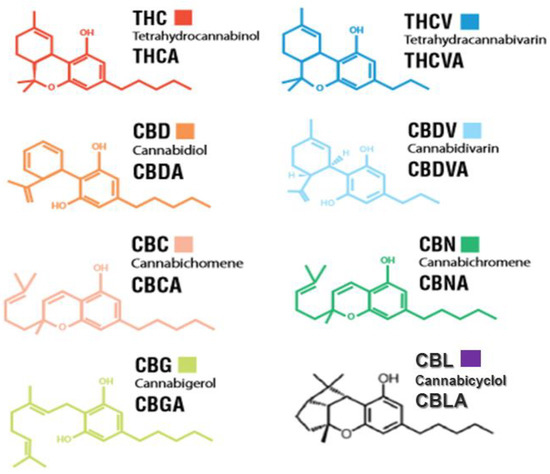
Over hundreds of 21-22-carbon compounds exclusively produce in cannabis glandular hairs through either polyketide and or deoxyxylulose phosphate/methylerythritol phosphate (DOXP/MEP) pathways. Trans-Δ9-tetrahydrocannabinol (Δ9-THC) and cannabidiol (CBD) are those that first come to mind while talking about cannabis. Nevertheless, despite the low concentration, cannabinol (CBN), cannabigerol (CBG), cannabichromene (CBC), tetrahydrocannabivarin (THCV), cannabidivarin (CBDV), cannabinodiol (CBND), and cannabinidiol (CBDL) may have potentially some medical effects.

PCs and endocannabinoids (ECs) mediate their effects mainly through CB1 and CB2 receptors. Despite all concerns regarding cannabis, nobody can ignore the use of cannabinoids as promising tonic, analgesic, antipyretic, antiemetic, anti-inflammatory, anti-epileptic, anticancer agents, which are effective for pain relief, depression, anxiety, sleep disorders, nausea and vomiting, multiple sclerosis, cardiovascular disorders, and appetite stimulation.

The scientific community and public society have now increasingly accepted cannabis specifically hemp as much more than a recreational drug. There are growing demands for cannabinoids, mainly CBD, with many diverse therapeutic and nutritional properties in veterinary or human medicine. The main objective of this review article is to historically summarize findings concerning cannabinoids, mainly THC and CBD, towards putting these valuable compounds into food, feed and health baskets and current and future trends in the consumption of products derived from cannabis.”

https://pubmed.ncbi.nlm.nih.gov/32899626/

https://www.mdpi.com/1420-3049/25/18/4036
Potential role of cannabidiol for seizure control in a patient with recurrent glioma.

Journal of Clinical Neuroscience Home“Glioma-related epilepsy significantly impact on patients’ quality of life, and can often be difficult to treat. Seizures cause significant morbidity for example neurocognitive deterioration, which may result from seizures themselves or due to adverse effects from antiepileptic drugs. Management of tumour with surgery, radiotherapy and chemotherapy may contribute to seizure control, but tumour related epilepsy is often refractory despite adequate treatment with standard anti-epileptic medications. Given the increasing interest in medicinal cannabis (or cannabidiol or CBD) as an anti-epileptic drug, CBD may help with seizure control in glioma patients with treatment-refractory seizures. Here we present a case of a young lady with recurrent glioma who had refractory seizures despite multiple anti-epileptic agents, who had significant benefit with CBD.”

https://www.ncbi.nlm.nih.gov/pubmed/31848037

“CBD could potentially be a management option in treatment-refractory epilepsy in glioma patients.”

https://www.jocn-journal.com/article/S0967-5868(19)31306-2/fulltext

Cannabinoids for drug-resistant seizures in a critically ill patient-Case report and literature review.

Publication cover image“Drug-resistant seizures are life-threatening and contribute to sustained hospitalization.

We present the case of a critically ill 28-year-old male with Lennox-Gastaut syndrome who had approximately 30 seizures/day in the intensive care unit.

CASE DESCRIPTION:

Patient required mechanical ventilation and pharmacologically induced thiopentone coma.

He was commenced on cannabidiol and subsequently extubated.

He remained seizure-free thereafter on a combination of cannabidiol and anti-epileptic medication that predated his critical illness.

WHAT IS NEW AND CONCLUSION:

Our case report provides a unique perspective on the role of cannabidiol in achieving remission from drug-resistant seizures in critically ill patients.”

https://www.ncbi.nlm.nih.gov/pubmed/31770462

https://onlinelibrary.wiley.com/doi/abs/10.1111/jcpt.13082

Effects of cannabidiol (CBD) in neuropsychiatric disorders: A review of pre-clinical and clinical findings.

Progress in Molecular Biology and Translational Science“Cannabis sativa (cannabis) is one of the oldest plants cultivated by men. Cannabidiol (CBD) is the major non-psychomimetic compound derived from cannabis. It has been proposed to have a therapeutic potential over a wide range of neuropsychiatric disorders.

In this narrative review, we have summarized a selected number of pre-clinical and clinical studies, examining the effects of CBD in neuropsychiatric disorders. In some pre-clinical studies, CBD was demonstrated to potentially exhibit anti-epileptic, anti-oxidant, anti-inflammatory anti-psychotic, anxiolytic and anti-depressant properties. Moreover, CBD was shown to reduce addictive effects of some drugs of abuse.

In clinical studies, CBD was shown to be safe, well-tolerated and efficacious in mitigating the symptoms associated with several types of seizure disorders and childhood epilepsies.

Given that treatment with CBD alone was insufficient at managing choreic movements in patients with Huntington’s disease, other cannabis-derived treatments are currently being investigated. Patients with Parkinson’s disease (PD) have reported improvements in sleep and better quality of life with CBD; however, to fully elucidate the therapeutic potential of CBD on the symptoms of PD-associated movement disorders, larger scale, randomized, placebo-controlled studies still need to be conducted in the future.

Currently, there are no human studies that investigated the effects of CBD in either Alzheimer’s disease or unipolar depression, warranting further investigation in this area, considering that CBD was shown to have effects in pre-clinical studies.

Although, anxiolytic properties of CBD were reported in the Social Anxiety Disorder, antipsychotic effects in schizophrenia and anti-addictive qualities in alcohol and drug addictions, here too, larger, randomized, placebo-controlled trials are needed to evaluate the therapeutic potential of CBD.”

https://www.ncbi.nlm.nih.gov/pubmed/31601406

https://www.sciencedirect.com/science/article/pii/S187711731930095X?via%3Dihub

Use of Cannabidiol in the Treatment of Epilepsy: Efficacy and Security in Clinical Trials.

molecules-logo

“Cannabidiol (CBD) is one of the cannabinoids with non-psychotropic action, extracted from Cannabis sativa. CBD is a terpenophenol and it has received a great scientific interest thanks to its medical applications. This compound showed efficacy as anti-seizure, antipsychotic, neuroprotective, antidepressant and anxiolytic. The neuroprotective activity appears linked to its excellent anti-inflammatory and antioxidant properties. The purpose of this paper is to evaluate the use of CBD, in addition to common anti-epileptic drugs, in the severe treatment-resistant epilepsy through an overview of recent literature and clinical trials aimed to study the effects of the CBD treatment in different forms of epilepsy. The results of scientific studies obtained so far the use of CBD in clinical applications could represent hope for patients who are resistant to all conventional anti-epileptic drugs.”

https://www.ncbi.nlm.nih.gov/pubmed/31013866

https://www.mdpi.com/1420-3049/24/8/1459

Inhibitory effects of cannabidiol on voltage-dependent sodium currents.

Image result for jbc journal “Cannabis sativa contains many related compounds known as phytocannabinoids. The main psychoactive and non-psychoactive compounds are Δ9-tetrahydrocannabidiol (THC) and cannabidiol (CBD), respectively. Much of the evidence for clinical efficacy of CBD-mediated anti-epileptic effects has been from case reports or smaller surveys. The mechanisms for CBD’s anticonvulsant effects are unclear and likely involve non-cannabinoid receptor pathways. CBD is reported to modulate several ion channels, including sodium channels (Nav). Evaluating therapeutic mechanisms and safety of CBD demands a richer understanding of its interactions with central nervous system targets. Here, we used voltage-clamp electrophysiology of HEK-293 cells and iPSC neurons to characterize the effects of CBD on Nav channels. Our results show that CBD inhibits hNav1.1-1.7 currents, with an IC50 of 1.9-3.8 μM, suggesting that this inhibition could occur at therapeutically relevant concentrations. A steep Hill slope of ~3 suggested multiple interactions of CBD with Nav channels. CBD exhibited resting-state blockade, became more potent at depolarized potentials, and also slowed recovery from inactivation, supporting the idea that CBD binding preferentially stabilizes inactivated Nav channel states. We also found that CBD inhibits other voltage-dependent currents from diverse channels, including bacterial homomeric Nav channel (NaChBac) and voltage-gated potassium channel subunit Kv2.1. Lastly, the CBD block of Nav was temperature-dependent, with potency increasing at lower temperatures. We conclude that CBD’s mode of action likely involves (1) compound partitioning in lipid membranes, which alters membrane fluidity affecting gating, and (2) undetermined direct interactions with sodium and potassium channels, whose combined effects are loss of channel excitability.” https://www.ncbi.nlm.nih.gov/pubmed/30219789 http://www.jbc.org/content/early/2018/09/14/jbc.RA118.004929
]]>