Marijuana for migraines – USAToday

“Does marijuana have medicinal value for migraine headaches and other maladies?

“There is no question that cannabis is beneficial medicinally,” Bearman says. With migraines, “some people say it makes the pain go completely away or can prevent migraines from coming on. Others say it lessens the pain and allows them to focus on other things to get their work done.”

What cannabis does to alleviate migraines is complicated and not completely understood. “But it works on serotonin and dopamine receptors, and has anti-inflammatory activity,” says Russo, who is just finishing a paper for the Journal of Cannabis Therapeutics.

“Basically, it is a multi-modality agent that works on various aspects of migraine in a way that’s really unique. And it’s not just the THC — tetrahydrocannabinol, the psychoactive chemical — that does it. It appears now that it’s the result of the interaction of a combination of other cannabinoids and also the essential oils in the plant.”

Unlike most headache medications, cannabis is unique in that it works as both a preventive agent and an analgesic. “At any point in the migraine, they could use cannabis by smoking, vaporizer, etc., and about 80% of these people get significant or total relief,” he says. “And, if someone has a chronic migraine, daily use in whatever form will often lead to a complete remission.””

http://usatoday30.usatoday.com/life/health/doctor/lhdoc227.htm

Marijuana may block Alzheimer’s

“The active ingredient in marijuana may stall decline from Alzheimer’s disease, research suggests.” 

Brain


“Scientists showed a synthetic version of the compound may reduce inflammation associated with Alzheimer’s and thus help to prevent mental decline.

They hope the cannabinoid may be used to develop new drug therapies.”

More: http://news.bbc.co.uk/2/hi/health/4286435.stm

[Marihuana and cannobinoids as medicaments].

“Biological activity of cannabinoids is caused by binding to two cannabinoid receptors CB1 and CB2. Psychoactive is not only tetrahydrocannabinol (THC) but also: cannabidiol, cannabigerol or cannabichromen.

Formerly, the usefulness of hemp was assessed in the relation to temporary appeasement of the symptoms of some ailments as nausea or vomiting.

Present discoveries indicates that cannabis-based drugs has shown ability to alleviate of autoimmunological disorders such as: Multiple sclerosis (MS), Rheumatoid arthritis (RA) or inflammatory bowel disease.

Another studies indicates that cannabinoids play role in treatment of neurological disorders like Alzheimer disease or Amyotrophic lateral sclerosis (ALS) or even can reduce spreading of tumor cells.

Cannabinoids stand out high safety profile considering acute toxicity, it is low possibility of deadly overdosing and side-effects are comprise in range of tolerated side-effects of other medications.

In some countries marinol and nabilone are used as anti vomiting and nausea drug. First cannabis-based drug containg naturally occurring cannabinoids is Sativex. Sativex is delivered in an mucosal spray for patients suffering from spasticity in MS, pain relevant with cancer and neuropathic pain of various origin.

Cannabis side-effects varies and depend from several factors like administrated dose, rout of administration and present state of mind. After sudden break from long-lasting use, withdrawal symptoms can appear, although they entirely disappear after a week or two.”

http://www.ncbi.nlm.nih.gov/pubmed/23421098

Cannabinoids inhibit human keratinocyte proliferation through a non-CB1/CB2 mechanism and have a potential therapeutic value in the treatment of psoriasis.

“Cannabinoids from cannabis (Cannabis sativa) are anti-inflammatory and have inhibitory effects on the proliferation of a number of tumorigenic cell lines, some of which are mediated via cannabinoid receptors.

Cannabinoid (CB) receptors are present in human skin and anandamide, an endogenous CB receptor ligand, inhibits epidermal keratinocyte differentiation.

Psoriasis is an inflammatory disease also characterised in part by epidermal keratinocyte hyper-proliferation.

OBJECTIVE:

We investigated the plant cannabinoids Delta-9 tetrahydrocannabinol, cannabidiol, cannabinol and cannabigerol for their ability to inhibit the proliferation of a hyper-proliferating human keratinocyte cell line and for any involvement of cannabinoid receptors.

CONCLUSION:

The results indicate that while CB receptors may have a circumstantial role in keratinocyte proliferation, they do not contribute significantly to this process.

 Our results show that cannabinoids inhibit keratinocyte proliferation, and therefore support a potential role for cannabinoids in the treatment of psoriasis.”

http://www.ncbi.nlm.nih.gov/pubmed/17157480

Structure-dependent inhibitory effects of synthetic cannabinoids against 12-O-tetradecanoylphorbol-13-acetate-induced inflammation and skin tumour promotion in mice.

“Whether and how synthetic cannabinoids affect inflammation and carcinogenesis has not been well studied. The present study was thus conducted to assess effects of synthetic cannabinoids on inflammation and carcinogenesis in vivo in mice…

The present results suggest that synthetic cannabinoids, such as JWH-018, -122 and -210, may be used as cancer chemopreventive agents in the future.”

http://www.ncbi.nlm.nih.gov/pubmed/23837590

Cannabidiol provides long-lasting protection against the deleterious effects of inflammation in a viral model of multiple sclerosis: A role for A2A receptors.

“Inflammation in the central nervous system (CNS) is a complex process that involves a multitude of molecules and effectors, and it requires the transmigration of blood leukocytes across the blood-brain barrier (BBB) and the activation of resident immune cells. Cannabidiol (CBD), a non-psychotropic cannabinoid constituent of Cannabis sativa, has potent anti-inflammatory and immunosuppressive properties.

 …Moreover, CBD administration at the time of viral infection exerts long-lasting effects, ameliorating motor deficits in the chronic phase of the disease in conjunction with reduced microglial activation and pro-inflammatory cytokine production. Adenosine A2A receptors participate in some of the anti-inflammatory effects of CBD…

Together, our findings highlight the anti-inflammatory effects of CBD in this viral model of MS, and demonstrate the significant therapeutic potential of this compound for the treatment of pathologies with an inflammatory component.”

http://www.ncbi.nlm.nih.gov/pubmed/23851307

Cannabinoid receptor subtypes 1 and 2 mediate long-lasting neuroprotection and improve motor behavior deficits after transient focal cerebral ischemia.

“The endocannabinoid system is crucially involved in the regulation of brain activity and inflammation… we show that the endocannabinoid system assembles a comprehensive machinery to defend the brain against the devastating consequences of cerebral ischemia.

 In summary, this study underlines the therapeutic potential of CB1 and/or CB2 receptor agonists against neurodegenerative diseases or injuries involving acute or chronic imbalances of cerebral blood flow and energy consumption.”

http://www.ncbi.nlm.nih.gov/pubmed/23069763

Alcohol and cannabis use and mortality in people with schizophrenia and related psychotic disorders.

“The impact of co-morbid substance use on mortality is not well studied in psychotic disorders. The objective of this study was to examine the impact of substance use on mortality in people with psychotic disorders and alcohol and/or drug use.

…In a Cox model, predicted mortality risk was higher in age group 35-55 compared to <35 years and in males, but reduced in cannabis users. Overall five- (3.1% vs 7.5%) and ten-year mortality risk (5.5% vs. 13.6%) was lower in cannabis users than in non-users with psychotic disorders (p = 0.005) in a survival model.

 We observed a lower mortality risk in cannabis-using psychotic disorder patients compared to cannabis non-users despite subjects having similar symptoms and treatments.

 Future research is warranted to replicate these findings and to shed light on the anti-inflammatory properties of the endocannabinoid system and its role in decreased mortality in people with psychotic disorders.”

http://www.ncbi.nlm.nih.gov/pubmed/22595870

Cannabinoids and Schizophrenia: Therapeutic Prospects.

“Approximately one third of patients diagnosed with schizophrenia do not achieve adequate symptom control with standard antipsychotic drugs (APs).

The endocannabinoid system (ECS) in the brain plays an important role in maintaining normal mental health.

ECS modulates emotion, reward processing, sleep regulation, aversive memory extinction and HPA axis regulation…

The cannabis plant synthesises a large number of pharmacologically active compounds unique to it known as phytocannabinoids. In contrast to the euphoric and pro-psychotic effects of delta-9-tetrahydrocannabinol (THC), certain non-intoxicating phytocannabinoids have emerged in pre-clinical and clinical models as potential APs.

Since the likely mechanism of action does not rely upon dopamine D2 receptor antagonism, synergistic combinations with existing APs are plausible.

The anti-inflammatory and immunomodulatory effects of the non-intoxicating phytocannabinoid cannabidiol (CBD) are well established and are summarised below.

Preliminary data reviewed in this paper suggest that CBD in combination with a CB1 receptor neutral antagonist could not only augment the effects of standard APs but also target the metabolic, inflammatory and stress-related components of the schizophrenia phenotype.”

http://www.ncbi.nlm.nih.gov/pubmed/23829368

“6”-Azidohex-2″-yne-cannabidiol: a potential neutral, competitive cannabinoid CB1 receptor antagonist… 6″-azidohex-2″-yne-cannabidiol was as potent as cannabidiol in producing surmountable antagonism… it is a competitive cannabinoid CB(1) receptor antagonist…it may be a neutral cannabinoid CB(1) receptor antagonist.”  http://www.ncbi.nlm.nih.gov/pubmed/15033394


Anti-inflammatory compound from cannabis found in herbs

“A compound found in cannabis as well as in herbs such as basil and oregano could help to treat inflammatory bowel diseases and arthritis, Swiss scientists believe.”

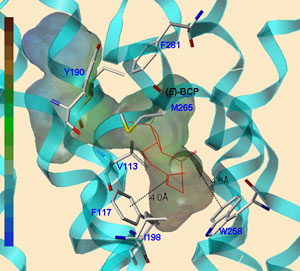
Model of the interaction of BCP with the CB2 receptor

“(E)-beta-caryophyllene (BCP) is an aromatic sesquiterpene that has used for many years as a food additive because of its peppery flavour. The researchers now say that it interacts selectively with one of two cannabinoid receptors, CB2, blocking the chemical signals that lead to inflammation without triggering cannabis’s mood-altering effects.
 
Many cannabinoids bind to the CB2 receptor, but few target it selectively. Most also interact with CB1, which is responsible for cannabis’ psychoactive properties. CB1 is found in brain tissue, whereas CB2is found only in cells elsewhere in the body.”
 

More:http://www.rsc.org/chemistryworld/News/2008/June/24060801.asp