“Cannabis has been used medicinally for centuries and numerous species of this genus are undoubtedly amongst the primeval plant remedies known to humans.
Cannabis sativa in particular is the most reported species, due to its substantial therapeutic implications that are owed to the presence of chemically and pharmacologically diverse cannabinoids.
These compounds have long been used for the palliative treatment of cancer.
Recent advancements in receptor pharmacology research have led to the identification of cannabinoids as effective antitumor agents.
This property is accredited for their ability to induce apoptosis, suppress proliferative cell signalling pathways and promote cell growth inhibition.
Evolving lines of evidence suggest that cannabinoid analogues, as well as their receptor agonists, may offer a novel strategy to treat various forms of cancer.
This review summarizes the historical perspective of C. sativa, its potential mechanism of action, and pharmacokinetic and pharmacodynamic aspects of cannabinoids, with special emphasis on their anticancer potentials.”
http://www.xiahepublishing.com/ArticleFullText.aspx?sid=2&jid=3&id=10.14218%2FJERP.2017.00012
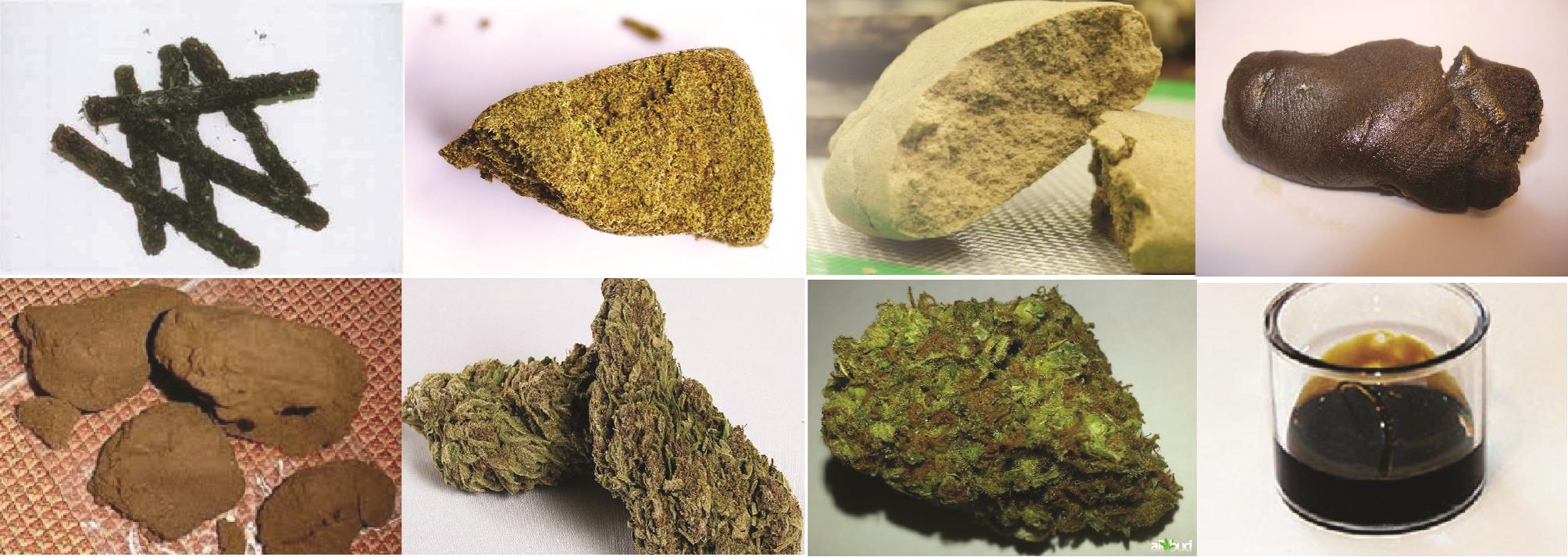 “Cannabis products. First row, left to right: Indian, Lebanese, Turkish and Pakistani hashish. Second row, left to right: Swiss hashish, Zairean marijuana, Swiss marijuana, Moroccan hash oil.”]]>
Tag Archives: antiproliferative
Appraising the "entourage effect": antitumor action of a pure cannabinoid versus a botanical drug preparation in preclinical models of breast cancer.
 “Breast cancer is the second leading cause of death among women. Although early diagnosis and development of new treatments have improved their prognosis, many patients present innate or acquired resistance to current therapies. New therapeutic approaches are therefore warranted for the management of this disease.
Extensive preclinical research has demonstrated that cannabinoids, the active ingredients of Cannabis sativa, trigger antitumor responses in different models of cancer. Most of these studies have been conducted with pure compounds, mainly Δ9-tetrahydrocannabinol (THC).
The cannabis plant, however, produces hundreds of other compounds with their own therapeutic potential and the capability to induce synergic responses when combined, the so-called “entourage effect”.
Here, we compared the antitumor efficacy of pure THC with that of a botanical drug preparation (BDP). The BDP was more potent than pure THC in producing antitumor responses in cell culture and animal models of ER+/PR+, HER2+ and triple-negative breast cancer. This increased potency was not due to the presence of the 5 most abundant terpenes in the preparation.
While pure THC acted by activating cannabinoid CB2 receptors and generating reactive oxygen species, the BDP modulated different targets and mechanisms of action. The combination of cannabinoids with estrogen receptor- or HER2-targeted therapies (tamoxifen and lapatinib, respectively) or with cisplatin, produced additive antiproliferative responses in cell cultures. Combinations of these treatments in vivo showed no interactions, either positive or negative.
Together, our results suggest that standardized cannabis drug preparations, rather than pure cannabinoids, could be considered as part of the therapeutic armamentarium to manage breast cancer.”
“Breast cancer is the second leading cause of death among women. Although early diagnosis and development of new treatments have improved their prognosis, many patients present innate or acquired resistance to current therapies. New therapeutic approaches are therefore warranted for the management of this disease.
Extensive preclinical research has demonstrated that cannabinoids, the active ingredients of Cannabis sativa, trigger antitumor responses in different models of cancer. Most of these studies have been conducted with pure compounds, mainly Δ9-tetrahydrocannabinol (THC).
The cannabis plant, however, produces hundreds of other compounds with their own therapeutic potential and the capability to induce synergic responses when combined, the so-called “entourage effect”.
Here, we compared the antitumor efficacy of pure THC with that of a botanical drug preparation (BDP). The BDP was more potent than pure THC in producing antitumor responses in cell culture and animal models of ER+/PR+, HER2+ and triple-negative breast cancer. This increased potency was not due to the presence of the 5 most abundant terpenes in the preparation.
While pure THC acted by activating cannabinoid CB2 receptors and generating reactive oxygen species, the BDP modulated different targets and mechanisms of action. The combination of cannabinoids with estrogen receptor- or HER2-targeted therapies (tamoxifen and lapatinib, respectively) or with cisplatin, produced additive antiproliferative responses in cell cultures. Combinations of these treatments in vivo showed no interactions, either positive or negative.
Together, our results suggest that standardized cannabis drug preparations, rather than pure cannabinoids, could be considered as part of the therapeutic armamentarium to manage breast cancer.”
Assessment of Cannabinoids Agonist and Antagonist in Invasion Potential of K562 Cancer Cells
“The prominent hallmark of malignancies is the metastatic spread of cancer cells. Recent studies have reported that the nature of invasive cells could be changed after this phenomenon, causing chemotherapy resistance. It has been demonstrated that the up-regulated expression of matrix metalloproteinase (MMP) 2/MMP-9, as a metastasis biomarker, can fortify the metastatic potential of leukemia. Furthermore, investigations have confirmed the inhibitory effect of cannabinoid and endocannabinoid on the proliferation of cancer cells in vitro and in vivo.
Our findings clarifies that CB1 receptors are responsible for anti-invasive effects in the K562 cell line.”
https://www.ncbi.nlm.nih.gov/pubmed/29883990]]>The importance of 15-lipoxygenase inhibitors in cancer treatment.
 “Cancer-targeted therapy is an expanding and successful approach in treatment of many types of cancers. One of the main categories of targeted therapy is use of small molecule inhibitors. 15-Lipoxygenase (15-LOX) is an enzyme which reacts with polyunsaturated fatty acids and produces metabolites that are implicated in many important human diseases, such as cancer.
Considering the role of 15-LOX (mainly 15-LOX-1) in the progression of some cancers, the discovery of 15-LOX inhibitors could potentially lead to development of novel cancer therapeutics and it can be claimed that 15-LOX inhibitors might be suitable as chemotherapy agents in the near future.
This article reviews relevant publications on 15-LOX inhibitors with focus on their anticancer activities in vitro and in vivo. Many 15-LOX inhibitors have been reported for which separate studies have shown their anticancer activities. This review paves the way to further explore the mechanism of their antiproliferative effects via 15-LOX inhibition.”
“Cancer-targeted therapy is an expanding and successful approach in treatment of many types of cancers. One of the main categories of targeted therapy is use of small molecule inhibitors. 15-Lipoxygenase (15-LOX) is an enzyme which reacts with polyunsaturated fatty acids and produces metabolites that are implicated in many important human diseases, such as cancer.
Considering the role of 15-LOX (mainly 15-LOX-1) in the progression of some cancers, the discovery of 15-LOX inhibitors could potentially lead to development of novel cancer therapeutics and it can be claimed that 15-LOX inhibitors might be suitable as chemotherapy agents in the near future.
This article reviews relevant publications on 15-LOX inhibitors with focus on their anticancer activities in vitro and in vivo. Many 15-LOX inhibitors have been reported for which separate studies have shown their anticancer activities. This review paves the way to further explore the mechanism of their antiproliferative effects via 15-LOX inhibition.”
 “Accumulating studies have linked inflammation to tumor progression.
Dietary omega-3 fatty acids including docosahexaenoic acid (DHA) have been shown to suppress tumor growth through their conversion to epoxide metabolites. Alternatively, DHA is converted enzymatically into docosahexaenoylethanolamide (DHEA), an endocannabinoid with anti-proliferative activity.
Recently, we reported a novel class of anti-inflammatory DHEA-epoxides (EDP-EAs) that contain both ethanolamide and epoxide moieties. Herein we evaluate the anti-tumorigenic properties of EDP-EAs in an osteosarcoma model.
First, we show ~80% increase in EDP-EAs in metastatic lungs versus normal mouse lungs. We found significant differences in the apoptotic and anti-migratory potency of the different EDP-EA regioisomers, which are partly mediated through
“Accumulating studies have linked inflammation to tumor progression.
Dietary omega-3 fatty acids including docosahexaenoic acid (DHA) have been shown to suppress tumor growth through their conversion to epoxide metabolites. Alternatively, DHA is converted enzymatically into docosahexaenoylethanolamide (DHEA), an endocannabinoid with anti-proliferative activity.
Recently, we reported a novel class of anti-inflammatory DHEA-epoxides (EDP-EAs) that contain both ethanolamide and epoxide moieties. Herein we evaluate the anti-tumorigenic properties of EDP-EAs in an osteosarcoma model.
First, we show ~80% increase in EDP-EAs in metastatic lungs versus normal mouse lungs. We found significant differences in the apoptotic and anti-migratory potency of the different EDP-EA regioisomers, which are partly mediated through  “Limited therapeutic interventions are clinically available for treating aggressive endometrial cancer (EC). Therefore, effective therapies are urgently required.
Therefore, the present study investigated the role of ∆9-tetrahydrocannabinol (THC), which is reported to impact proliferative and migratory activities during impairment of cancer progression.
In the present study, cell migration in response to THC was measured using transwell assays. Using western blot analysis, the levels of cannabinoid receptors in EC tissues were detected and pathways leading to the inhibition of cell migration by THC on human EC cells were determined.
Results suggested that cannabinoid receptors were highly expressed in EC tissues.
Furthermore, THC inhibited EC cell viability and motility by inhibiting epithelial-mesenchymal transition (EMT) and downregulating matrix metalloproteinase-9 (MMP-9) gene expression in aggressive human EC cells.
The results have the potential to promote the development of novel compounds for the treatment of EC metastasis. The present findings suggest that THC may inhibit human EC cell migration through regulating EMT and MMP-9 pathways.”
“Limited therapeutic interventions are clinically available for treating aggressive endometrial cancer (EC). Therefore, effective therapies are urgently required.
Therefore, the present study investigated the role of ∆9-tetrahydrocannabinol (THC), which is reported to impact proliferative and migratory activities during impairment of cancer progression.
In the present study, cell migration in response to THC was measured using transwell assays. Using western blot analysis, the levels of cannabinoid receptors in EC tissues were detected and pathways leading to the inhibition of cell migration by THC on human EC cells were determined.
Results suggested that cannabinoid receptors were highly expressed in EC tissues.
Furthermore, THC inhibited EC cell viability and motility by inhibiting epithelial-mesenchymal transition (EMT) and downregulating matrix metalloproteinase-9 (MMP-9) gene expression in aggressive human EC cells.
The results have the potential to promote the development of novel compounds for the treatment of EC metastasis. The present findings suggest that THC may inhibit human EC cell migration through regulating EMT and MMP-9 pathways.”
 “The anti-tumor properties of