
 “The potential therapeutic use of some Cannabis sativa plant compounds has been attracting great interest, especially for managing neuropsychiatric disorders due to the relative lack of efficacy of the current treatments.
Numerous studies have been carried out using the main phytocannabinoids, tetrahydrocannabinol (THC) and cannabidiol (CBD). CBD displays an interesting pharmacological profile without the potential for becoming a drug of abuse, unlike THC.
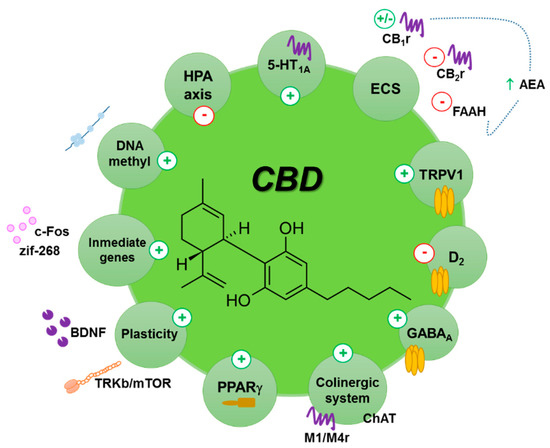
In this review, we focused on the anxiolytic, antidepressant, and antipsychotic effects of CBD found in animal and human studies. In rodents, results suggest that the effects of CBD depend on the dose, the strain, the administration time course (acute vs. chronic), and the route of administration. In addition, certain key targets have been related with these CBD pharmacological actions, including cannabinoid receptors (CB1r and CB2r), 5-HT1A receptor and neurogenesis factors.
Preliminary clinical trials also support the efficacy of CBD as an anxiolytic, antipsychotic, and antidepressant, and more importantly, a positive risk-benefit profile. These promising results support the development of large-scale studies to further evaluate CBD as a potential new drug for the treatment of these psychiatric disorders.”
https://pubmed.ncbi.nlm.nih.gov/33228239/
https://www.mdpi.com/2218-273X/10/11/1575
 “Little is known about the patients’ view on treatment with medical cannabis (MC) for Parkinson’s disease (PD).
 “With the current COVID-19 pandemic, caused by the severe acute respiratory syndrome coronavirus 2 (SARS-CoV-2), there is an urgent need for new therapies and prevention strategies that can help curtail disease spread and reduce mortality.
 “Background: Frontotemporal dementia (FTD) is characterized by progressive deterioration in behaviors, executive function and/or language. The behavioral variant (Bv) is characterized by disinhibition and obsessive/compulsive behaviors. These symptoms are sometimes resistant to medications. This series examines patients suffering with treatment-resistant Bv-FTD who were prescribed cannabinoid and related compounds for other indications.
 “A large number of cannabinoids have been discovered that could play a role in mitigating cardiac affections. However, none of them has been as widely studied as cannabidiol (CBD), most likely because, individually, the others offer only partial effects or can activate potential harmful pathways.
 “The endocannabinoid (eCB) system encompasses the eCBs anandamide and 2-arachidonoylglycerol, their anabolic/catabolic enzymes, and the cannabinoid CB1 and CB2 receptors. Its expansion to include several eCB-like lipid mediators, their metabolic enzymes, and their molecular targets, forms the endocannabinoidome (eCBome).
 “Cocaine addiction is a global health problem with no approved pharmacotherapies.
 “Objective: To determine the benefit of a tetrahydrocannabinol (THC)-rich cannabis oil on symptoms and quality of life of fibromyalgia patients.
 “Many people with MS (pwMS) use unregulated cannabis or cannabis products to treat the symptoms associated with the disease. In line with this, Sativex, a synthetic combination of cannabidiol (CBD) and Δ9-tetrahydrocannabinol (Δ9-THC) has been approved to treat symptoms of spasticity.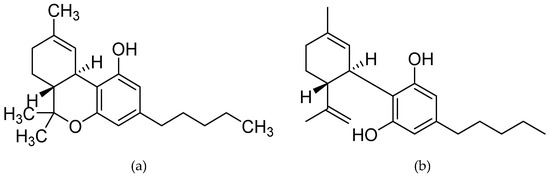
 “The cannabinoid receptor subtype 2 (CB2R) represents an interesting and new therapeutic target for its involvement in the first steps of neurodegeneration as well as in cancer onset and progression.