
Endocannabinoids and endocannabinoid-like compounds modulate hypoxia-induced permeability in CaCo-2 cells via CB1, TRPV1, and PPARα.

Biochemical Pharmacology“We have previously reported that endocannabinoids modulate permeability in Caco-2 cells under inflammatory conditions and hypothesised in the present study that endocannabinoids could also modulate permeability in ischemia/reperfusion.

CONCLUSIONS AND IMPLICATIONS:

A variety of endocannabinoids and endocannabinoid-like compounds modulate Caco-2 permeability in hypoxia/reoxygenation, which involves multiple targets, depending on whether the compounds are applied to the basolateral or apical membrane. CB1 antagonism and TRPV1 or PPARα agonism may represent novel therapeutic targets against several intestinal disorders associated with increased permeability.”

https://www.ncbi.nlm.nih.gov/pubmed/31325449

https://www.sciencedirect.com/science/article/abs/pii/S0006295219302722?via%3Dihub

Antitumor Cannabinoid Chemotypes: Structural Insights.

Image result for frontiers in pharmacology“Cannabis has long been known to limit or prevent nausea and vomiting, lack of appetite, and pain. For this reason, cannabinoids have been successfully used in the treatment of some of the unwanted side effects caused by cancer chemotherapy.

Besides their palliative effects, research from the past two decades has demonstrated their promising potential as antitumor agents in a wide variety of tumors.

Cannabinoids of endogenous, phytogenic, and synthetic nature have been shown to impact the proliferation of cancer through the modulation of different proteins involved in the endocannabinoid system such as the G protein-coupled receptors CB1, CB2, and GRP55, the ionotropic receptor TRPV1, or the fatty acid amide hydrolase (FAAH).

In this article, we aim to structurally classify the antitumor cannabinoid chemotypes described so far according to their targets and types of cancer. In a drug discovery approach, their in silico pharmacokinetic profile has been evaluated in order to identify appropriate drug-like profiles, which should be taken into account for further progress toward the clinic.

This analysis may provide structural insights into the selection of specific cannabinoid scaffolds for the development of antitumor drugs for the treatment of particular types of cancer.” https://www.ncbi.nlm.nih.gov/pubmed/31214034

“The first report on the antitumor activity of phytocannabinoids was published over four decades ago. During these last years, significant research has been focused on the therapeutic potential of cannabinoids to manage palliative effects in cancer patients. Besides such palliative applications, some cannabinoids have shown anticancer properties. Since inflammation is a common risk factor for cancer, and some cannabinoids have shown anti-inflammatory properties, they could play a role in chemoprevention.” https://www.frontiersin.org/articles/10.3389/fphar.2019.00621/full
“Antitumor effects of THC.” http://www.ncbi.nlm.nih.gov/pubmed/11097557
“Antitumor effects of cannabidiol” http://www.ncbi.nlm.nih.gov/pubmed/14617682
“Anti-tumour actions of cannabinoids.” https://www.ncbi.nlm.nih.gov/pubmed/30019449
“Extensive preclinical research has demonstrated that cannabinoids, the active ingredients of Cannabis sativa, trigger antitumor responses in different models of cancer.” https://www.ncbi.nlm.nih.gov/pubmed/29940172

New Insights of Uterine Leiomyoma Pathogenesis: Endocannabinoid System.


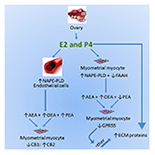
“The aim of this study was to determine if components of the endocannabinoid system are modulated in uterine leiomyomas (fibroids). Components studied included cannabinoid receptors 1 (CB1) and 2 (CB2); the G protein-coupled receptor GPR55; transient potential vanilloid receptor 1 (TRPV1) and the endocannabinoid modulating enzymes N-acylphosphatidylethanolamine-specific phospholipase D (NAPE-PLD) and fatty acid amide hydrolase (FAAH), and their N-acylethanolamine (NAE) ligands: N-arachidonylethanolamine (AEA), N-oleoylethanolamine (OEA), and N-palmityolethanaolamine (PEA). MATERIAL AND METHODS Transcript levels of CB1, CB2, TRPV1, GPR55, NAPE-PLD, and FAAH were measured using RT-PCR and correlated with the tissue levels of the 3 NAEs in myometrial tissues. The tissues studied were: 1) fibroids, 2) myometrium adjacent/juxtaposed to the fibroid lesions, and 3) normal myometrium. Thirty-seven samples were processed for NAE measurements and 28 samples were used for RT-PCR analyses. RESULTS FAAH expression was significantly lower in fibroids, resulting in a NAPE-PLD: FAAH ratio that favors higher AEA levels in pre-menopausal tissues, whilst PEA levels were significantly lower, particularly in post-menopausal women, suggesting PEA protects against fibroid pathogenesis. The CB1: CB2 ratio was lower in fibroids, suggesting that loss of CB1 expression affects the fibroid cell phenotype. Significant correlations between reduced FAAH, CB1, and GPR55 expression and PEA in fibroids indicate that the loss of these endocannabinoid system components are biomarkers of leiomyomata. CONCLUSIONS Loss of expression of CB1, FAAH, GPR55, and PEA production are linked to the pathogenesis of uterine fibroids and further understanding of this might eventually lead to better disease indicators or the development of therapeutic potentials that might eventually be used in the management of uterine fibroids.”

https://www.ncbi.nlm.nih.gov/pubmed/30842391

https://basic.medscimonit.com/abstract/index/idArt/914019

Effects of CB2 and TRPV1 receptors’ stimulation in pediatric acute T-lymphoblastic leukemia

Related image

“T-Acute Lymphoblastic Leukemia (T-ALL) is less frequent than B-ALL, but it has poorer outcome. For this reason new therapeutic approaches are needed to treat this malignancy.

The Endocannabinoid/Endovanilloid (EC/EV) system has been proposed as possible target to treat several malignancies, including lymphoblastic diseases. The EC/EV system is composed of two G-Protein Coupled Receptors (CB1 and CB2), the Transient Potential Vanilloid 1 (TRPV1) channel, their endogenous and exogenous ligands and enzymes. CB1 is expressed mainly in central nervous system while CB2 predominantly on immune and peripheral cells, therefore we chose to selectively stimulate CB2 and TRPV1.

We treated T-ALL lymphoblasts derived from 4 patients and Jurkat cells with a selective agonist at CB2 receptor: JWH-133 [100 nM] and an agonist at TRPV1 calcium channel: RTX [5 uM] at 6, 12 and 24 hours. We analyzed the effect on apoptosis and Cell Cycle Progression by a cytofluorimetric assays and evaluated the expression level of several target genes (Caspase 3, Bax, Bcl-2, AKT, ERK, PTEN, Notch-1, CDK2, p53) involved in cell survival and apoptosis, by Real-Time PCR and Western Blotting.

We observed a pro-apoptotic, anti-proliferative effect of these compounds in both primary lymphoblasts obtained from patients with T-ALL and in Jurkat cell line. Our results show that both CB2 stimulation and TRPV1 activation, can increase the apoptosis in vitro, interfere with cell cycle progression and reduce cell proliferation, indicating that a new therapeutic approach to T-cell ALL might be possible by modulating CB2 and TRPV1 receptors.”

http://www.oncotarget.com/index.php?journal=oncotarget&page=article&op=view&path%5B%5D=25052
]]>