“Amyotrophic Lateral Sclerosis (ALS) is a fatal neurodegenerative disease caused by the progressive death of motor neurons. Cannabidiol, the second most prevalent cannabinoid in the Cannabis sativa plant, is a potential therapeutic tool for ALS due to its antioxidant, anti-inflammatory, and anti-spasticity effects, as well as its complementary role in treating other neurodegenerative diseases. In SOD1-G93A murine ALS models, cannabinoids have been shown to slow disease progression, extending lifespan and increasing motor function. However, the effects of specific cannabinoids-including cannabidiol-are yet undefined and their functions slowing disease progression are unknown. To advance this understanding we aim to study the effects of cannabidiol treatment in a Caenorhabditis elegans ALS model: a SOD-1 mutant transgenic strain with SOD-1 aggregation in muscular cells. We will use a death assay to measure the lifespan of SOD-1 mutant C. elegans and cannabidiol-treated SOD-1 mutant C. elegans to investigate whether treatment with cannabidiol impacts the lifespan of SOD-1 mutants. To assess mechanosensation, we will touch C. elegans with sutures of various sizes, based on the Von Frey filaments touch response assay in humans. We will develop a novel computational analysis system to measure C. elegans movement in response to touch. We will then compare the motor response of the SOD-1 mutant transgenic strain to wild type and study if cannabidiol modulates a possible change in motor response. This study will evaluate the functions of cannabidiol as a potential therapeutic tool in ALS using a SOD-1 mutant C. elegans model.”
https://pubmed.ncbi.nlm.nih.gov/35555765/
https://faseb.onlinelibrary.wiley.com/doi/10.1096/fasebj.2022.36.S1.0R317
 “Background: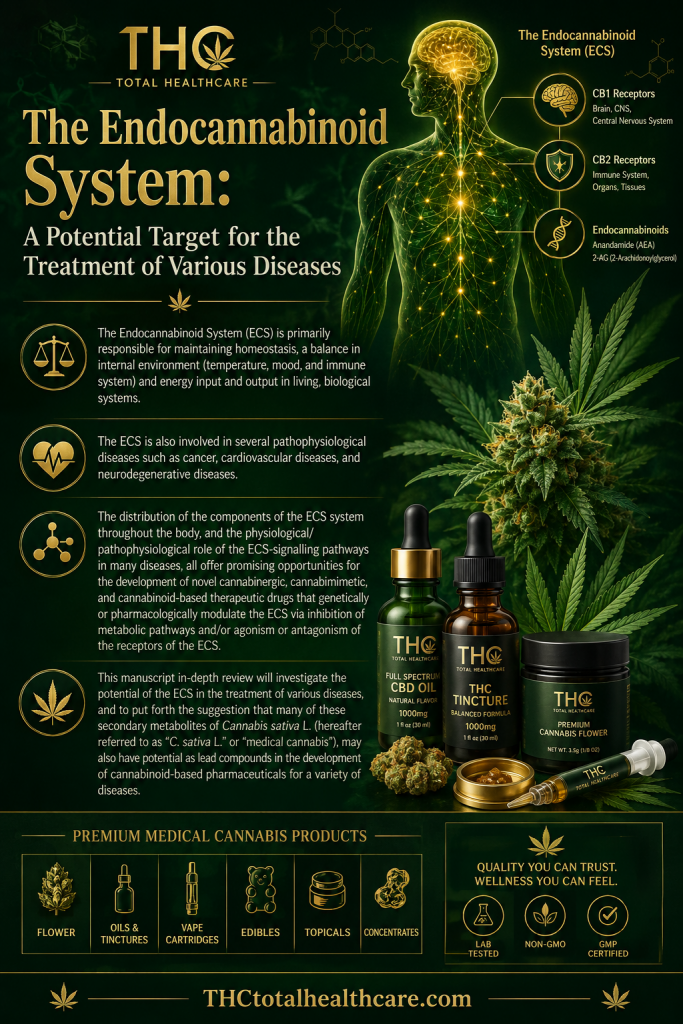
 “The Endocannabinoid System (ECS) is primarily responsible for maintaining homeostasis, a balance in internal environment (temperature, mood, and immune system) and energy input and output in living, biological systems.
 “The aberrant accumulation of disease-specific protein aggregates accompanying cognitive decline is a pathological hallmark of age-associated neurological disorders, also termed as proteinopathies, including Alzheimer’s disease, Parkinson’s disease, Huntington’s disease, amyotrophic lateral sclerosis and multiple sclerosis.
 “Neuroinflammation is associated with many neurodegenerative diseases, including amyotrophic lateral sclerosis (ALS). In this study, we investigate the anti-inflammatory, anti-oxidant, and anti-apoptotic properties of two non-psychoactive phytocannabinoids, cannabigerol (CBG) and
  “Amyotrophic lateral sclerosis (ALS) is a neurodegenerative disorder with no known cure and with an average life expectancy of 3-5 years post diagnosis.
 “Treatment of spasticity poses a major challenge in amyotrophic lateral sclerosis (ALS) patient management.