
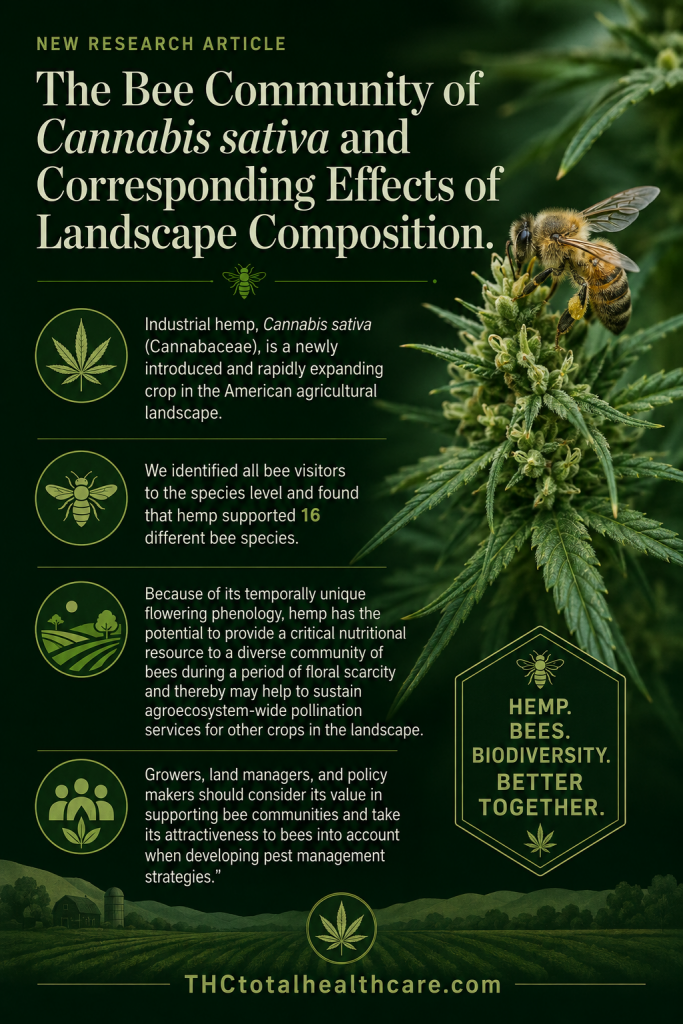
“Industrial hemp, Cannabis sativa (Cannabaceae), is a newly introduced and rapidly expanding crop in the American agricultural landscape. As an exclusively wind-pollinated crop, hemp lacks nectar but produces an abundance of pollen during a period of floral dearth in agricultural landscapes. These pollen resources are attractive to a range of bee species but the diversity of floral visitors and their use of hemp across a range of agricultural contexts remains unclear. We made repeated sweep net collections of bees visiting hemp flowers on farms in New York, which varied in both landscape context and phenotypic traits of hemp varieties. We identified all bee visitors to the species level and found that hemp supported 16 different bee species. Landscape simplification negatively impacted the abundance of bees visiting hemp flowers but did not affect the species richness of the community. Plant height, on the other hand, was strongly correlated with bee species richness and abundance for hemp plots with taller varieties attracting a broader diversity of bee species. Because of its temporally unique flowering phenology, hemp has the potential to provide a critical nutritional resource to a diverse community of bees during a period of floral scarcity and thereby may help to sustain agroecosystem-wide pollination services for other crops in the landscape. As cultivation of hemp increases, growers, land managers, and policy makers should consider its value in supporting bee communities and take its attractiveness to bees into account when developing pest management strategies.”
https://www.ncbi.nlm.nih.gov/pubmed/31789341
https://academic.oup.com/ee/advance-article/doi/10.1093/ee/nvz141/5634339
 “Excessive binge alcohol drinking may adversely affect cardiovascular function. In this study we characterize the detailed hemodynamic effects of an acute alcohol binge in mice using multiple approaches and investigate the role of the endocannabinoid-
 “The functions of the glycine receptor (GlyR) and γ-aminobutyric acid type A receptor (GABAAR) are both impaired in hyperekplexia, a neurological disorder that is usually caused by GlyR mutations.
 “It is unclear whether
 “Delayed neurologic sequelae (DNS) are among the most serious complications of carbon monoxide (CO) poisoning caused partly by elevated neuroinflammation.
 “The protective effect of
  “Cannabis sativa L. is one of the most-studied species for its phytochemistry due to the abundance of secondary metabolites, including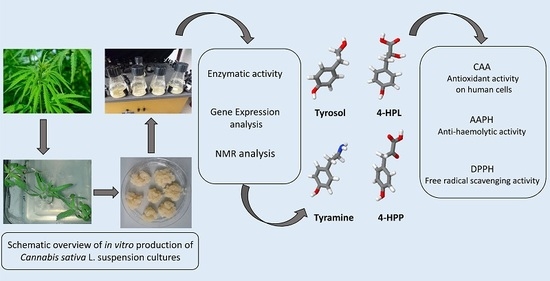
 “The hemp plant (
 “Endocannabinoids are produced within the gastrointestinal (GI) tract and modulate energy homeostasis and food intake, at least in part, via vagally-dependent actions. The recent paper by Christie et al., [Christie, et al. J Physiol, 2019] demonstrate, for the first time, that