
Therapeutic Potential of β-Caryophyllene: A Dietary Cannabinoid in Diabetes and Associated Complications

nutrients-logo“Diabetes mellitus (DM), a metabolic disorder is one of the most prevalent chronic diseases worldwide across developed as well as developing nations. Hyperglycemia is the core feature of the type 1 diabetes mellitus (T1DM) and type 2 diabetes mellitus (T2DM), following insulin deficiency and impaired insulin secretion or sensitivity leads insulin resistance (IR), respectively. Genetic and environmental factors attributed to the pathogenesis of DM and various therapeutic strategies are available for the prevention and treatment of T2DM.

Among the numerous therapeutic approaches, the health effects of dietary/nutraceutical approach due to the presence of bioactive constituents, popularly termed phytochemicals are receiving special interest for pharmacological effects and therapeutic benefits. The phytochemicals classes, in particular sesquiterpenes received attention because of potent antioxidant, anti-inflammatory, and antihyperglycemic effects and health benefits mediating modulation of enzymes, receptors, and signaling pathways deranged in DM and its complications.

One of the terpene compounds, β-caryophyllene (BCP), received enormous attention because of its abundant occurrence, non-psychoactive nature, and dietary availability through consumption of edible plants including spices. BCP exhibit selective full agonism on cannabinoid receptor type 2 (CB2R), an important component of endocannabinoid system, and plays a role in glucose and lipid metabolism and represents the newest drug target for chronic inflammatory diseases.

Many studies demonstrated its antioxidant, anti-inflammatory, organoprotective, and antihyperglycemic properties. In the present review, the plausible therapeutic potential of BCP in diabetes and associated complications has been comprehensively elaborated based on experimental and a few clinical studies available. Further, the pharmacological and molecular mechanisms of BCP in diabetes and its complications have been represented using synoptic tables and schemes.

Given the safe status, abundant natural occurrence, oral bioavailability, dietary use and pleiotropic properties modulating receptors and enzymes, BCP appears as a promising molecule for diabetes and its complications.”

https://pubmed.ncbi.nlm.nih.gov/32998300/

https://www.mdpi.com/2072-6643/12/10/2963
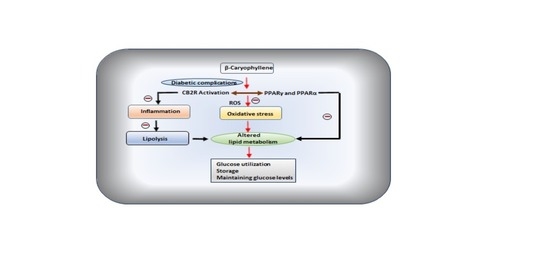
“β-caryophyllene (BCP) is a common constitute of the essential oils of numerous spice, food plants and major component in Cannabis.”   http://www.ncbi.nlm.nih.gov/pubmed/23138934

“Beta-caryophyllene is a dietary cannabinoid.”   https://www.ncbi.nlm.nih.gov/pubmed/18574142

A Cannabinoid Type 2 (CB2) Receptor Agonist Augments NOS-Dependent Responses of Cerebral Arterioles during Type 1 Diabetes

Microvascular Research “While activation of cannabinoid (CB2) receptors has been shown to be neuroprotective, no studies have examined whether this neuroprotection is directed at cerebral arterioles and no studies have examined whether activation of CB2 receptors can rescue cerebrovascular dysfunction during a chronic disease state such as type 1 diabetes (T1D).

Our goal was to test the hypothesis that administration of a CB2 agonist (JWH-133) would improve impaired endothelial (eNOS)- and neuronal (nNOS)- dependent dilation of cerebral arterioles during T1D.

In vivo diameter of cerebral arterioles in nondiabetic and T1D rats was measured in response to an eNOS-dependent agonist (adenosine 5′-diphosphate; ADP), an nNOS-dependent agonist (N-methyl-D-aspartate; NMDA), and an NOS-independent agonist (nitroglycerin) before and 1 hour following JWH-133 (1 mg/kg IP). Dilation of cerebral arterioles to ADP and NMDA was greater in nondiabetic than in T1D rats.

Treatment with JWH-133 increased responses of cerebral arterioles to ADP and NMDA in both nondiabetic and T1D rats. Responses of cerebral arterioles to nitroglycerin were similar between nondiabetic and T1D rats, and JWH-133 did not influence responses to nitroglycerin in either group. The restoration in responses to the agonists by JWH-133 could be inhibited by treatment with a specific inhibitor of CB2 receptors (AM-630; 3 mg/kg IP).

Thus, activation of CB2 receptors can potentiate reactivity of cerebral arterioles during physiologic and pathophysiologic states. We speculate that treatment with CB2 receptor agonists may have potential therapeutic benefits for the treatment of cerebral vascular diseases via a mechanism that can increase cerebral blood flow.”

https://pubmed.ncbi.nlm.nih.gov/32979391/

“Activation of CB2 receptors improves cerebral vascular function. Activation of CB2 receptors improves responses in type 1 diabetes. We speculate that treatment with CB2 receptor agonists may have potential therapeutic benefits for the treatment of cerebral vascular disease that can contribute to the pathogenesis of stroke.”

https://www.sciencedirect.com/science/article/pii/S0026286220301370?via%3Dihub

Association between recent cannabinoid use and acute ischemic stroke

Home“Studies that have analyzed the association between cannabis use and acute ischemic stroke (AIS) have provided conflicting results.

In this study, we aim to determine the association of recent cannabis use detected through urine drug screen (UDS) among patients admitted with AIS.

Results: A total of 9,350 patients were determined to have undergone UDS during admission, and 18% (1,643) of this had a positive urine cannabis test. Unadjusted risk ratio showed a 50% decrease in risk of AIS among cannabis users (risk ratio = 0.505, 95% confidence interval [CI] 0.425-0.600). The effect was lost after adjusting for age, race, ethnicity, sickle cell disease, dyslipidemia, hypertension, obesity, diabetes mellitus, cigarette smoking, atrial fibrillation, and other cardiac conditions (odds ratio 1.038, 95% CI 0.773-1.394).

Conclusion: This is one of the few studies analyzing the association of recent cannabis use and AIS using admission urine toxicology test independent of polysubstance use. Although our study has limitations, we did not find an independent association between recent cannabis use and the incidence of AIS. Further studies using urine toxicology tests with larger sample size and including dosage of cannabis exposure should be conducted.”

https://pubmed.ncbi.nlm.nih.gov/32983613/

https://cp.neurology.org/content/10/4/333

Site Logo

Cannabis and cannabidiol (CBD) for the treatment of fibromyalgia

Best Practice & Research Clinical Anaesthesiology “Fibromyalgia is a complex disease process that is as prevalent as it is poorly understood. Research into the pathophysiology is ongoing, and findings will likely assist in identifying new therapeutic options to augment those in existence today that are still insufficient for the care of a large population of patients.

Recent evidence describes the use of cannabinoids in the treatment of fibromyalgia.

This study provides a systematic, thorough review of the evidence alongside a review of the seminal data regarding the pathophysiology, diagnosis, and current treatment options.

Fibromyalgia is characterized by widespread chronic pain, fatigue, and depressive episodes without an organic diagnosis, which may be prevalent in up to 10% of the population and carries a significant cost in healthcare utilization, morbidity, a reduced quality of life, and productivity. It is frequently associated with psychiatric comorbidities. The diagnosis is clinical and usually prolonged, and diagnostic criteria continue to evolve. Some therapies have been previously described, including neuropathic medications, milnacipran, and antidepressants. Despite some level of efficacy, only physical exercise has strong evidence to support it.

Cannabis has been used historically to treat different pain conditions since ancient times.

Recent advances allowed for the isolation of the active substances in cannabis and the production of cannabinoid products that are nearly devoid of psychoactive influence and provide pain relief and alleviation of other symptoms. Many of these, as well as cannabis itself, are approved for use in chronic pain conditions.

Evidence supporting cannabis in chronic pain conditions is plentiful; however, in fibromyalgia, they are mostly limited. Only a handful of randomized trials exists, and their objectivity has been questioned. However, many retrospective trials and patient surveys suggest the significant alleviation of pain, improvement in sleep, and abatement of associated symptoms.

Evidence supporting the use of cannabis in chronic pain and specifically in fibromyalgia is being gathered as the use of cannabis increases with current global trends. While the current evidence is still limited, emerging data do suggest a positive effect of cannabis in fibromyalgia.

Cannabis use is not without risks, including psychiatric, cognitive, and developmental as well as the risks of addiction. As such, clinical judgment is warranted to weigh these risks and prescribe to patients who are more likely to benefit from this treatment. Further research is required to define appropriate patient selection and treatment regimens.”

https://pubmed.ncbi.nlm.nih.gov/33004171/

https://www.sciencedirect.com/science/article/pii/S1521689620300781?via%3Dihub

Use of cannabidiol (CBD) for the treatment of chronic pain

Best Practice & Research Clinical Anaesthesiology “Chronic pain can be recurrent or constant pain that lasts for longer than 3 months and can result in disability, suffering, and a physical disturbance. Related to the complex nature of chronic pain, treatments have a pharmacological and non-pharmacological approach.

Due to the opioid epidemic, alternative therapies have been introduced, and components of the plant Cannabis Sativa, Δ9-tetrahydrocannabinol (THC) and cannabidiol (CBD) have gained recent interest as a choice of treatment.

The current pharmaceutical products for the treatment of chronic pain are known as nabiximols, and they contain a ratio of THC combined with CBD, which has been promising.

This review focuses on the treatment efficacy of CBD, THC: CBD-based treatments for chronic pain and adverse events with each.”

https://pubmed.ncbi.nlm.nih.gov/33004159/

https://www.sciencedirect.com/science/article/pii/S1521689620300458?via%3Dihub

Efficacy of combined therapy with fish oil and phytocannabinoids in murine intestinal inflammation

Phytotherapy Research“Fish oil (FO) and phytocannabinoids have received considerable attention for their intestinal anti-inflammatory effects.

We investigated whether the combination of FO with cannabigerol (CBG) and cannabidiol (CBD) or a combination of all three treatments results in a more pronounced intestinal antiinflammatory action compared to the effects achieved separately.

Colitis was induced in mice by 2,4-dinitrobenzenesulfonic acid (DNBS). CBD and CBG levels were detected and quantified by liquid chromatography coupled with time of flight mass spectrometry and ion trap mass spectrometry (LC-MS-IT-TOF). Endocannabinoids and related mediators were assessed by LC-MS. DNBS increased colon weight/colon length ratio, myeloperoxidase activity, interleukin-1β, and intestinal permeability.

CBG, but not CBD, given by oral gavage, ameliorated DNBS-induced colonic inflammation. FO pretreatment (at the inactive dose) increased the antiinflammatory action of CBG and rendered oral CBD effective while reducing endocannabinoid levels. Furthermore, the combination of FO, CBD, and a per se inactive dose of CBG resulted in intestinal anti-inflammatory effects. Finally, FO did not alter phytocannabinoid levels in the serum and in the colon.

By highlighting the apparent additivity between phytocannabinoids and FO, our preclinical data support a novel strategy of combining these substances for the potential development of a treatment of inflammatory bowel disease.”

https://pubmed.ncbi.nlm.nih.gov/32996187/

https://onlinelibrary.wiley.com/doi/10.1002/ptr.6831

Cannabidiol Ameliorates Monocrotaline-Induced Pulmonary Hypertension in Rats

ijms-logo“Cannabidiol (CBD) is known for its vasorelaxant (including in the human pulmonary artery), anti-proliferative and anti-inflammatory properties. The aim of our study was to examine the potential preventive effect of chronic CBD administration (10 mg/kg/day for three weeks) on monocrotaline (MCT)-induced pulmonary hypertension (PH) rats.
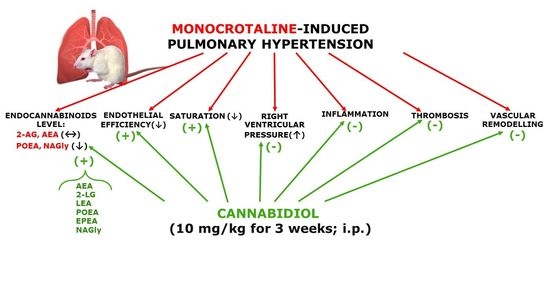

PH was connected with elevation of right ventricular systolic pressure; right ventricle hypertrophy; lung edema; pulmonary artery remodeling; enhancement of the vasoconstrictor and decreasing vasodilatory responses; increases in plasma concentrations of tissue plasminogen activator, plasminogen activator inhibitor type 1 and leukocyte count; and a decrease in blood oxygen saturation.

CBD improved all abovementioned changes induced by PH except right ventricle hypertrophy and lung edema. In addition, CBD increased lung levels of some endocannabinoids (anandamide, N-arachidonoyl glycine, linolenoyl ethanolamide, palmitoleoyl ethanolamide and eicosapentaenoyl ethanolamide but not 2-arachidonoylglycerol). CBD did not affect the cardiopulmonary system of control rats or other parameters of blood morphology in PH.

Our data suggest that CBD ameliorates MCT-induced PH in rats by improving endothelial efficiency and function, normalization of hemostatic alterations and reduction of enhanced leukocyte count determined in PH. In conclusion, CBD may be a safe, promising therapeutic or adjuvant therapy agent for the treatment of human pulmonary artery hypertension.”

https://pubmed.ncbi.nlm.nih.gov/32992900/

https://www.mdpi.com/1422-0067/21/19/7077

Cannabidiol and Oxygen-Ozone Combination Induce Cytotoxicity in Human Pancreatic Ductal Adenocarcinoma Cell Lines

cancers-logo“Pancreatic cancer (PC) is related to lifestyle risks, chronic inflammation, and germline mutations in BRCA1/2ATMMLH1TP53, or CDKN2A. Surgical resection and adjuvant chemotherapy are the main therapeutic strategies but are less effective in patients with high-grade tumors.
Oxygen-ozone (O2/O3) therapy is an emerging alternative tool for the treatment of several clinical disorders. O2/O3 therapy has been found to ameliorate mechanisms promoting chronic pain and inflammation, including hypoxia, inflammatory mediators, and infection.

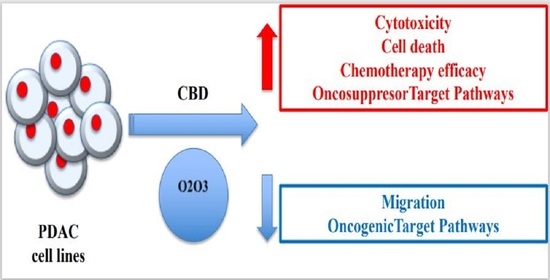
The advantages of using cannabinoids have been evaluated in vitro and in vivo models of several human cancers. Regarding PDAC, activation of cannabinoid receptors was found to induce pancreatic cancer cell apoptosis without affecting the normal pancreas cells.

In a murine model of PDAC, a combination of cannabidiol (CBD) and gemcitabine increased survival length by nearly three times. Herein, we evaluate the anticancer effect of CBD and O2/O3, alone or in combination, on two human PDAC cell lines, PANC-1 and MiaPaCa-2, examining expression profiles of 92 pancreatic adenocarcinoma associated genes, cytotoxicity, migration properties, and cell death. Finally, we assess the combination effects with gemcitabine and paclitaxel.

Summarizing, for the first time the antitumoral effect of combined therapy with CBD and oxygen-ozone therapy in PDAC is evidenced.”

https://pubmed.ncbi.nlm.nih.gov/32992648/

https://www.mdpi.com/2072-6694/12/10/2774

Development of cannabidiol as a treatment for severe childhood epilepsies

“In recent years there has been a growing appreciation by regulatory authorities that cannabis-based medicines can play a useful role in disease therapy.

Although often conflagrated by proponents of recreational use, the legislative rescheduling of cannabis-derived compounds, such as cannabidiol (CBD), has been associated with the steady increase in the pursuit of use of medicinal cannabis.

One key driver in this interest has been the scientific demonstration of efficacy and safety of CBD in randomised, placebo-controlled clinical trials in children and young adults with difficult-to-treat epilepsies, which has encouraged increasing numbers of human trials of CBD for other indications and in other populations.

The introduction of CBD as the medicine Epidiolex in the US (in 2018) and as Epidyolex in the EU (in 2019) as the first cannabis-derived therapeutic for the treatment for seizures was underpinned by preclinical research performed at the University of Reading.

This work was awarded the British Pharmacological Society Sir James Black Award for Contributions to Drug Discovery 2019 and is discussed in the following review article.”

https://pubmed.ncbi.nlm.nih.gov/32986848/

https://bpspubs.onlinelibrary.wiley.com/doi/10.1111/bph.15274

CBD Effects on TRPV1 Signaling Pathways in Cultured DRG Neurons

 “Cannabidiol (CBD) is reported to produce pain relief, but the clinically relevant cellular and molecular mechanisms remain uncertain.

The TRPV1 receptor integrates noxious stimuli and plays a key role in pain signaling. Hence, we conducted in vitro studies, to elucidate the efficacy and mechanisms of CBD for inhibiting neuronal hypersensitivity in cultured rat sensory neurons, following activation of TRPV1.

Results: DRG neurons treated with 10 and 50 µMol/L CBD showed calcium influx, but not at lower doses. Neurons treated with capsaicin demonstrated robust calcium influx, which was dose-dependently reduced in the presence of low dose CBD (IC50 = 100 nMol/L). The inhibition or desensitization by CBD was reversed in the presence of forskolin and cyclosporin. Forskolin-stimulated cAMP levels were significantly reduced in CBD treated neurons.

Conclusion: CBD at low doses corresponding to plasma concentrations observed physiologically inhibits or desensitizes neuronal TRPV1 signalling by inhibiting the adenylyl cyclase – cAMP pathway, which is essential for maintaining TRPV1 phosphorylation and sensitization. CBD also facilitated calcineurin-mediated TRPV1 inhibition. These mechanisms may underlie nociceptor desensitization and the therapeutic effect of CBD in animal models and patients with acute and chronic pain.”

https://pubmed.ncbi.nlm.nih.gov/32982390/

https://www.dovepress.com/cbd-effects-on-trpv1-signaling-pathways-in-cultured-drg-neurons-peer-reviewed-article-JPR