Cannabinoid Signaling in Cancer.

“The family of chemical structures that interact with a cannabinoid receptor are broadly termed cannabinoids. Traditionally known for their psychotropic effects and their use as palliative medicine in cancer, cannabinoids are very versatile and are known to interact with several orphan receptors besides cannabinoid receptors (CBR) in the body. Recent studies have shown that several key pathways involved in cell growth, differentiation and, even metabolism and apoptosis crosstalk with cannabinoid signaling. Several of these pathways including AKT, EGFR, and mTOR are known to contribute to tumor development and metastasis, and cannabinoids may reverse their effects, thereby by inducing apoptosis, autophagy and modulating the immune system. In this book chapter, we explore how cannabinoids regulate diverse signaling mechanisms in cancer and immune cells within the tumor microenvironment and whether they impart a therapeutic effect. We also provide some important insight into the role of cannabinoids in cellular and whole body metabolism in the context of tumor inhibition. Finally, we highlight recent and ongoing clinical trials that include cannabinoids as a therapeutic strategy and several combinational approaches towards novel therapeutic opportunities in several invasive cancer conditions.”

https://www.ncbi.nlm.nih.gov/pubmed/31332734

https://link.springer.com/chapter/10.1007%2F978-3-030-21737-2_4

Cannabinoid Interactions with Proteins: Insights from Structural Studies.

 “Cannabinoids have been widely used for recreational and medicinal purposes. The increasing legalization of cannabinoid use and the growing success in Medicinal Chemistry of cannabinoids have fueled recent interest in cannabinoid-sensing sites in receptor proteins. Here, we review structural data from high-resolution cryo-EM and crystallography studies that depict phytocannabinoid, endocannabinoid, and synthetic cannabinoid molecules bound to various proteins. The latter include antigen-binding fragment (Fab), cellular retinol binding protein 2 (CRBP2), fatty acid-binding protein 5 (FABP5), peroxisome proliferator-activated receptor γ (PPAR γ), and cannabinoid receptor types 1 and 2 (CB1 and CB2). Cannabinoid-protein complexes reveal the complex design of cannabinoid binding sites that are usually presented by conventional ligand-binding pockets on respective proteins. However, subtle differences in cannabinoid interaction with amino acids within the binding pocket often result in diverse consequences for protein function. The rapid increase in available structural data on cannabinoid-protein interactions will ultimately direct drug design efforts toward rendering highly potent cannabinoid-related pharmacotherapies that are devoid of side effects.”

https://www.ncbi.nlm.nih.gov/pubmed/31332733

https://link.springer.com/chapter/10.1007%2F978-3-030-21737-2_3

Endocannabinoid System Components: Overview and Tissue Distribution.

 “Marijuana/cannabinoid research has been transformed into mainstream science during the last half-century. Evidence based research and remarkable biotechnological advances demonstrate that phytocannabinoids and endocannabinoid (eCBs) acting on cannabinoid receptors (CBRs) regulate various aspects of human physiological, behavioral, immunological and metabolic functions. The distribution and function of the components of the endocannabinoid system (ECS) in the central nervous system (CNS) and immune processes have garnished significant research focus with major milestones. With these advances in biotechnology, rapid extension of the ECS research in the periphery has gained momentum. In this chapter, we review the components and tissue distribution of this previously unknown but ubiquitous and complex ECS that is involved in almost all aspects of mammalian physiology and pathology.”

https://www.ncbi.nlm.nih.gov/pubmed/31332731

https://link.springer.com/chapter/10.1007%2F978-3-030-21737-2_1

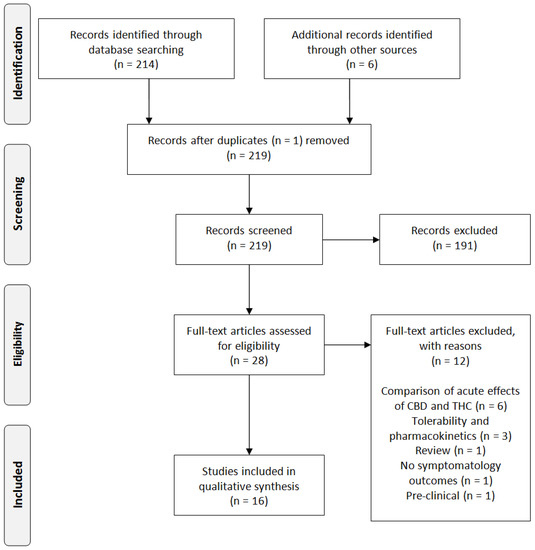
The Potential of Cannabidiol as a Treatment for Psychosis and Addiction: Who Benefits Most? A Systematic Review.

jcm-logo

“The endogenous cannabinoid (eCB) system plays an important role in the pathophysiology of both psychotic disorders and substance use disorders (SUDs). The non-psychoactive cannabinoid compound, cannabidiol (CBD) is a highly promising tool in the treatment of both disorders. Here we review human clinical studies that investigated the efficacy of CBD treatment for schizophrenia, substance use disorders, and their comorbidity. In particular, we examined possible profiles of patients who may benefit the most from CBD treatment. CBD, either as monotherapy or added to regular antipsychotic medication, improved symptoms in patients with schizophrenia, with particularly promising effects in the early stages of illness. A potential biomarker is the level of anandamide in blood. CBD and THC mixtures showed positive effects in reducing short-term withdrawal and craving in cannabis use disorders. Studies on schizophrenia and comorbid substance use are lacking. Future studies should focus on the effects of CBD on psychotic disorders in different stages of illness, together with the effects on comorbid substance use. These studies should use standardized measures to assess cannabis use. In addition, future efforts should be taken to study the relationship between the eCB system, GABA/glutamate, and the immune system to reveal the underlying neurobiology of the effects of CBD.”

Medical Marijuana Laws and Suicide

Publication Cover“In the current study we use a synthetic control group design to estimate the causal effect of a medical marijuana initiative on suicide risk.

In 1996, California legalized marijuana use for medical purposes. Implementation was abrupt and uniform, presenting a “natural experiment.” Utilizing a panel dataset containing annual frequencies of Total, gun, and non-gun suicides aggregated by state for the years 1970–2004, we construct a control time series for California as a weighted combination of the 41 states that did not legalize marijuana during the analysis period. Post-intervention differences for California and its constructed control time series can be interpreted as the effects of the medical marijuana law on suicide. Significance of the effects were assessed with permutation tests.

Our findings suggest that California’s 1996 legalization resulted in statistically significant (p<.05) reductions in suicides and gun suicides, but only a non-significant reduction in non-gun suicides (p≥.488). Since the effect for non-gun suicides was indistinguishable from chance, we infer that the overall causal effect was realized through gun suicides. The mechanism could not be determined, however. Participation in the medical marijuana program legally disqualifies participants from purchasing guns. But since most suicides involve guns, it is possible that the effect on total suicide is driven by gun suicide alone.”

https://www.tandfonline.com/doi/full/10.1080/13811118.2019.1612803

Multiple pharmacognostic characterization on hemp commercial cultivars: Focus on inflorescence water extract activity

Food and Chemical Toxicology“One of the most promising economic perspectives of hemp production chain is female inflorescence valorization, despite there being actually no chemical composition or biological data from water fraction. In this context, the focus of this study is the evaluation of protective effects related to hemp water flower extracts from four commercial cultivars (Futura 75, Kc virtus, Carmagnola Cs and Villanova). We evaluated the phytochemical profile through validated spectrophotometric and HPLC methods. Then, we studied the biological activity on C2C12 and HCT116 cell lines, and in an ex vivo experimental model of ulcerative colitis, constituted by isolated LPS-stimulated colon. Particularly, we assayed the blunting effects induced by hemp water extract treatment on LPS-induced levels of nitritesmalondialdehyde (MDA), prostaglandin (PG)E2and serotonin (5-HT). All tested cultivars displayed similar total phenolic and flavonoid profile. However, Futura 75 water extract displayed a better antioxidant and anti-inflammatory profile. Considering this, Futura 75 extract activity has been subsequently assayed on bacterial and fungal species involved in ulcerative colitis, finding a significant inhibition on C. albicans and selected Gram positive and negative bacterial strains.

Concluding, our results support the potential efficacy of hemp inflorescence water extracts in managing the clinical symptoms related to ulcerative colitis.”

https://www.sciencedirect.com/science/article/pii/S0278691519300468?via%3Dihub

Image 1

Hemp (Marijuana) reverted Copper-induced toxic effects on the essential fatty acid profile of Labeo rohita and Cirrhinus mrigala

“Heavy metals pollution affects the nutritive value of fish.

This study examined if the inclusion of dietary hempseed (HS) and hempseed oil (HO) in the diet of the fish could revert the copper-induced toxic effects on muscle fatty acid profile of rohu (Labeo rohita) and mrigal (Cirrhinus mrigala).

Copper exposure showed a significant effect on the fatty acid composition of both species; increased their saturated (SFA) to unsaturated (USFA) and altered their omega-3/omega-6 (ω-3/ω-6) ratios. However, feeding graded levels of hempseed products reverted the toxic effects of copper on the fatty acid profile of both the species, significantly increased muscle total fatty acid contents, improved ω-3/ω-6 ratios, and decreased SFA / USFA ratio in % inclusion dependent manner.

Furthermore, hempseed product showed a species-specific effect on USFA. The ω-3/ω-6 ratios decreased in the muscle of C. mrigala whereas an increasing trend with an increase in hempseed product % inclusion was observed in L. rohita. Moreover, HS showed a higher impact on both species as compared to HO.

With the findings of this study, hempseed product could be recommended as a feed ingredient for enhancing the essential fatty acid contents of fish which in turn can have a good impact on consumer health.”

https://link.springer.com/article/10.1007%2Fs11033-018-4483-2

Endocannabinoids and endocannabinoid-like compounds modulate hypoxia-induced permeability in CaCo-2 cells via CB1, TRPV1, and PPARα.

Biochemical Pharmacology“We have previously reported that endocannabinoids modulate permeability in Caco-2 cells under inflammatory conditions and hypothesised in the present study that endocannabinoids could also modulate permeability in ischemia/reperfusion.
CONCLUSIONS AND IMPLICATIONS:

A variety of endocannabinoids and endocannabinoid-like compounds modulate Caco-2 permeability in hypoxia/reoxygenation, which involves multiple targets, depending on whether the compounds are applied to the basolateral or apical membrane. CB1 antagonism and TRPV1 or PPARα agonism may represent novel therapeutic targets against several intestinal disorders associated with increased permeability.”

https://www.ncbi.nlm.nih.gov/pubmed/31325449

https://www.sciencedirect.com/science/article/abs/pii/S0006295219302722?via%3Dihub

Cannabinoid system involves in the analgesic effect of protocatechuic acid.

 “Protocatechuic acid is an antioxidant which is shown to have analgesic activity in limited studies. However, the mechanisms of action remain unclear.

OBJECTIVES:

It is aimed to investigate the possible contribution of cannabinoid system that supresses the nociceptive process by the activation of CB1 and CB2 receptors in central and peripheral levels of pain pathways, to the analgesic activity of protocatechuic acid.

RESULTS:

It was determined that protocatechuic acid has dose-dependent analgesic effect independently from locomotor activity and is comparable with effects of dipyrone and WIN 55,212-2. Pre-treatment with CB1 receptor antagonist AM251 significantly antagonized the protocatechuic acid-induced analgesia in the tail-immersion and writhing tests, whereas pre-treatment of CB2 receptor antagonist AM630 was found to be effective only in the tail-immersion test.

CONCLUSION:

It is concluded that cannabinoid modulation contributes to the analgesic effect of protocatechuic acid in spinal level rather than peripheral. CB1 receptor stimulation rather than CB2 receptor stimulation mediates the analgesic effect of protocatechuic acid in both levels, especially peripheral. Graphical abstract Protocatechuic acid inhibits pain response via cannabinoidergic system.”

https://www.ncbi.nlm.nih.gov/pubmed/31325037

https://link.springer.com/article/10.1007/s40199-019-00288-x

“Protocatechuic acid (PCA) is a dihydroxybenzoic acid, a type of phenolic acid. It is a major metabolite of antioxidant polyphenols found in green tea.”  https://en.wikipedia.org/wiki/Protocatechuic_acid

Cannabidiol improves vocal learning-dependent recovery from, and reduces magnitude of deficits following, damage to a cortical-like brain region in a songbird pre-clinical animal model.

Neuropharmacology“Cannabidiol (CBD), a non-euphorigenic compound derived from Cannabis, shows promise for improving recovery following cerebral ischemia and has recently been shown effective for the treatment of childhood seizures caused by Dravet and Lennox-Gastaut syndromes.

Given evidence for activity to mitigate effects of CNS insult and dysfunction, we considered the possibility that CBD may also protect and improve functional recovery of a complex learned behavior. To test this hypothesis, we have applied a songbird, the adult male zebra finch, as a novel pre-clinical animal model.

Results indicate 10 and 100 mg/kg CBD effectively reduced the time required to recover vocal phonology and syntax. In the case of phonology, the magnitude of microlesion-related disruptions were also reduced.

These results suggest CBD holds promise to improve functional recovery of complex learned behaviors following brain injury, and represent establishment of an important new animal model to screen drugs for efficacy to improve vocal recovery.”

https://www.ncbi.nlm.nih.gov/pubmed/31325430

https://www.sciencedirect.com/science/article/pii/S0028390818305343?via%3Dihub