
The Pathophysiology and the Therapeutic Potential of Cannabinoids in Prostate Cancer

cancers-logo“Prostate cancer is the second most frequently occurring cancer diagnosed among males. Recent preclinical evidence implicates cannabinoids as powerful regulators of cell growth and differentiation. In this review, we focused on studies that demonstrated anticancer effects of cannabinoids and their possible mechanisms of action in prostate cancer. Besides the palliative effects of cannabinoids, research from the past two decades has demonstrated their promising potential as antitumor agents in a wide variety of cancers. This analysis may provide pharmacological insights into the selection of specific cannabinoids for the development of antitumor drugs for the treatment of prostate cancer.”

https://pubmed.ncbi.nlm.nih.gov/34439262/

“Prostate cancer, after lung cancer, is the leading cause of death among men. Although the pathophysiological mechanisms and the etiological factors of prostate cancer development are still poorly understood, there are several factors associated with the risk of developing the disease such as age, family history, lifestyle-related factors (e.g., smoking, diet), and testosterone levels. Cannabinoids are an emerging class of pharmacological molecules that may exert their therapeutic effect against different cancers, including those from the prostate. Several studies have shown that various agonists are able to target cannabinoid receptors exhibited on prostate cancer cells.”

https://www.mdpi.com/2072-6694/13/16/4107

Changes in Hepatic Phospholipid Metabolism in Rats under UV Irradiation and Topically Treated with Cannabidiol

antioxidants-logo“The liver is a key metabolic organ that is particularly sensitive to environmental factors, including UV radiation. As UV radiation induces oxidative stress and inflammation, natural compounds are under investigation as one method to counteract these consequences.
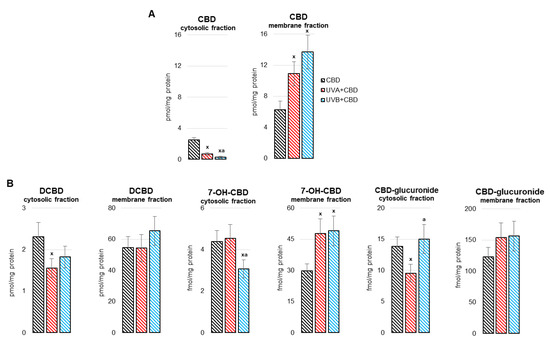

The aim of this study was to assess the effect of topical application of phytocannabinoid-cannabidiol (CBD) on the skin of nude rats chronically irradiated with UVA/UVB, paying particular attention to its impact on the liver antioxidants and phospholipid metabolism.

The results of this study indicate that CBD reaches the rat liver where it is then metabolized into decarbonylated cannabidiol, 7-hydroxy-cannabidiol and cannabidiol-glucuronide. CBD increased the levels of GSH and vitamin A after UVB radiation. Moreover, CBD prevents the increase of 4-hydroxynonenal and 8-iso-prostaglandin-F levels in UVA-irradiated rats. As a consequence of reductions in phospholipase A2 and cyclooxygenases activity following UV irradiation, CBD upregulates the level of 2-arachidonoylglycerol and downregulates prostaglandin E2 and leukotriene B4. Finally, CBD enhances decreased level of 15-deoxy-Δ-12,14-prostaglandin J2 after UVB radiation and 15-hydroxyeicosatetraenoic acid after UVA radiation.

These data show that CBD applied to the skin prevents ROS- and enzyme-dependent phospholipid metabolism in the liver of UV-irradiated rats, suggesting that it may be used as an internal organ protector.”

https://pubmed.ncbi.nlm.nih.gov/34439405/

https://www.mdpi.com/2076-3921/10/8/1157

Neuroprotective and Symptomatic Effects of Cannabidiol in an Animal Model of Parkinson’s Disease

ijms-logo“Parkinson’s disease (PD) is a neurodegenerative disorder characterized by the loss of dopaminergic neurons in the Substantia Nigra pars compacta, leading to classical PD motor symptoms. Current therapies are purely symptomatic and do not modify disease progression.
Cannabidiol (CBD), one of the main phytocannabinoids identified in Cannabis Sativa, which exhibits a large spectrum of therapeutic properties, including anti-inflammatory and antioxidant effects, suggesting its potential as disease-modifying agent for PD.

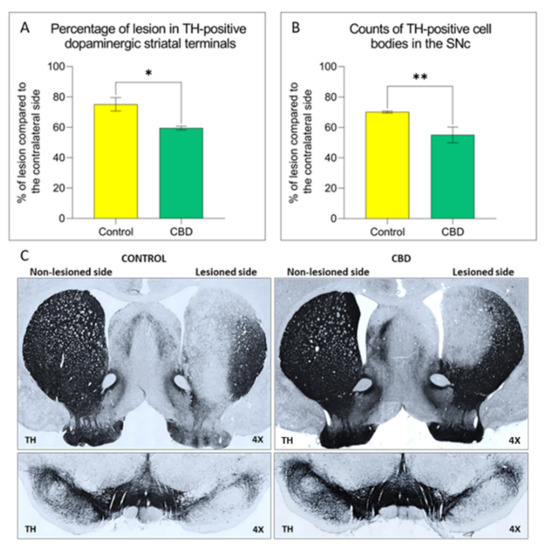
The aim of this study was to evaluate the effects of chronic treatment with CBD (10 mg/kg, i.p.) on PD-associated neurodegenerative and neuroinflammatory processes, and motor deficits in the 6-hydroxydopamine model. Moreover, we investigated the potential mechanisms by which CBD exerted its effects in this model.

CBD-treated animals showed a reduction of nigrostriatal degeneration accompanied by a damping of the neuroinflammatory response and an improvement of motor performance. In particular, CBD exhibits a preferential action on astrocytes and activates the astrocytic transient receptor potential vanilloid 1 (TRPV1), thus, enhancing the endogenous neuroprotective response of ciliary neurotrophic factor (CNTF).

These results overall support the potential therapeutic utility of CBD in PD, as both neuroprotective and symptomatic agent.”

https://pubmed.ncbi.nlm.nih.gov/34445626/

https://www.mdpi.com/1422-0067/22/16/8920

Cannabidiol – A phytocannabinoid that widely affects sphingolipid metabolism under conditions of brain insulin resistance

Biomedicine & Pharmacotherapy“Obesity-related insulin resistance (IR) and attenuated brain insulin signaling are significant risk factors for neurodegenerative disorders, e.g., Alzheimer’s disease. IR and type 2 diabetes correlate with an increased concentration of sphingolipids, a class of lipids that play an essential structural role in cellular membranes and cell signaling pathways.

Cannabidiol (CBD) is a nonpsychoactive constituent of Cannabis sativa plant that interacts with the endocannabinoidome. Despite known positive effects of CBD on improvement in diabetes and its aftermath, e.g., anti-inflammatory and anti-oxidant effects, there are no studies evaluating the effect of phytocannabinoids on the brain insulin resistance and sphingolipid metabolism. Our experiment was carried out on Wistar rats that received a high-fat diet and/or intraperitoneal CBD injections.

In our study, we indicated inhibition of de novo synthesis and salvage pathways, which resulted in significant changes in the concentration of sphingolipids, e.g., ceramide and sphingomyelin. Furthermore, we observed reduced brain IR and decreased tau protein phosphorylation what might be protective against neuropathologies development.

We believe that our research will concern a new possible therapeutic approach with Cannabis -plant derived compounds and within a few years, cannabinoids would be considered as prominent substances for targeting both metabolic and neurodegenerative pathologies.”

https://pubmed.ncbi.nlm.nih.gov/34435590/

“CBD might be an essential factor that leads to the reduction of brain IR. Thus, we believe that our research will concern a new possible therapeutic approach with a Cannabis-plant derived compounds and within a few years, those substances would be considered as prominent compounds for targeting both metabolic and neurodegenerative pathologies.”

https://www.sciencedirect.com/science/article/pii/S0753332221008404?via%3Dihub

Analysis of Toxicity Effects of Delta-9-Tetrahydrocannabinol on Isolated Rat Heart Mitochondria

Publication Cover“Mitochondria have the main roles in myocardial tissue homeostasis, through providing ATP for the vital enzymes in intermediate metabolism, contractile apparatus and maintaining ion homeostasis. Mitochondria-related cardiotoxicity results from the exposure with illicit drugs have previously reported. These illicit drugs interference with processes of normal mitochondrial homeostasis and lead to mitochondrial dysfunction and mitochondrial-related oxidative stress.

Here, we investigated this hypothesis that delta-9-tetrahydrocannabinol (Delta-9-THC) as a main cannabinoid found in cannabis could directly cause mitochondrial dysfunction.

Our observation showed that THC did not cause a deleterious alteration in mitochondrial functions, ROS production, MMP collapse, mitochondrial swelling, oxidative stress and lipid peroxidation in used concentrations (5-100 µM), even in several tests, toxicity showed a decreasing trend.

Altogether, the results of the current study showed that THC is not directly toxic in isolated cardiac mitochondria, and even may be helpful in reducing mitochondrial toxicity.”

https://pubmed.ncbi.nlm.nih.gov/34431445/

https://www.tandfonline.com/doi/abs/10.1080/15376516.2021.1973168?journalCode=itxm20

Systematic review of the impact of cannabinoids on neurobehavioral outcomes in preclinical models of traumatic and nontraumatic spinal cord injury

Spinal Cord“Objectives: To evaluate the impact of cannabinoids on neurobehavioral outcomes in preclinical models of nontraumatic and traumatic spinal cord injury (SCI), with the aim of determining suitability for clinical trials involving SCI patients.

Results: The search returned 8714 studies, 19 of which met our inclusion criteria. Sample sizes ranged from 23 to 390 animals. WIN 55,212-2 (n = 6) and AM 630 (n = 8) were the most used cannabinoid receptor agonist and antagonist respectively. Acute SCI models included traumatic injury (n = 16), ischaemia/reperfusion injury (n = 2), spinal cord cryoinjury (n = 1) and spinal cord ischaemia (n = 1). Assessment tools used assessed locomotor function, pain and anxiety. Cannabinoid receptor agonists resulted in statistically significant improvement in locomotor function in 9 out of 10 studies and pain outcomes in 6 out of 6 studies.

Conclusion: Modulation of the endo-cannabinoid system has demonstrated significant improvement in both pain and locomotor function in pre-clinical SCI models; however, the risk of bias is unclear in all studies. These results may help to contextualise future translational clinical trials investigating whether cannabinoids can improve pain and locomotor function in SCI patients.”

https://pubmed.ncbi.nlm.nih.gov/34392312/

“The results of these studies demonstrate that modulation of the endo-cannabinoid system has significant benefit for both pain and locomotor function across a range of pre-clinical models of acute spinal cord injury.”

https://www.nature.com/articles/s41393-021-00680-y

Localisation of Cannabinoid and Cannabinoid-Related Receptors in the Horse Ileum

Journal of Equine Veterinary Science“Colic is a common digestive disorder in horses and one of the most urgent problems in equine medicine. A growing body of literature has indicated that the activation of cannabinoid receptors could exert beneficial effects on gastrointestinal inflammation and visceral hypersensitivity.

The localisation of cannabinoid and cannabinoid-related receptors in the intestine of the horse has not yet been investigated. The purpose of this study was to immunohistochemically localise the cellular distribution of canonical and putative cannabinoid receptors in the ileum of healthy horses.

Distal ileum specimens were collected from six horses at the slaughterhouse. The tissues were fixed and processed to obtain cryosections which were used to investigate the immunoreactivity of canonical cannabinoid receptors 1 (CB1R) and 2 (CB2R), and three putative cannabinoid-related receptors: nuclear peroxisome proliferator-activated receptor-alpha (PPARα), transient receptor potential ankyrin 1 and serotonin 5-HT1a receptor (5-HT1aR).

Cannabinoid and cannabinoid-related receptors showed a wide distribution in the ileum of the horse.

The epithelial cells showed immunoreactivity for CB1R, CB2R and 5-HT1aR. Lamina propria inflammatory cells showed immunoreactivity for CB2R and 5-HT1aR. The enteric neurons showed immunoreactivity for CB1R, transient receptor potential ankyrin 1 and PPARα. The enteric glial cells showed immunoreactivity for CB1R and PPARα. The smooth muscle cells of the tunica muscularis and the blood vessels showed immunoreactivity for PPARα.

The present study represents a histological basis which could support additional studies regarding the distribution of cannabinoid receptors during gastrointestinal inflammatory diseases as well as studies assessing the effects of non-psychotic cannabis-derived molecules in horses for the management of intestinal diseases.”

https://pubmed.ncbi.nlm.nih.gov/34416995/

“Horses are often affected by gastrointestinal pathologies. Researchers are searching for new therapies for equine gastrointestinal diseases. New products with cannabinoid receptor agonists have been produced for horses. Cannabinoid receptors showed a wide distribution in the ileum of the horse. Activation of cannabinoids receptors could attenuate intestinal inflammation.”

https://www.sciencedirect.com/science/article/abs/pii/S073708062100318X?via%3Dihub


The Impact of CB1 Receptor on Inflammation in Skeletal Muscle Cells

Dove Medical Press - Open Access Publisher of Medical Journals“Background: Various factors trigger the inflammatory response and cytokine activation in skeletal muscle. Inflamed muscle will exhibit significant levels of inflammation and cytokine activity. Interleukin-6 (IL-6), a pro-inflammatory cytokine, exerts pleiotropic effects on skeletal muscle. Endocannabinoid produced by all cell types binds to a class of G protein-coupled receptors, in particular cannabinoid CB1 receptors, to induce skeletal muscle actions.

Objective: The purpose of this research was to discover whether activation of cannabinoid CB1 receptors in L6 skeletal muscle cells may promote IL-6 gene expression.

Materials and methods: L6 skeletal muscle cells were cultured in 25 cm2 flasks and quantitative reverse transcription-polymerase chain reaction (probe-based) utilised to quantify IL-6 gene expression levels among different treatment settings.

Results: Arachidonyl-2′-chloroethylamide (ACEA) 10 nM, a persistent selective CB1 receptor agonist, promotes IL-6 gene expression in a time-dependent manner. Rimonabant 100 nM, a selective cannabinoid CB1 receptor antagonist, blocks the impact of ACEA. However, insulin does not change IL-6 gene expression.

Conclusion: For the first time, a unique link between ACEA and IL-6 up-regulation has been established; IL-6 up-regulation generated by ACEA is mediated in skeletal muscle through cannabinoid CB1 receptor activation. As a result, cannabinoid CB1 receptors may be useful pharmaceutical targets in the treatment of inflammation and related disorders in skeletal muscle tissues.”

https://pubmed.ncbi.nlm.nih.gov/34421307/

“In the present study, I have demonstrated that when cannabinoid CB1 receptors are activated, the expression of IL-6 increases in a way that is influenced by time. Such findings deliver a novel mechanism characterised by cannabinoid analogue playing the role of a pro-inflammatory mediator in the skeletal muscle tissue. The findings from the present study also imply that there may be a possible therapeutic use of cannabinoid CB1 receptor antagonist at acute early states for skeletal muscle dysfunction related to inflammation. My findings point to skeletal muscle cell cannabinoid CB1 receptor as a therapeutic target, and expand its potential to include anti-inflammatory effects in diabetes, obesity, and sarcopenia.”

https://www.dovepress.com/the-impact-of-cb1-receptor-on-inflammation-in-skeletal-muscle-cells-peer-reviewed-fulltext-article-JIR

Pharmacological characterisation of the CB 1 receptor antagonist activity of cannabidiol in the rat vas deferens bioassay

European Journal of Pharmacology“Cannabidiol is increasingly considered for treatment of a wide range of medical conditions. Binding studies suggest that cannabidiol binds to CB1 receptors. In the rat isolated vas deferens bioassay, a single electrical pulse causes a biphasic contraction from nerve-released ATP and noradrenaline. WIN 55,212-2 acts on prejunctional CB1 receptors to inhibit release of these transmitters. In this bioassay, we tested whether cannabidiol and SR141716 were acting as competitive antagonists of this receptor. Monophasic contractions mediated by ATP or noradrenaline in the presence of prazosin or NF449 (P2X1 inhibitor), respectively, were measured to a single electrical pulse delivered every 30 min. Following treatment with cannabidiol (10-100 μM) or SR141716 (0.003-10 μM), cumulative concentrations of WIN 55,212-2 (0.001-30 μM) were applied followed by a single electrical pulse. The WIN 55,212-2 concentration-contraction curve EC50 values were applied to global regression analysis to determine the pKB. The antagonist potency of cannabidiol at the CB1 receptor in the rat vas deferens bioassay matched the reported receptor binding affinity. Cannabidiol was a competitive antagonist of WIN 55,212-2 with pKB values of 5.90 when ATP was the effector transmitter and 5.29 when it was noradrenaline. Similarly, SR141716 was a competitive antagonist with pKB values of 8.39 for ATP and 7.67 for noradrenaline as the active transmitter. Cannabidiol’s low micromolar CB1 antagonist pKB values suggest that at clinical blood levels (1-3 μM) it may act as a CB1 antagonist at prejunctional neuronal sites with more potency when ATP is the effector than for noradrenaline.”

https://pubmed.ncbi.nlm.nih.gov/34416240/

https://www.sciencedirect.com/science/article/abs/pii/S0014299921005860?via%3Dihub

Cannabigerolic acid, a major biosynthetic precursor molecule in cannabis, exhibits divergent effects on seizures in mouse models of epilepsy

British Journal of Pharmacology“Background and purpose: Cannabis has been used to treat epilepsy for millennia, with such use validated by regulatory approval of cannabidiol (CBD) for the treatment of Dravet syndrome. Unregulated artisanal cannabis-based products used to treat children with intractable epilepsies often contain relatively low doses of CBD but are enriched in other phytocannabinoids. This raises the possibility that other cannabis constituents might have anticonvulsant properties.

Experimental approach: We used the Scn1a+/- mouse model of Dravet syndrome to interrogate the cannabis plant for phytocannabinoids with anticonvulsant effects against hyperthermia-induced seizures. The most promising, cannabigerolic acid (CBGA), was further examined against spontaneous seizures and survival in Scn1a+/- mice. CBGA was also examined in conventional electroshock seizure models. In addition, we surveyed the pharmacological effects of CBGA across multiple drug targets.

Key results: The initial screen identified three phytocannabinoids with novel anticonvulsant properties: CBGA, cannabidivarinic acid (CBDVA) and cannabigerovarinic acid (CBGVA). CBGA was the most potent and potentiated the anticonvulsant effects of clobazam against hyperthermia-induced and spontaneous seizures, and was anticonvulsant in the MES threshold test. However, CBGA was proconvulsant in the 6-Hz threshold test and a high dose increased spontaneous seizure frequency in Scn1a+/- mice. CBGA was found to interact with numerous epilepsy-relevant targets including GPR55, TRPV1 channels and GABAA receptors.

Conclusion: These results suggest CBGA, CBDVA and CBGVA may contribute to the effects of cannabis-based products in childhood epilepsy. While these phytocannabinoids have anticonvulsant potential and could be lead compounds for drug development programs, several liabilities would need to be overcome before CBD is superseded by another in this class.”

https://pubmed.ncbi.nlm.nih.gov/34384142/

https://bpspubs.onlinelibrary.wiley.com/doi/10.1111/bph.15661