

“Objective: Add-on cannabidiol (CBD) reduced seizures associated with Dravet syndrome (DS) in two randomized, double-blind, placebo-controlled trials: GWPCARE1 Part B (NCT02091375) and GWPCARE2 (NCT02224703). Patients who completed GWPCARE1 Part A (NCT02091206) or Part B, or GWPCARE2, were enrolled in a long-term open-label extension trial, GWPCARE5 (NCT02224573). We present an interim analysis of the safety, efficacy, and patient-reported outcomes from GWPCARE5.
Methods: Patients received a pharmaceutical formulation of highly purified CBD in oral solution (100 mg/ml), titrated from 2.5 to 20 mg/kg/day over a 2-week period, added to their existing medications. Based on response and tolerance, CBD could be reduced or increased to 30 mg/kg/day.
Results: Of the 330 patients who completed the original randomized trials, 315 (95%) enrolled in this open-label extension. Median treatment duration was 444 days (range = 18-1535), with a mean modal dose of 22 mg/kg/day; patients received a median of three concomitant antiseizure medications. Adverse events (AEs) occurred in 97% patients (mild, 23%; moderate, 50%; severe, 25%). Commonly reported AEs were diarrhea (43%), pyrexia (39%), decreased appetite (31%), and somnolence (28%). Twenty-eight (9%) patients discontinued due to AEs. Sixty-nine (22%) patients had liver transaminase elevations >3 × upper limit of normal; 84% were on concomitant valproic acid. In patients from GWPCARE1 Part B and GWPCARE2, the median reduction from baseline in monthly seizure frequency assessed in 12-week periods up to Week 156 was 45%-74% for convulsive seizures and 49%-84% for total seizures. Across all visit windows, ≥83% patients/caregivers completing a Subject/Caregiver Global Impression of Change scale reported improvement in overall condition.
Significance: We show that long-term CBD treatment had an acceptable safety profile and led to sustained, clinically meaningful reductions in seizure frequency in patients with treatment-resistant DS.”
 “Despite the high incidence of traumatic brain injury (TBI), there is no universal treatment to safely treat patients. Blunt brain injuries destroy primary neural tissue that results in impaired perfusion, excessive release of glutamate, inflammation, excitotoxicity, and progressive secondary neuronal cell death.
  “Importance:
  “Studies investigating the psychosomatic effects of social isolation in animals have shown that one of the physiologic system that gets disrupted by this environment-affective change is the Endocannabinoid System. As the levels of endocannabinoids change in limbic areas and prefrontal cortex during stressful times, so is the subject more prone to fearful and negative thoughts and aggressive behavior. The interplay of social isolation on the hypothalamic-pituitary-adrenal axis and cannabinoid tone triggers a vicious cycle which further impairs the natural body’s homeostatic neuroendocrine levels and provokes a series of risk factors for developing health complications. In this paper, we explore the psychosomatic impact of prolonged quarantine in healthy individuals, and propose management and coping strategies that may improve endocannabinoid tone, such as integration of probiotics, cannabidiol, meditation, and physical exercise interventions with the aim of supporting interpersonal, individual, and professional adherence with COVID-19 emergency public measures whilst minimizing their psycho-physical impact.”
 “Cannabis sativa
 “The Cannabis sativa plant has been used medicinally and recreationally for thousands of years, but recently only relatively some of its constituents have been identified.
 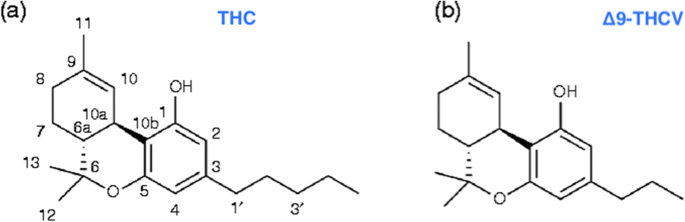 “Δ9-Tetrahydrocannabivarin (THCV) is a cannabis-derived compound with unique properties that set it apart from the more common cannabinoids, such as Δ9-tetrahydrocannabinol (THC). The main advantage of THCV over THC is the lack of psychoactive effects.
 “Introduction: