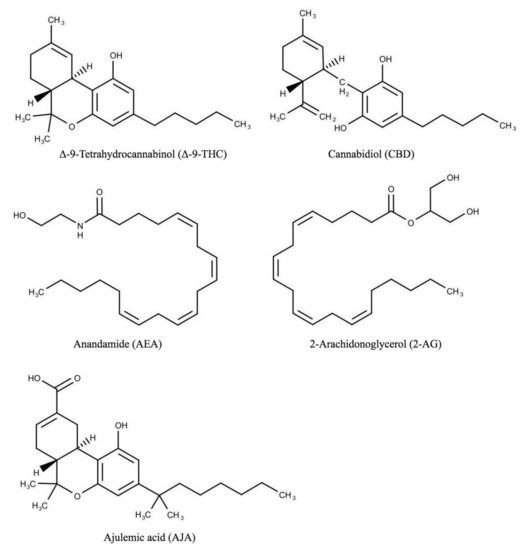
“Background and purpose: Research on demyelinating disorders aims to find novel molecules that are able to induce oligodendrocyte precursor cell differentiation to promote central nervous system remyelination and functional recovery.
Δ9 -Tetrahydrocannabinol (THC), the most prominent active constituent of the hemp plant Cannabis sativa, confers neuroprotection in animal models of demyelination. However, the possible effect of THC on myelin repair has never been studied.
Experimental approach: By using oligodendroglia-specific reporter mouse lines in combination with two models of toxin-induced demyelination, we analysed the effect of THC on the processes of oligodendrocyte regeneration and functional remyelination.
Key results: We show that THC administration enhanced oligodendrocyte regeneration, white matter remyelination and motor function recovery. THC also promoted axonal remyelination in organotypic cerebellar cultures. THC remyelinating action relied on the induction of oligodendrocyte precursor differentiation upon cell cycle exit and via CB1 cannabinoid receptor activation.
Conclusions and implications: Overall, our study identifies THC administration as a promising pharmacological strategy aimed to promote functional CNS remyelination in demyelinating disorders.”
“Our study provides a novel therapeutic advantage of THC-based interventions in multiple sclerosis by promoting remyelination and functional recovery. New clinical trials with improved designs on cannabinoids in people with multiple sclerosis are needed now, considering these compounds as potential remyelinating/disease-modifying drugs to try to overcome previous failures. Our work also suggests that at least part of the neuroprotective action of phytocannabinoids in multiple sclerosis animal models and potentially in patients as well may be due to an enhanced CNS remyelination. Finally, this study also identifies THC as a potent inductor of oligodendrocyte progenitor cell differentiation under demyelination in mice, opening the possibility for this molecule to become a candidate drug to promote oligodendrocyte regeneration and remyelination in the treatment of demyelinating disorders.”
https://bpspubs.onlinelibrary.wiley.com/doi/10.1111/bph.15608
 “α-Pinene represents a member of the monoterpene class and is highly distributed in higher plants like conifers, Juniper ssp. and Cannabis ssp.
 “Introduction:
  “Introduction: Cannabis sativa L. (C. sativa) is used since ancient times to produce fabrics, baskets, and cords. Later, different ethnic groups used to burn the leaves and flowers of psychotropic cultivars with high Δ9-tetrahydrocannabinol (D9-THC) levels, during the religious or propitiatory rites to alter the state of consciousness. To date, it is not known whether also nonpsychotropic cultivars of C. sativa were used during these rites, and whether these varieties could have an effect on human behavior.
 “Neoechinulins are diketopiperazine type indole alkaloids that demonstrate radical scavenging, anti-inflammatory, antiviral, anti-neurodegenerative, neurotrophic factor-like, anticancer, pro-apoptotic, and anti-apoptotic properties.
  “Oral ulcer is a common oral inflammatory lesion accompanied by severe pain but with few effective treatments. Cannabidiol (CBD) is recently emerging for its therapeutic potential in a range of diseases, including inflammatory conditions and cancers.
 “The use of cannabis for skin diseases and hair regrowth is at the preliminary stage.
 “Significant growth of interest in cannabis (