
 “Industrial hemp is characterized by a huge amount of by-products, such as inflorescences, that may represent high-quality sources of biomolecules with pharmaceutical interest.
In the present study, we have evaluated the phytochemical profile, including terpene and terpenophenolic compounds, of the essential oils (EOs) of Futura 75, Carmagnola selezionata and Eletta campana hemp varieties.
The EOs were also tested for antifungal properties toward Trichophyton mentagrophytes, Trichophyton rubrum, Arthroderma crocatum, Arthroderma quadrifidum, Arthroderma gypseum, Arthroderma curreyi, and Arthroderma insingulare. In parallel, we investigated the inhibitory effects of the EOs against tyrosinase, and the production of prostaglandin E2 in isolated mouse skin exposed to hydrogen peroxide.
In human H1299 lung adenocarcinoma cells, we also evaluated the influence of the EOs on the gene expression of angiotensin-converting enzyme 2 (ACE2) and transmembrane protease serine 2 (TMPRSS2), which are involved in SARS-CoV-2 entry in human host. E-caryophyllene and α-pinene were the prominent terpenes in the EOs, whereas the cannabidiolic acid was the terpenophenol present at higher concentration.
The EOs inhibited the growth of all tested dermatophytes species. In isolated skin specimens, EOs prevented the hydrogen-peroxide-induced synthesis of prostaglandin E2, consistent with the intrinsic antityrosinase activity. Finally, in H1299 cells, all tested EOs reduced the gene expression of ACE-2 and TMPRSS2, as well.
Therefore, the present findings highlight the rationale for the use of the present EOs against infectious diseases.”
 “The activity of a new, terpene-based formulation, code-named NT-VRL-1, against Human Coronavirus (HCoV) strain 229E was evaluated in human lung fibroblasts (MRC-5 cells), with and without the addition of cannabidiol (CBD). The main constituents in the terpene formulation used for the experiment were beta caryophyllene, eucalyptol, and citral. The tested formulation exhibited an antiviral effect when it was pre-incubated with the host cells prior to virus infection. The combination of NT-VRL-1 with CBD potentiated the antiviral effect better than the positive controls pyrazofurin and glycyrrhizin. There was a strong correlation between the quantitative results from a cell-viability assay and the cytopathic effect seen under the microscope after 72 h. To the best of our knowledge, this is the first report of activity of a combination of terpenes and CBD against a coronavirus.”
 “A cannabinoid anticancer para-quinone, HU-331, which was synthesized by our group five decades ago, was shown to have very high efficacy against human cancer cell lines in-vitro and against in-vivo grafts of human tumors in nude mice. The main mechanism was topoisomerase IIα catalytic inhibition. Later, several groups synthesized related compounds. In the present presentation, we review the publications on compounds synthesized on the basis of HU-331, summarize their published activities and mechanisms of action and report the synthesis and action of novel quinones, thus expanding the structure-activity relationship in these series.”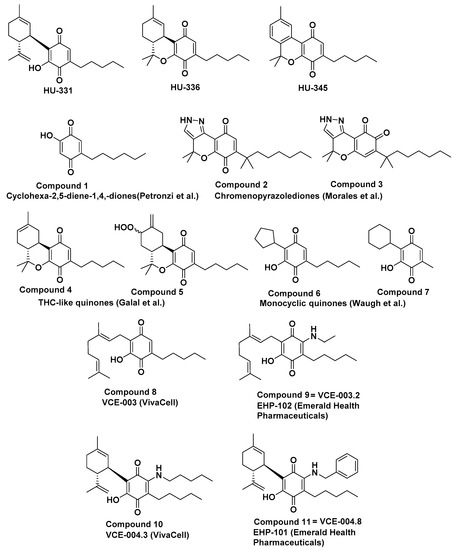

 “Cannabis sativa
 “Autophagy is a “self-degradation” process whereby malfunctioned cytoplasmic constituents and protein aggregates are engulfed by a vesicle called the autophagosome, and subsequently degraded by the lysosome. Autophagy plays a crucial role in sustaining protein homeostasis and can be an alternative source of energy under detrimental circumstances. Studies have demonstrated a paradoxical function for autophagy in cancer, displaying both tumour suppressive and tumour promotive roles. In early phases of tumour development autophagy promotes cancer cell death. In later phases, autophagy enables cancer cells to survive and withstand therapy.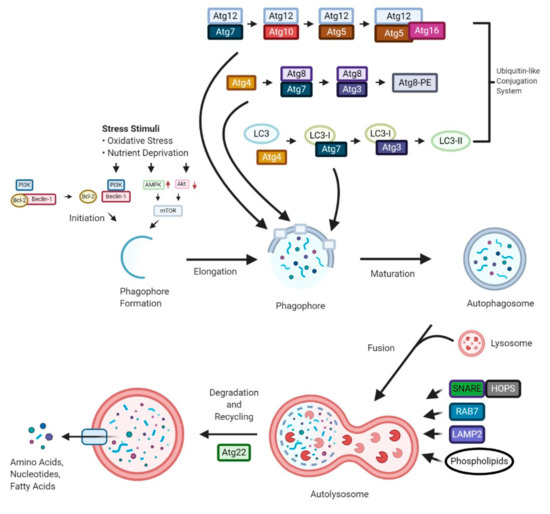

 “Purpose: Hodgkin lymphoma (HL) is the fourth most frequent cancer diagnosis among pregnant females. A multidisciplinary team is mandatory to obtain the best treatment and prognosis for the mother and for the baby. Here, we present the case of a patient diagnosed with HL and its evolution during 2 pregnancies.