Endocannabinoids Inhibit the Induction of Virulence in Enteric Pathogens


“Anxiety disorders in young people are frequently comorbid with other mental disorders and respond unsatisfactorily to first-line treatment in many cases.
Here, we report the case of a 20-year-old man with severe social anxiety disorder, major depressive disorder, insomnia and attenuated psychotic symptoms despite ongoing treatment with cognitive behavioural therapy and mirtazapine who was treated with adjunctive cannabidiol (CBD) in doses between 200 and 800 mg/day for 6 months.
During treatment with CBD, he experienced subjective benefits to his anxiety, depression and positive symptoms during treatment that were confirmed by clinicians and by standardised research instruments.
Findings from this case study add to existing evidence in support of the safety of CBD and suggest that it may be useful for young people with treatment refractory anxiety and for attenuated psychotic symptoms.”
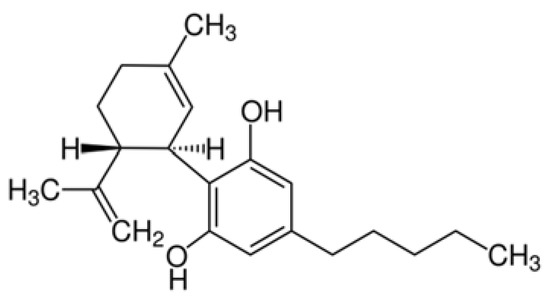
“Pharmaceutically purified oral cannabidiol (CBD) has been recently approved by the US Food and Drug Administration and European Medicines Agency as treatment of seizures associated with Dravet syndrome (DS) and Lennox-Gastaut syndrome (LGS), which are severe and difficult-to-treat developmental and epileptic encephalopathies with onset in early childhood.
Areas covered: This review will critically review the pharmacokinetic properties of CBD, the interactions with antiseizure and non-antiseizure medications, and the main tolerability and safety issues to provide guidance for its use in everyday practice.
Expert opinion: CBD is metabolized in the liver and can influence the activity of enzymes involved in drug metabolism. The best characterized drug-drug interaction is between CBD and clobazam. The most common adverse events include somnolence, gastrointestinal discomfort and increase in serum transaminases.
High-grade purified CBD oral solution represents an effective therapeutic option in patients with DS and LGS.
The findings cannot be extrapolated to other cannabis-based products, synthetic cannabinoids for medicinal use and non-medicinal cannabis and CBD derivatives.”
https://pubmed.ncbi.nlm.nih.gov/33026899/
“Pharmaceutically purified oral cannabidiol (CBD) is approved for treatment of seizures associated with Dravet syndrome and Lennox-Gastaut syndrome.”
https://www.tandfonline.com/doi/abs/10.1080/14737175.2021.1834383?journalCode=iern20
“Background/objectives: Use of cannabis is increasing in a variety of populations in the United States; however, few investigations about how and for what reasons cannabis is used in older populations exist.
Design: Anonymous survey.
Setting: Geriatrics clinic.
Participants: A total of 568 adults 65 years and older.
Intervention: Not applicable.
Measurements: Survey assessing characteristics of cannabis use.
Results: Approximately 15% (N = 83) of survey responders reported using cannabis within the past 3 years. Half (53%) reported using cannabis regularly on a daily or weekly basis, and reported using cannabidiol-only products (46%).
The majority (78%) used cannabis for medical purposes only, with the most common targeted conditions/symptoms being pain/arthritis (73%), sleep disturbance (29%), anxiety (24%), and depression (17%). Just over three-quarters reported cannabis “somewhat” or “extremely” helpful in managing one of these conditions, with few adverse effects.
Just over half obtained cannabis via a dispensary, and lotions (35%), tinctures (35%), and smoking (30%) were the most common administration forms. Most indicated family members (94%) knew about their cannabis use, about half reported their friends knew, and 41% reported their healthcare provider knowing. Sixty-one percent used cannabis for the first time as older adults (aged ≥61 years), and these users overall engaged in less risky use patterns (e.g., more likely to use for medical purposes, less likely to consume via smoking).
Conclusion: Most older adults in the sample initiated cannabis use after the age of 60 years and used it primarily for medical purposes to treat pain, sleep disturbance, anxiety, and/or depression. Cannabis use by older adults is likely to increase due to medical need, favorable legalization, and attitudes.”
https://pubmed.ncbi.nlm.nih.gov/33026117/
https://onlinelibrary.wiley.com/doi/10.1111/jgs.16833
“Study Finds Older Adults Using Cannabis to Treat Common Health Conditions” https://health.ucsd.edu/news/releases/Pages/2020-10-07-study-finds-older-adults-using-cannabis-to-treat-common-health-conditions.aspx
“Rett syndrome (RTT) is a rare neurologic disorder, characterized by severe behavioural and physiological symptoms. RTT is caused by mutations in the MECP2 gene in about 95% of cases and to date no cure is available.
Recent evidence suggests that non-euphoric phytocannabinoids (pCBs) extracted from Cannabis sativa may represent innovative therapeutic molecules for RTT, with the cannabinoid cannabidivarin having beneficial effects on behavioural and brain molecular alterations in RTT mouse models.
The present study evaluated the potential therapeutic efficacy for RTT of cannabidiolic acid (CBDA; 0.2, 2, 20 mg/kg through intraperitoneal injections for 14 days), a pCB that has proved to be effective for the treatment of nausea and anxiety in rodents.
This study demonstrates that systemic treatment with the low dose of CBDA has anti-nociceptive effects and reduces the thermal hyperalgesia in 8-month old MeCP2-308 male mice, a validated RTT mouse model. CBDA did not affect other behavioural or molecular parameters.
These results provide support to the antinociceptive effects of CBDA and stress the need for further studies aimed at clarifying the mechanisms underlying the abnormal pain perception in RTT.”
https://pubmed.ncbi.nlm.nih.gov/33010341/
“Chronic treatment with CBDA reduces pain sensitivity in wild type mice.”
https://www.sciencedirect.com/science/article/abs/pii/S0306452220306254?via%3Dihub
“Providers need to be better equipped to discuss medical cannabis with patients even if they are not willing to prescribe it. The oncology community would be well served to ensure that providers are aware of existing cannabis research and are able to incorporate it into their communications with patients instead of leaving patients to figure out medical cannabis on their own.”
https://pubmed.ncbi.nlm.nih.gov/32986251/
https://acsjournals.onlinelibrary.wiley.com/doi/10.1002/cncr.33204
“Background: Little is known about medical cannabis (MC)-related care for patients with cancer using MC.
Methods: Semistructured telephone interviews were conducted in a convenience sample of individuals (n = 24) with physician-confirmed oncologic diagnoses and state/district authorization to use MC (Arizona, California, Florida, Illinois, Massachusetts, Oregon, New York, and Washington, DC) from April 2017 to March 2019. Standard qualitative techniques were used to assess the degree of MC-related health care oversight, MC practices, and key information sources.
Results: Among 24 participants (median age, 57 years; range, 30-71 years; 16 women [67%]), MC certifications were typically issued by a professional new to a patient’s care after a brief, perfunctory consultation. Patients disclosed MCuse to their established medical teams but received little medical advice about whether and how to use MC. Patients with cancer used MC products as multipurpose symptom management and as cancer-directed therapy, sometimes in lieu of standard-of-care treatments. Personal experimentation, including methodical self-monitoring, was an important source of MC know-how. Absent formal advice from medical professionals, patients relied on nonmedical sources for MC information.
Conclusions: Patients with cancer used MC with minimal medical oversight. Most received MC certifications through brief meetings with unfamiliar professionals. Participants desired but were often unable to access high-quality clinical information about MC from their established medical teams. Because many patients are committed to using MC, a product sustained by a growing industry, medical providers should familiarize themselves with the existing data for MM and its limitations to address a poorly met clinical need.”
https://pubmed.ncbi.nlm.nih.gov/32986266/
“Notably, oncology patients reported using medical cannabis (MC) for symptom management and as cancer‐directed therapy, sometimes instead of traditional treatments.”
https://acsjournals.onlinelibrary.wiley.com/doi/10.1002/cncr.33202
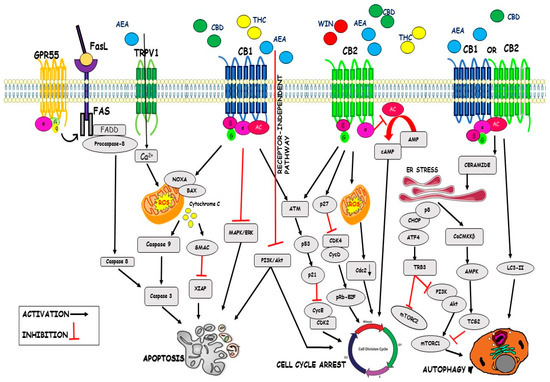
“∆ 9 -Tetrahydrocannabinol (∆9 -THC), the active phytocannabinoid in cannabis, is virtually an adjunct to the endogenous endocannabinoid signaling system.
By interacting with G-protein-coupled receptors CB1 and CB2, ∆9 -THC affects peripheral and central circulation by lowering sympathetic activity, altering gene expression, cell proliferation, and differentiation, decreasing leukocyte migration, modulating neurotransmitter release thereby modulating cardiovascular functioning, tumorigenesis, immune responses, behavioral and locomotory activities respectively.
∆ 9 -THC is effective in suppressing chemotherapy-induced vomiting, retards malignant tumor growth, inhibits metastasis, and promotes apoptosis. Other mechanisms involved are targeting cell cycle at the G2-M phase in human breast cancer, downregulation of E2F transcription factor 1 (E2F1) in human glioblastoma multiforme, and stimulation of ER stress-induced autophagy.
∆ 9 -THC also plays a role in ameliorating neuroinflammation, excitotoxicity, neuroplasticity, trauma, and stroke and is associated with reliving childhood epilepsy, brain trauma, and neurodegenerative diseases.
∆9 -THC via CB1 receptors affects nociception, emotion, memory, and reduces neuronal excitability and excitotoxicity in epilepsy. It also increases renal blood flow, reduces intraocular pressure via a sympathetic pathway, and modulates hormonal release, thereby decreasing the reproductive function and increasing glucose metabolism.
Versatile medical marijuana has stimulated abundant research demonstrating substantial therapeutic promise, suggesting the possibilities of first-in-class drugs in diverse therapeutic segments. In this review, we represent the current pharmacological status of the phytocannabinoid, ∆ 9 -THC, and synthetic analogs in cancer, cardiovascular, and neurodegenerative disorders.”
“Diabetes mellitus (DM), a metabolic disorder is one of the most prevalent chronic diseases worldwide across developed as well as developing nations. Hyperglycemia is the core feature of the type 1 diabetes mellitus (T1DM) and type 2 diabetes mellitus (T2DM), following insulin deficiency and impaired insulin secretion or sensitivity leads insulin resistance (IR), respectively. Genetic and environmental factors attributed to the pathogenesis of DM and various therapeutic strategies are available for the prevention and treatment of T2DM.
Among the numerous therapeutic approaches, the health effects of dietary/nutraceutical approach due to the presence of bioactive constituents, popularly termed phytochemicals are receiving special interest for pharmacological effects and therapeutic benefits. The phytochemicals classes, in particular sesquiterpenes received attention because of potent antioxidant, anti-inflammatory, and antihyperglycemic effects and health benefits mediating modulation of enzymes, receptors, and signaling pathways deranged in DM and its complications.
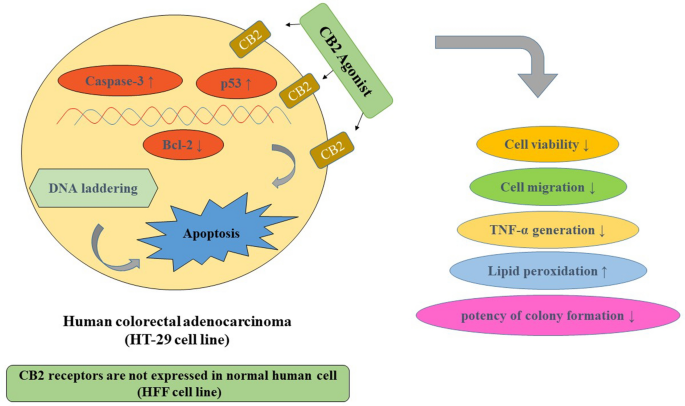
One of the terpene compounds, β-caryophyllene (BCP), received enormous attention because of its abundant occurrence, non-psychoactive nature, and dietary availability through consumption of edible plants including spices. BCP exhibit selective full agonism on cannabinoid receptor type 2 (CB2R), an important component of endocannabinoid system, and plays a role in glucose and lipid metabolism and represents the newest drug target for chronic inflammatory diseases.
Many studies demonstrated its antioxidant, anti-inflammatory, organoprotective, and antihyperglycemic properties. In the present review, the plausible therapeutic potential of BCP in diabetes and associated complications has been comprehensively elaborated based on experimental and a few clinical studies available. Further, the pharmacological and molecular mechanisms of BCP in diabetes and its complications have been represented using synoptic tables and schemes.
Given the safe status, abundant natural occurrence, oral bioavailability, dietary use and pleiotropic properties modulating receptors and enzymes, BCP appears as a promising molecule for diabetes and its complications.”
https://pubmed.ncbi.nlm.nih.gov/32998300/
https://www.mdpi.com/2072-6643/12/10/2963

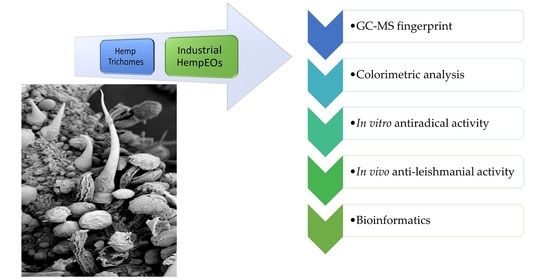
“β-caryophyllene (BCP) is a common constitute of the essential oils of numerous spice, food plants and major component in Cannabis.” http://www.ncbi.nlm.nih.gov/pubmed/23138934
“While activation of cannabinoid (CB2) receptors has been shown to be neuroprotective, no studies have examined whether this neuroprotection is directed at cerebral arterioles and no studies have examined whether activation of CB2 receptors can rescue cerebrovascular dysfunction during a chronic disease state such as type 1 diabetes (T1D).
Our goal was to test the hypothesis that administration of a CB2 agonist (JWH-133) would improve impaired endothelial (eNOS)- and neuronal (nNOS)- dependent dilation of cerebral arterioles during T1D.
In vivo diameter of cerebral arterioles in nondiabetic and T1D rats was measured in response to an eNOS-dependent agonist (adenosine 5′-diphosphate; ADP), an nNOS-dependent agonist (N-methyl-D-aspartate; NMDA), and an NOS-independent agonist (nitroglycerin) before and 1 hour following JWH-133 (1 mg/kg IP). Dilation of cerebral arterioles to ADP and NMDA was greater in nondiabetic than in T1D rats.
Treatment with JWH-133 increased responses of cerebral arterioles to ADP and NMDA in both nondiabetic and T1D rats. Responses of cerebral arterioles to nitroglycerin were similar between nondiabetic and T1D rats, and JWH-133 did not influence responses to nitroglycerin in either group. The restoration in responses to the agonists by JWH-133 could be inhibited by treatment with a specific inhibitor of CB2 receptors (AM-630; 3 mg/kg IP).
Thus, activation of CB2 receptors can potentiate reactivity of cerebral arterioles during physiologic and pathophysiologic states. We speculate that treatment with CB2 receptor agonists may have potential therapeutic benefits for the treatment of cerebral vascular diseases via a mechanism that can increase cerebral blood flow.”
https://pubmed.ncbi.nlm.nih.gov/32979391/
“Activation of CB2 receptors improves cerebral vascular function. Activation of CB2 receptors improves responses in type 1 diabetes. We speculate that treatment with CB2 receptor agonists may have potential therapeutic benefits for the treatment of cerebral vascular disease that can contribute to the pathogenesis of stroke.”
https://www.sciencedirect.com/science/article/pii/S0026286220301370?via%3Dihub