
 “In recent decades, epidemiological, clinical, and experimental studies have demonstrated that a diet with antioxidant or anti-inflammatory function plays a central role in the prevention of atherosclerosis (AS).
The purpose of this study was to explore the effects of Cannabis seed oil (CO) administration on in vitro antioxidant capacity as well as blood lipid profiles, lipid peroxidation, inflammatory response, and endothelial cell integrity. Female ApoE-/- mice were fed a high-cholesterol diet and administrated with CO or phosphate-buffered saline (PBS) and seal oil by gavage for 8 weeks.
The results show that CO administration reduced the levels of serum triglycerides and low-density lipoprotein cholesterol at week 6. Additionally, a decrease in serum tumor necrosis factor α and nitric oxide was also observed. Moreover, results from CD31 staining and scanning electron microscopy revealed that CO treatment alleviated the endothelial cell damage and lipid deposition induced by a high-cholesterol diet. The ratio of lesion area to the total aorta area was 19.57% for the CO group, which was lower than the PBS control group (24.67%).
Collectively, CO exerted anti-atherosclerotic effects by modulating serum lipid profiles and inflammatory responses and improving endothelial cell integrity and arterial lipid deposition. The results provide a promising preventive strategy for the early progression of AS.”
 “This study aims to add evidence regarding the impact marijuana use has on the prevalence of cardiovascular disease.
 “A large number of cannabinoids have been discovered that could play a role in mitigating cardiac affections. However, none of them has been as widely studied as cannabidiol (CBD), most likely because, individually, the others offer only partial effects or can activate potential harmful pathways.
 “(E)-β-caryophyllene (BCP) is a bicyclic sesquiterpene widely distributed in the plant kingdom, where it contributes a unique aroma to essential oils and has a pivotal role in the survival and evolution of higher plants.
 “Multiple therapeutic properties have been attributed to Cannabis sativa. However, further research is required to unveil the medicinal potential of Cannabis and the relationship between biological activity and chemical profile.
 “This article provides a concise overview of how cannabinoids and the endocannabinoid system (ECS) have significant implications for the prevention and treatment of metabolic syndrome (MetS) and for the treatment of cardiovascular disorders, including cardiac fibrosis.
 “Cannabidiol (CBD) is known for its vasorelaxant (including in the human pulmonary artery), anti-proliferative and anti-inflammatory properties. The aim of our study was to examine the potential preventive effect of chronic CBD administration (10 mg/kg/day for three weeks) on monocrotaline (MCT)-induced pulmonary hypertension (PH) rats.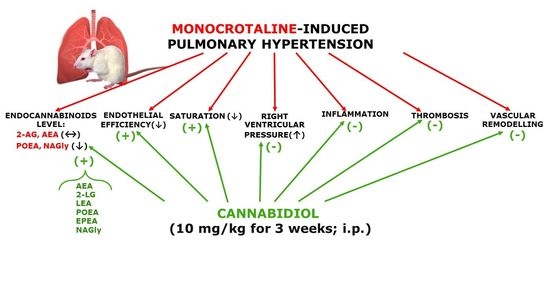
 “Chronic ethanol abuse can lead to harmful consequences for the heart, resulting in systolic dysfunction, variability in the heart rate, arrhythmia, and cardiac remodelling. However, the precise molecular mechanism responsible for ethanol-induced cardiomyopathy is poorly understood. In this regard, the present study aimed to describe the RIP1/RIP3/MLKL-mediated necroptotic cell death that may be involved in ethanol-induced cardiomyopathy and characterize CBR-mediated effects on the signalling pathway and myocardial injury.
 “In recent years, the role of the endocannabinoid system (ECS) in various cardiovascular conditions has been a subject of great interest. The ECS is composed of cannabinoid receptors, their endogenous ligands, also known as endocannabinoids, and enzymes responsible for the synthesis and degradation of endocannabinoids.