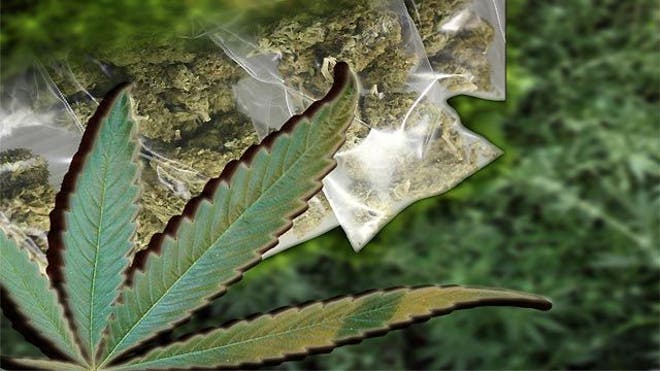
Study: Cannabis may prevent brain damage – FOX

“Marijuana continues to be a paradox as it makes its way from illicit drug to wonder medicine being used to treat a number of symptoms and disorders more safely than traditional pharmaceuticals.”

  • 110712_fr_marijuana2_640.jpg
     

“In the latest news, cannabis, which has been associated with long-term cognitive deficits in chronic users, is now being tested as a treatment to preserve brain function after traumatic injury.

…some reports have shown that cannabis has neuroprotective effects. Studies have suggested that it has protective effects in neurodegenerative diseases like multiple sclerosis, Alzheimer’s, Huntington’s and Parkinson’s diseases.”

More: http://www.foxnews.com/health/2013/06/06/study-cannabis-may-prevent-brain-damage/

Read more: http://www.foxnews.com/health/2013/06/06/study-cannabis-may-prevent-brain-damage/#ixzz2VXJJw9yc

The endocannabinoid system and its therapeutic exploitation.

Image result for Nat Rev Drug Discov.

“The term ‘endocannabinoid’ – originally coined in the mid-1990s after the discovery of membrane receptors for the psychoactive principle in Cannabis, Delta9-tetrahydrocannabinol and their endogenous ligands – now indicates a whole signalling system that comprises cannabinoid receptors, endogenous ligands and enzymes for ligand biosynthesis and inactivation. This system seems to be involved in an ever-increasing number of pathological conditions. With novel products already being aimed at the pharmaceutical market little more than a decade since the discovery of cannabinoid receptors, the endocannabinoid system seems to hold even more promise for the future development of therapeutic drugs. We explore the conditions under which the potential of targeting the endocannabinoid system might be realized in the years to come.”  http://www.ncbi.nlm.nih.gov/pubmed/15340387

http://www.nature.com/nrd/journal/v3/n9/full/nrd1495.html

Medical cannabis: the opportunity versus the temptation.

“The cannabis plant has been known to humanity for centuries as a remedy for pain, diarrhea, and inflammation. Current research has shown cannabis to be a useful remedy for many diseases, including multiple sclerosis, dystonia, and chronic pain.

 Cannabinoids are used to improve food intake in anorexia of AIDS patients and to prevent vomiting due to cancer chemotherapy. In inflammatory conditions cannabinoids improve pain in rheumatoid arthritis and pain and diarrhea in Crohn’s disease. Cannabinoids reduce the size of brain infarct and cardiac reperfusion injury. However, cannabinoid treatment is not free of side effects including euphoria, psychosis, anxiety, paranoia, dependence and abuse.

Since the cannabinoid system is involved in many physiological and pathological processes, the therapeutic potential is great. We must not be blind to the opportunity offered to us by medical cannabis just because it is an illicit drug, nor should we be temped by the quick response of patients to the central effect of cannabis. More research is warranted to explore the full potential of cannabis as medicine.”

http://www.ncbi.nlm.nih.gov/pubmed/22352284

A tale of two cannabinoids: the therapeutic rationale for combining tetrahydrocannabinol and cannabidiol.

“This study examines the current knowledge of physiological and clinical effects of tetrahydrocannabinol (THC) and cannabidiol (CBD) and presents a rationale for their combination in pharmaceutical preparations. Cannabinoid and vanilloid receptor effects as well as non-receptor mechanisms are explored, such as the capability of THC and CBD to act as anti-inflammatory substances independent of cyclo-oxygenase (COX) inhibition.

CBD is demonstrated to antagonise some undesirable effects of THC including intoxication, sedation and tachycardia, while contributing analgesic, anti-emetic, and anti-carcinogenic properties in its own right.

In modern clinical trials, this has permitted the administration of higher doses of THC, providing evidence for clinical efficacy and safety for cannabis based extracts in treatment of spasticity, central pain and lower urinary tract symptoms in multiple sclerosis, as well as sleep disturbances, peripheral neuropathic pain, brachial plexus avulsion symptoms, rheumatoid arthritis and intractable cancer pain. Prospects for future application of whole cannabis extracts in neuroprotection, drug dependency, and neoplastic disorders are further examined.

The hypothesis that the combination of THC and CBD increases clinical efficacy while reducing adverse events is supported.”

http://www.ncbi.nlm.nih.gov/pubmed/16209908

[Marihuana and cannabinoids as medicaments].

“Biological activity of cannabinoids is caused by binding to two cannabinoid receptors CB1 and CB2. Psychoactive is not only tetrahydrocannabinol (THC) but also: cannabidiol, cannabigerol or cannabichromen. Formerly, the usefulness of hemp was assessed in the relation to temporary appeasement of the symptoms of some ailments as nausea or vomiting.

 Present discoveries indicates that cannabis-based drugs has shown ability to alleviate of autoimmunological disorders such as: Multiple sclerosis (MS), Rheumatoid arthritis (RA) or inflammatory bowel disease. Another studies indicates that cannabinoids play role in treatment of neurological disorders like Alzheimer disease or Amyotrophic lateral sclerosis (ALS) or even can reduce spreading of tumor cells.

 Cannabinoids stand out high safety profile considering acute toxicity, it is low possibility of deadly overdosing and side-effects are comprise in range of tolerated side-effects of other medications.

In some countries marinol and nabilone are used as anti vomiting and nausea drug. First cannabis-based drug containg naturally occurring cannabinoids is Sativex. Sativex is delivered in an mucosal spray for patients suffering from spasticity in MS, pain relevant with cancer and neuropathic pain of various origin. Despite the relatively low acute toxicity of cannabinoids they should be avoid in patients with psychotic disorders, pregnant or breastfeeding woman. Cannabinoids prolong a time of reaction and decrease power of concentration that’s why driving any vehicles is forbidden.

 Cannabis side-effects varies and depend from several factors like administrated dose, rout of administration and present state of mind. After sudden break from long-lasting use, withdrawal symptoms can appear, although they entirely disappear after a week or two.”

http://www.ncbi.nlm.nih.gov/pubmed/23421098

[Cannabinoids for symptomatic therapy of multiple sclerosis].

“Spasticity represents a common troublesome symptom in patients with multiple sclerosis (MS). Treatment of spasticity remains difficult, which has prompted some patients to self-medicate with and perceive benefits from cannabis. Advances in the understanding of cannabinoid biology support these anecdotal observations.

Various clinical reports as well as randomized, double-blind, placebo-controlled studies have now demonstrated clinical efficacy of cannabinoids for the treatment of spasticity in MS patients. Sativex is a 1:1 mix of delta-9-tetrahydocannabinol and cannabidiol extracted from cloned Cannabis sativa chemovars, which recently received a label for treating MS-related spasticity in Germany.

The present article reviews the current understanding of cannabinoid biology and the value of cannabinoids as a symptomatic treatment option in MS.”

http://www.ncbi.nlm.nih.gov/pubmed/22080198

Symptomatic therapy in multiple sclerosis: the role of cannabinoids in treating spasticity

“Anecdotal evidence suggests a beneficial effect of cannabis on spasticity as well as pain. Recently, randomized, double-blind, placebo-controlled studies have confirmed the clinical efficacy of cannabinoids for the treatment of spasticity in patients with MS. Based on these data, nabiximols (Sativex), a 1:1 mix of Δ-9-tetrahydrocannabinol and cannabidiol extracted from cloned Cannabis sativa chemovars, received approval for treating MS-related spasticity in various countries around the globe. In this article we review the current understanding of cannabinoid biology and the value of cannabinoids as a symptomatic treatment option addressing spasticity in patients with MS.

Based on individual case reports, the consumption of plant parts, specifically, the resin of the Cannabis sativa hemp plant, has, for years, been attributed to the capacity to reduce the symptoms of multiple sclerosis (MS), such as spasticity, neuropathic pain, tremor, and disturbed bladder function. As characterization of the endocannabinoid system and its role in the motor system and pain processing continue to advance, there is increasing evidence of a scientific basis for the postulated therapeutic effect of cannabis derivatives.

The oromucosal administration of THC and CBD in a 1:1 ratio has proven to be a well tolerated therapeutic option for treating spasticity in patients with MS who respond poorly to conventional antispastic drugs. Assessment of the efficacy is limited by the fact that spasticity as a symptom is very difficult to measure reliably, objectively, and validly. Current study data support the position that the beneficial effects of nabiximols on subjective and objective endpoints in a selected patient sample outweigh the adverse pharmaceutical effects. The effects of long-term nabiximols treatment on neuropsychological processes and the structure of the endocannabinoid system need to be further characterized.”

Full text: http://www.ncbi.nlm.nih.gov/pmc/articles/PMC3437528/

[Cannabinoids in multiple sclerosis — therapeutically reasonable?].

“For centuries extracts from the Cannabis sativa plant have been used for recreational use and as remedies. Anecdotal reports from patients with multiple sclerosis (MS) experiencing relief of their spasticity and pain after smoking marihuana have prompted discussions about a potential therapeutic application of cannabis preparations in MS.

Only recently the first large, multicenter, double-blind, placebo controlled study was conducted evaluating the use of cannabinoids for treatment of spasticity and other symptoms related to MS.

 Based on this trial and previous uncontrolled observations together with insights from basic research and animal experiments there is reasonable evidence for the therapeutical employment of cannabinoids in the treatment of MS related symptoms.

 Furthermore, data are arising that cannabinoids have immunomodulatory and neuroprotective properties. However, results from clinical trials do not allow the recommendation for the general use of cannabinoids in MS.

This article summarizes the present knowledge of clinical and experimental research regarding the therapeutic potential of cannabinoids for the treatment of MS”

http://www.ncbi.nlm.nih.gov/pubmed/16052440

Sativex® in multiple sclerosis spasticity: a cost-effectiveness model.

“Multiple sclerosis (MS) is a chronic, progressive disease that carries a high socioeconomic burden. Spasticity (rigidity and spasms) is common in MS and a key contributor to MS-related disability.

This study evaluated the cost-effectiveness of Sativex®, a 9-d-tetrahydrocannabinol/cannabidiol-based oromucosal spray that acts as an endocannabinoid system modulator. Sativex was recently approved for the management of resistant MS spasticity as add-on medication.

CONCLUSION:

Despite having a relatively high acquisition cost, Sativex was shown to be a cost-effective treatment option for patients with MS-related spasticity.”

http://www.ncbi.nlm.nih.gov/pubmed/22681512

Cost effectiveness of oromucosal cannabis-based medicine (sativex®) for spasticity in multiple sclerosis.

“Spasticity is common in patients with multiple sclerosis (MS) and is a major contributor to disability. Sativex®, an oromucosal spray containing cannabis-based medicinal products, has been found to be effective in reducing spasticity symptoms.

Our objective was to estimate the cost effectiveness of Sativex® plus oral anti-spasticity medicines compared with the current standard treatment for moderate or severe spasticity in MS in the UK.

CONCLUSIONS:

Using a willingness-to-pay threshold of £30 000 per QALY, Sativex® appears unlikely to be considered cost effective by UK funders of healthcare for spasticity in MS. This is unfortunate, since it appears that Sativex® use is likely to benefit some patients in the management of this common consequence of MS.”

http://www.ncbi.nlm.nih.gov/pubmed/23072659