“The level of the major endocannabinoids anandamide (AEA) and 2-arachidonoylglycerol (2-AG) are altered in several types of carcinomas, and are known to regulate tumor growth. Thusly, this study hypothesized that the HEp-2 human laryngeal squamous cell carcinoma (LSCC) cell line releases AEA and 2-AG, and aimed to determine if their exogenous supplementation has an anti-proliferative effect in vitro.
In this in vitro observational study a commercial human LSCC cell line (HEp-2) was used to test for endogenous AEA and 2-AG release via liquid chromatography-tandem mass spectrometry (LC-MS/MS). The anti-proliferative effect of AEA and 2-AG supplementation was evaluated via WST-1 proliferation assay. It was observed that the HEp-2 LSCC cell line released AEA and 2-AG; the median quantity of AEA released was 15.69 ng mL-1 (range: 14.55-15.95 ng mL-1) and the median quantity of 2-AG released was 2.72 ng -1 (range: 2.67-2.74 ng mL-1). Additionally, both AEA and 2-AG exhibited an anti-proliferative effect. The anti-proliferative effect of 2-AG was stronger than that of AEA. These findings suggest that AEA might function via a CB1 receptor-independent pathway and that 2-AG might function via a CB2-dependent pathway.
The present findings show that the HEp-2 LSCC cell line releases the major endocannabinoids AEA and 2-AG, and that their supplementation inhibits tumor cell proliferation in vitro. Thus, cannabinoid ligands might represent novel drug candidates for laryngeal cancers, although functional in vivo studies are required in order to validate their potency.”
https://pubmed.ncbi.nlm.nih.gov/33797678/
https://link.springer.com/article/10.1007/s10561-021-09917-9
 “Providers need to be better equipped to discuss medical cannabis with patients even if they are not willing to prescribe it. The oncology community would be well served to ensure that providers are aware of existing cannabis research and are able to incorporate it into their communications with patients instead of leaving patients to figure out medical cannabis on their own.”
 “In recent years, and even more since its legalization in several jurisdictions, cannabis and the endocannabinoid system have received an increasing amount of interest related to their potential exploitation in clinical settings. Cannabinoids have been suggested and shown to be effective in the treatment of various conditions. In cancer, the endocannabinoid system is altered in numerous types of tumours and can relate to cancer prognosis and disease outcome. Additionally, cannabinoids display anticancer effects in several models by suppressing the proliferation, migration and/or invasion of cancer cells, as well as tumour angiogenesis. However, the therapeutic use of cannabinoids is currently limited to the treatment of symptoms and pain associated with chemotherapy, while their potential use as cytotoxic drugs in chemotherapy still requires validation in patients. Along with cannabinoids, cannabis contains several other compounds that have also been shown to exert anti-tumorigenic actions. The potential anti-cancer effects of cannabinoids, terpenes and flavonoids, present in cannabis, are explored in this literature review.”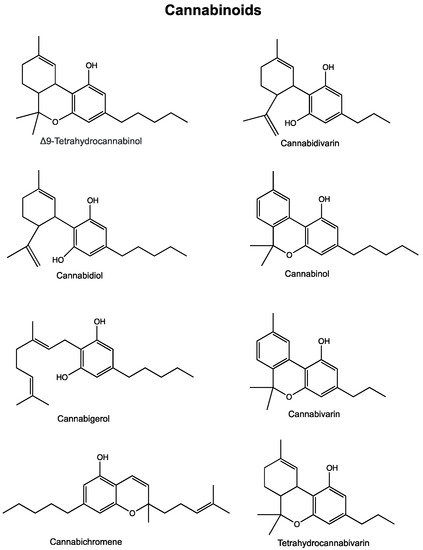
 “The recent announcement of marijuana legalization in Canada spiked many discussions about potential health benefits of Cannabis sativa.
 “In recent years, the endocannabinoid system has received great interest as a potential therapeutic target in numerous pathological conditions.
 “Little is known about the endocannabinoid (eCB) system in squamous cell carcinoma of the oral tongue (SCCOT). Here we have investigated, at the mRNA level, expression of genes coding for the components of the eCB system in tumour and non-malignant samples from SCCOT patients. Expression of NAPEPLD and PLA2G4E, coding for eCB anabolic enzymes, was higher in the tumour tissue than in non-malignant tissue. Among genes coding for eCB catabolic enzymes, expression of MGLL was lower in tumour tissue while PTGS2 was increased. It is concluded that the eCB system may be dysfunctional in SCCOT.”