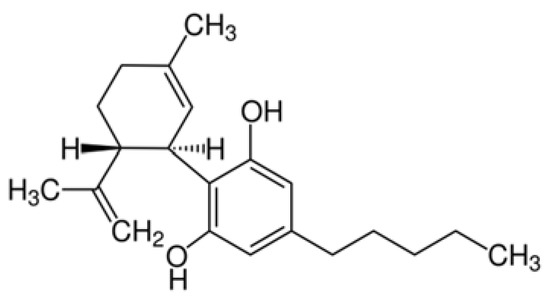
 “An observational research design was used to evaluate which types of commonly labeled Cannabis flower product characteristics are associated with changes in momentary feelings of distress-related symptoms.
Results: In total, a decrease in symptom intensity levels was reported in 95.51% of Cannabis usage sessions, an increase in 2.32% of sessions, and no change in 2.16% of sessions. Fixed effects models showed, on average, respondents recorded a maximum symptom intensity reduction of 4.33 points for agitation/irritability (SE = 0.20, p < 0.01), 3.47 points for anxiety (SE = 0.13, p < 0.01), and 3.98 for stress (SE = 0.12, p < 0.01) on an 11-point visual analog scale. Fixed effects regressions showed that, controlling for time-invariant user characteristics, mid and high tetrahydrocannabinol (THC) levels were the primary independent predictor of increased symptom relief, and that when broken out by symptom type, this effect was only statistically significant for our largest sample of users, those reporting anxiety rather than agitation/irritability or stress. Cannabidiol (CBD) levels were generally not associated with changes in symptom intensity levels. In a minority of cannabis use sessions (< 13%), cannabis users reported anxiogenic-related negative side effects (e.g., feeling anxious, irritable, paranoid, rapid pulse, or restless), whereas in a majority of sessions (about 66%), users reported positive anxiolytic side effects (e.g., feeling chill, comfy, happy, optimistic, peaceful, or relaxed).
Conclusions: The findings suggest the majority of patients in our sample experienced relief from distress-related symptoms following consumption of Cannabis flower, and that among product characteristics, higher THC levels were the strongest predictors of relief.”
https://pubmed.ncbi.nlm.nih.gov/33526145/
“Our findings suggest that self-directed use of Cannabis flower, especially that with higher THC levels, is associated with significant improvements in at least short-term feelings of distress in many users, likely a contributing factor to its widespread popularity and consumption in the U.S.”
https://jcannabisresearch.biomedcentral.com/articles/10.1186/s42238-020-00051-z
 “Cannabis
 “Foodborne protein hydrolysates exhibit biological activity that may be therapeutic in a number of human disease settings. Hemp peptides (HP) generated by controlled hydrolysis of hemp proteins have a number of health benefits and are of pharmaceutical value. In the present study, we produce small molecular weight HP from hemp seed and investigate its anticancer properties in Hep3B human liver cancer cells. We demonstrate that HP treatment increased apoptosis, reduced cell viability, and reduced cell migration in Hep3B human liver cancer cells without affecting the normal liver cell line L02. We correlate these phenotypes with increased cellular ROS levels, upregulation of cleaved caspase 3 and Bad, and downregulation of antiapoptotic Bcl-2. HP treatment led to increased Akt and GSK-3β phosphorylation, with subsequent downregulation of β-catenin, suggesting β-catenin signaling modulation as a critical mechanism by which HP exhibits anticancer properties. Our findings suggest HP are of potential therapeutic interest for liver cancer treatment.”
 “Cannabinoids are a family of heterogeneous compounds that mostly interact with receptors eliciting several physiological effects both in the central and peripheral nervous systems and in peripheral organs. They exert anticancer action by modulating signaling pathways involved in cancer progression; furthermore, the effects induced by their use depend on both the type of tumor and their action on the components of the endocannabinoid system. This review will explore the mechanism of action of the cannabinoids in signaling pathways involved in cancer proliferation, neovascularisation, migration, invasion, metastasis, and tumor angiogenesis.”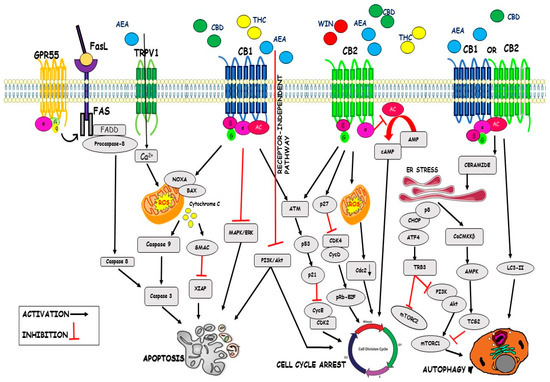
 “Agents targeting the endocannabinoid system (ECS) have gained attention as potential cancer treatments. Given recent evidence that cannabinoid receptor 2 (CB2R) regulates lymphocyte development and inflammation, we performed studies on CB2R in the immune response against melanoma. Analysis of The Cancer Genome Atlas (TCGA) data revealed a strong positive correlation between CB2R expression and survival, as well as B cell infiltration in human melanoma. In a murine melanoma model, CB2R expression reduced the growth of melanoma as well as the B cell frequencies in the tumor microenvironment (TME), compared to CB2R-deficient mice. In depth analysis of tumor-infiltrating B cells using single-cell RNA sequencing suggested a less differentiated phenotype in tumors from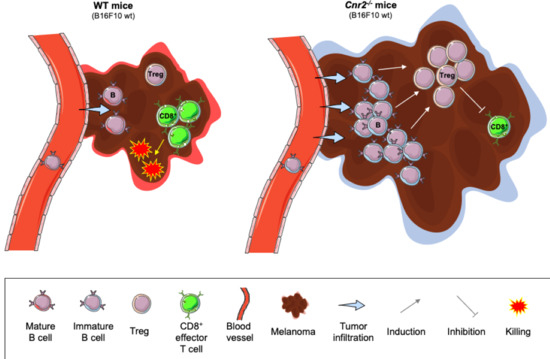
 “Colorectal cancer (CRC) is between the top three occurring cancers worldwide. The anticancer effects of Cannabinoid receptor 2 (CB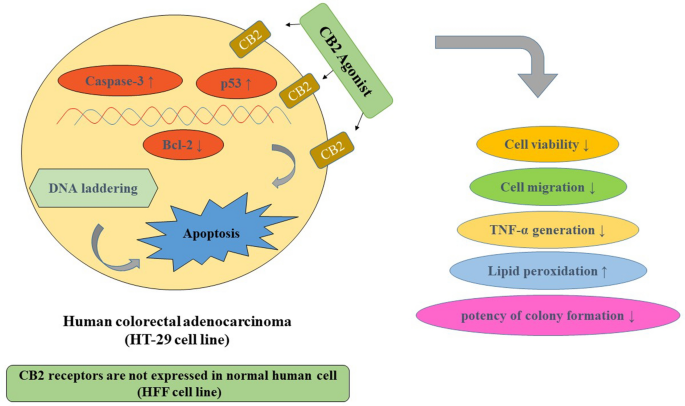
 “In recent years, evidence has accumulated that cannabinoids-especially the non-psychoactive compound, cannabidiol (CBD)-possess promising medical and pharmacological activities that might qualify them as potential anti-tumor drugs. This review is based on multiple studies summarizing different mechanisms for how CBD can target tumor cells including cannabinoid receptors or other constituents of the endocannabinoid system, and their complex activation of biological systems that results in the inhibition of tumor growth. CBD also participates in anti-inflammatory activities which are related to tumor progression, as demonstrated in preclinical models. Although the numbers of clinical trials and tested tumor entities are limited, there is clear evidence that CBD has anti-tumor efficacy and is well tolerated in human cancer patients. In summary, it appears that CBD has potential as a neoadjuvant and/or adjuvant drug in therapy for cancer.”