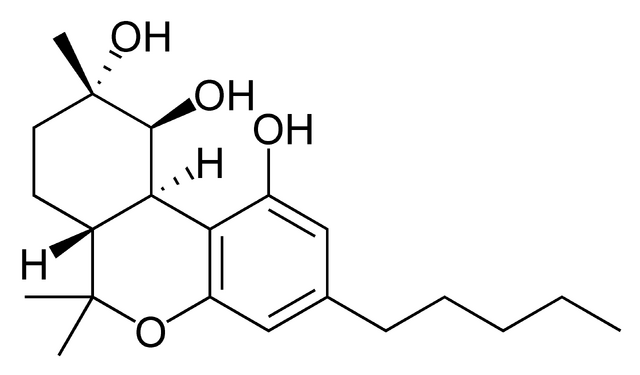
Decreased glial reactivity could be involved in the antipsychotic-like effect of cannabidiol.

“Cannabidiol (CBD), a major non-psychotomimetic constituent of Cannabis sativa with anti-inflammatory and neuroprotective properties induces antipsychotic-like effects.

The present study evaluated if repeated treatment with CBD would attenuate the behavioral and glial changes observed in an animal model of schizophrenia…

These data reinforces the proposal that CBD may induce antipsychotic-like effects.

Although the possible mechanism of action of these effects is still unknown, it may involve CBD anti-inflammatory and neuroprotective properties.

Furthermore, our data support the view that inhibition of microglial activation may improve schizophrenia symptoms.”

http://www.ncbi.nlm.nih.gov/pubmed/25680767

http://www.thctotalhealthcare.com/category/schizophrenia/

Exploiting Cannabinoid-Induced Cytotoxic Autophagy to Drive Melanoma Cell Death.

“While the global incidence of cutaneous melanoma is increasing, survival rates for patients with metastatic disease remain less than 10%. Novel treatment strategies are therefore urgently required, particularly for patients bearing BRAF/NRAS wildtype tumours.

Targeting autophagy is a novel means to promote cancer cell death in chemotherapy-resistant tumours and the aim of the present study was to test the hypothesis that cannabinoids promote autophagy-dependent apoptosis in melanoma.

Treatment with Δ9-Tetrahydrocannabinol (THC) resulted in the activation of autophagy, loss of cell viability and activation of apoptosis, while co-treatment with chloroquine or knockdown of Atg7, but not Beclin-1 or Ambra1, prevented THC-induced autophagy and cell death in vitro.

Administration of Sativex-like (a laboratory preparation comprising equal amounts of THC and cannabidiol (CBD)) to mice bearing BRAF wildtype melanoma xenografts substantially inhibited melanoma viability, proliferation and tumour growth paralleled by an increase in autophagy and apoptosis compared to standard single agent temozolomide.

Collectively our findings suggest THC activates non-canonical autophagy-mediated apoptosis of melanoma cells, suggesting cytotoxic autophagy induction with Sativex warrants clinical evaluation for metastatic disease.”

http://www.ncbi.nlm.nih.gov/pubmed/25674907

http://www.thctotalhealthcare.com/category/melanoma/

Evaluation of Phytocannabinoids from High Potency Cannabis sativa using In Vitro Bioassays to Determine Structure-Activity Relationships for Cannabinoid Receptor 1 and Cannabinoid Receptor 2.

“Cannabis has been around for thousands of years and has been used recreationally, medicinally, and for fiber.

Over 500 compounds have been isolated from Cannabis sativa with approximately 105 being cannabinoids. Of those 105 compounds, Δ9-tetrahydrocannabinol has been determined as the primary constituent, which is also responsible for the psychoactivity associated with Cannabis.

Cannabinoid receptors belong to the large superfamily of G protein-coupled receptors.

Targeting the cannabinoid receptors has the potential to treat a variety of conditions such as pain, neurodegeneration, appetite, immune function, anxiety, cancer, and others.

Developing in vitro bioassays to determine binding and functional activity of compounds has the ability to lead researchers to develop a safe and effective drug that may target the cannabinoid receptors…”

http://www.ncbi.nlm.nih.gov/pubmed/25419092

Cannabinoid receptor type 2, but not type 1, is up-regulated in peripheral blood mononuclear cells of children affected by autistic disorders.

“Autistic disorders (ADs) are heterogeneous neurodevelopmental disorders arised by the interaction of genes and environmental factors. Dysfunctions in social interaction and communication skills, repetitive and stereotypic verbal and non-verbal behaviours are common features of ADs.

There are no defined mechanisms of pathogenesis, rendering curative therapy very difficult…

In this study, we investigated the involvement of cannabinoid system…

Our data indicate CB2 receptor as potential therapeutic target for the pharmacological management of the autism care.”

http://www.ncbi.nlm.nih.gov/pubmed/23585028

http://www.thctotalhealthcare.com/category/autism/

Δ9 -tetrahydrocannabinol and cannabidiol as potential curative agents for cancer. A critical examination of the preclinical literature.

“An internet search with searchwords “cannabis cures cancer” produce a wealth of sites claiming that cannabis has this effect. These sites are freely accessible to the general public and thus contribute to public opinion. But do Δ9 -tetrahydrocannabinol (Δ9 -THC) and cannabidiol (CBD) cure cancer? In the absence of clinical data other than a safety study and case reports, preclinical data should be evaluated in terms of its predictive value. Using a strict approach where only concentrations and/or models relevant to the clinical situation are considered, the current preclinical data does not yet provide robust evidence that systemically administered Δ9 -THC will be useful for the curative treatment of cancer. There is more support for an intratumoural route of administration of higher doses of Δ9 -THC. CBD produces effects in relevant concentrations and models, although more data are needed concerning its use in conjunction with other treatment strategies.”

http://www.ncbi.nlm.nih.gov/pubmed/25669486

http://www.thctotalhealthcare.com/category/cancer/

A selective, non-toxic CB2 cannabinoid o-quinone with in vivo activity against triple negative breast cancer.

“Triple-negative breast cancer (TNBC) represents a subtype of breast cancer characterized by high aggressiveness. There is no current targeted therapy for these patients whose prognosis, as a group, is very poor.

Here, we report the synthesis and evaluation of a potent antitumor agent in vivo for this type of breast cancer designed as a combination of quinone/cannabinoid pharmacophores.

This new compound (10) has been selected from a series of chromenopyrazolediones with full selectivity for the non-psychotropic CB2 cannabinoid receptor and with efficacy in inducing death of human TNBC cell lines.

The dual concept quinone/cannabinoid was supported by the fact that compound 10 exerts antitumor effect by inducing cell apoptosis through activation of CB2 receptors and through oxidative stress.

Notably, it did not show either cytotoxicity on non-cancerous human mammary epithelial cells nor toxic effects in vivo suggesting that it may be a new therapeutic tool for the management of TNBC.”

http://www.ncbi.nlm.nih.gov/pubmed/25671648

http://www.thctotalhealthcare.com/category/breast-cancer/

Activation of Cannabinoid Type Two Receptors (CB2) Diminish Inflammatory Responses in Macrophages and Brain Endothelium.

“Chronic neuroinflammatory disorders (such as HIV associated neurodegeneration) require treatment that decreases production of inflammatory factors by activated microglia and macrophages and protection of blood brain barrier (BBB) injury secondary to activation of brain endothelium.

Cannabioid type 2 receptor (CB2) is highly expressed on macrophages and brain microvasular enndothelial cells (BMVEC) and is upregulated in inflammation and HIV infection. It has been shown that CB2 activation dampened inflammatory responses in macrophages and BMVEC.

In this study, we assessed by PCR array the expression of a wide range of genes increased in macrophages and BMVEC in inflammation. TNFα treatment upregulated 33 genes in primary human BMVEC, and two highly selective CB2 agonists diminished expression of 31 and 32 genes.

These results were confirmed by functional assays (BBB protection after inflammatory insult and decreased migration of monocytes across BMVEC monolayers after CB2stimulation). Similarly, CB2 stimulation in primary human macrophages led to the suppression of 35 genes out of the 50 genes upregulated by LPS. Such changes in gene expression paralleled diminished secretion of proinflammatory factors.

These results indicate the potential utility of CB2agonists for the treatment of neuroinflammation.”

http://www.ncbi.nlm.nih.gov/pubmed/25666933

Fatty Acid Binding Proteins (FABPs) are Intracellular Carriers for Δ9-Tetrahydrocannabinol (THC) and Cannabidiol (CBD).

Image result for fatty acid binding proteins

“Δ9-tetrahydrocannabinol (THC) and cannabidiol (CBD) occur naturally in marijuana (Cannabis) and may be formulated, individually or in combination in pharmaceuticals such as Marinol or Sativex.

Recent reports suggest that CBD and THC elevates the levels of the endocannabinoid anandamide (AEA) when administered to humans, suggesting that phytocannabinoids target cellular proteins involved in endocannabinoid clearance.

Fatty acid binding proteins (FABPs) are intracellular proteins that mediate AEA transport to its catabolic enzyme fatty acid amide hydrolase (FAAH).

By computational analysis and ligand displacement assays, we show that at least three human FABPs bind THC and CBD and we demonstrate that THC and CBD inhibit the cellular uptake and catabolism of AEA by targeting FABPs.

Furthermore, we show that in contrast to rodent FAAH, CBD does not inhibit the enzymatic actions of human FAAH, and thus FAAH inhibition cannot account for the observed increase in circulating AEA in humans following CBD consumption.

Using computational molecular docking and site-directed mutagenesis we identify key residues within the active site of FAAH that confer the species-specific sensitivity to inhibition by CBD.

Competition for FABPs may in part or wholly explain the increased circulating levels of endocannabinoids reported after consumption of cannabinoids.

These data shed light on the mechanism of action of CBD in modulating the endocannabinoid tone in vivo and may explain, in part, its reported efficacy towards epilepsy and other neurological disorders.”

http://www.ncbi.nlm.nih.gov/pubmed/25666611

A systematic review of the antipsychotic properties of cannabidiol in humans.

“Despite extensive study over the past decades, available treatments for schizophrenia are only modestly effective and cause serious metabolic and neurological side effects. Therefore, there is an urgent need for novel therapeutic targets for the treatment of schizophrenia.

A highly promising new pharmacological target in the context of schizophrenia is the endocannabinoid system…

the non-psychotropic, plant-derived cannabinoid agent cannabidiol (CBD) may have antipsychotic properties, and thus may be a promising new agent in the treatment of schizophrenia.

Here we review studies that investigated the antipsychotic properties of CBD in human subjects.

Results show the ability of CBD to counteract psychotic symptoms and cognitive impairment associated with cannabis use as well as with acute THC administration.

In addition, CBD may lower the risk for developing psychosis that is related to cannabis use.

These effects are possibly mediated by opposite effects of CBD and THC on brain activity patterns in key regions implicated in the pathophysiology of schizophrenia, such as the striatum, hippocampus and prefrontal cortex.

The first small-scale clinical studies with CBD treatment of patients with psychotic symptoms further confirm the potential of CBD as an effective, safe and well-tolerated antipsychotic compound, although large randomised clinical trials will be needed before this novel therapy can be introduced into clinical practice.”

http://www.ncbi.nlm.nih.gov/pubmed/25667194

http://www.thctotalhealthcare.com/category/schizophrenia/

Modulation of the tumor microenvironment and inhibition of EGF/EGFR pathway: Novel anti-tumor mechanisms of Cannabidiol in breast cancer.

“The anti-tumor role and mechanisms of Cannabidiol (CBD), a non-psychotropic cannabinoid compound, are not well studied especially in triple-negative breast cancer (TNBC).

In the present study, we analyzed CBD’s anti-tumorigenic activity against highly aggressive breast cancer cell lines including TNBC subtype.

We show here -for the first time-that CBD significantly inhibits epidermal growth factor (EGF)-induced proliferation and chemotaxis of breast cancer cells.

Further studies revealed that CBD inhibits EGF-induced activation of EGFR, ERK, AKT and NF-kB signaling pathways as well as MMP2 and MMP9 secretion.

In addition, we demonstrated that CBD inhibits tumor growth and metastasis in different mouse model systems.

Analysis of molecular mechanisms revealed that CBD significantly inhibits the recruitment of tumor-associated macrophages in primary tumor stroma and secondary lung metastases…

In summary, our study shows -for the first time-that CBD inhibits breast cancer growth and metastasis through novel mechanisms by inhibiting EGF/EGFR signaling and modulating the tumor microenvironment.

These results also indicate that CBD can be used as a novel therapeutic option to inhibit growth and metastasis of highly aggressive breast cancer subtypes including TNBC, which currently have limited therapeutic options and are associated with poor prognosis and low survival rates.”

http://www.ncbi.nlm.nih.gov/pubmed/25660577

http://www.thctotalhealthcare.com/category/breast-cancer/