

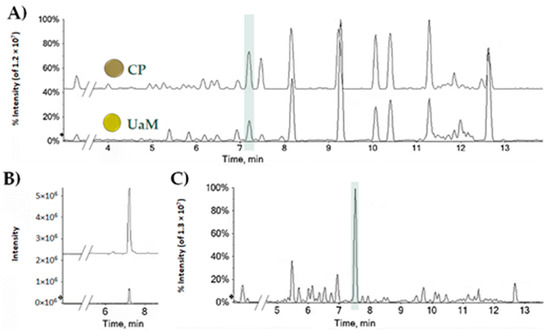
“Cannabidiolic acid (CBDA) is the main precannabinoid in industrial hemp. It represents a common constituent of hemp seed oil, but mainly abundant in the aerial parts of the plant (including their processing waste). Thus, the optimization of fast and low-cost purification strategies is mandatory, as well as a deep investigation on its nutraceutical and cosmeceutical properties. To this purpose, CBDA content in hemp seed oil is evaluated, and its recovery from wasted leaves is favorably achieved. The cytotoxicity screening towards HaCaT cells, by means of MTT, SRB and LDH release assays, suggested it was not able to decrease cell viability or perturb cell integrity up to 10 μM concentration. Thus, the ability of CBDA to differentially modulate the release of proinflammatory cytokines and chemokines mediators has been evaluated, finding that CBDA decreased IFN-γ, CXCL8, CXCL10, CCL2, CCL4 and CCL5, mostly in a dose-dependent manner, with 10 μM tested concentration exerting the highest activity. These data, together with those from assessing antimicrobial activity against Gram(+) and Gram(-) bacteria and the antibiofilm formation, suggest that CBDA is able to counteract the inflammatory response, also preventing bacteria colonization.”
https://pubmed.ncbi.nlm.nih.gov/35458762/
https://www.mdpi.com/1420-3049/27/8/2566
 “α-Pinene represents a member of the monoterpene class and is highly distributed in higher plants like conifers, Juniper ssp. and Cannabis ssp.
 “Myrcene (β-myrcene) is an abundant monoterpene which occurs as a major constituent in many plant species, including hops and cannabis. It is a popular flavouring and aroma agent (food additive) used in the manufacture of food and beverages. This review aims to report on the occurrence, biological and toxicological profile of β-myrcene. The main reported biological properties of β-myrcene-anxiolytic, antioxidant, anti-ageing, anti-inflammatory, analgesic properties-are discussed, with the mechanisms of activity. Here we also discuss recent data regarding the safety of β-myrcene. Overall, β-myrcene has shown promising health benefits in many animal studies. However, studies conducted in humans is lacking. In the future, there is potential for the formulation and production of non-alcoholic beers, functional foods and drinks, and cannabis extracts (low in THC) rich in β-myrcene.”
 “Streptococcus mutans
 “The purpose of this study was to evaluate the antioxidant and antimicrobial properties of two extracts from a new Chinese accession (G-309) of Cannabis sativa L. (Δ9 -tetrahydrocannabinol <0.2%) with high content of propyl side chain phytocannabinoids.
 “Hemp (Cannabis sativa) is an angiosperm plant belonging to the Cannabaceae family. Its cultivation dates back to centuries. It has always been cultivated due to the possibility of exploiting almost all the parts of the plant: paper, fabrics, ropes, bio-compounds with excellent insulating capacity, fuel, biodegradable plastic, antibacterial detergents, and food products, such as flour, oils, seeds, herbal teas, and beer, are indeed obtained from hemp.
 “In the present work, Cannabis sativa L. cv Futura 75 inflorescences, cultivated in the Abruzzo territory, were characterized for their volatile fraction through SPME-GC-MS. In addition, the essential oil extracted from these inflorescences was investigated for the antioxidant potentialities and for the terpenic profile.
 “Methicillin-resistant Staphylococcus aureus (MRSA) has proven to be an imminent threat to public health, intensifying the need for novel therapeutics.
 “The emergence of multi-drug resistant bacteria such as methicillin-resistant Staphylococcus aureus (MRSA) causes a major threat to public health due to its limited therapeutic options.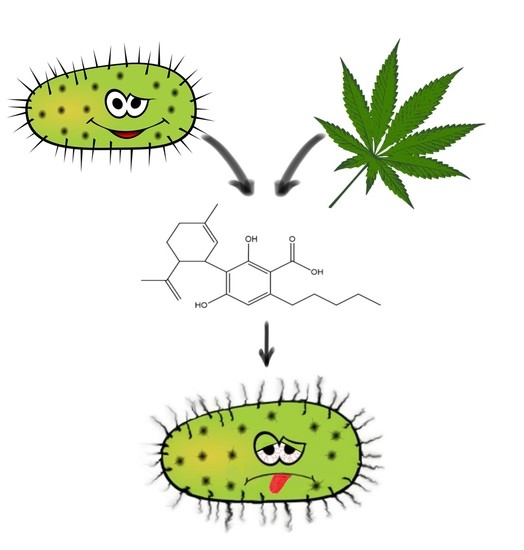
 “The growing concern on the antibiotic resistance spreading among bacteria has stimulated the search for valuable alternatives from plant sources.