Comprehensive Review of Medicinal Marijuana, Cannabinoids, and Therapeutic Implications in Medicine and Headache: What a Long Strange Trip It’s Been ….

“The use of cannabis, or marijuana, for medicinal purposes is deeply rooted though history, dating back to ancient times. It once held a prominent position in the history of medicine, recommended by many eminent physicians for numerous diseases, particularly headache and migraine.

Through the decades, this plant has taken a fascinating journey from a legal and frequently prescribed status to illegal, driven by political and social factors rather than by science.

However, with an abundance of growing support for its multitude of medicinal uses, the misguided stigma of cannabis is fading, and there has been a dramatic push for legalizing medicinal cannabis and research.

Almost half of the United States has now legalized medicinal cannabis, several states have legalized recreational use, and others have legalized cannabidiol-only use, which is one of many therapeutic cannabinoids extracted from cannabis.

Physicians need to be educated on the history, pharmacology, clinical indications, and proper clinical use of cannabis, as patients will inevitably inquire about it for many diseases, including chronic pain and headache disorders for which there is some intriguing supportive evidence…

The literature suggests that the medicinal use of cannabis may have a therapeutic role for a multitude of diseases, particularly chronic pain disorders including headache.

Supporting literature suggests a role for medicinal cannabis and cannabinoids in several types of headache disorders including migraine and cluster headache, although it is primarily limited to case based, anecdotal, or laboratory-based scientific research.

Cannabis contains an extensive number of pharmacological and biochemical compounds, of which only a minority are understood, so many potential therapeutic uses likely remain undiscovered.

Cannabinoids appear to modulate and interact at many pathways inherent to migraine, triptan mechanisms ofaction, and opiate pathways, suggesting potential synergistic or similar benefits.

Modulation of the endocannabinoid system through agonism or antagonism of its receptors, targeting its metabolic pathways, or combining cannabinoids with other analgesics for synergistic effects, may provide the foundation for many new classes of medications.”

http://www.ncbi.nlm.nih.gov/pubmed/26015168

http://www.thctotalhealthcare.com/category/headachemigraine/
Subtypes of attention deficit-hyperactivity disorder (ADHD) and cannabis use.

“The current study examined the association between subtypes of attention-deficit/hyperactivity disorder (ADHD) and cannabis use within a sample of 2811 current users.

When asked about the ADHD symptoms they have experienced when not using cannabis, a higher proportion of daily users met symptom criteria for an ADHD diagnoses of the subtypes that include hyperactive-impulsive symptoms than the inattentive subtype.

For nondaily users, the proportions of users meeting symptom criteria did not differ by subtype.

These results have implications for identifying which individuals with ADHD might be more likely to self-medicate using cannabis. Furthermore, these findings indirectly support research linking relevant cannabinoid receptors to regulatory control.”

http://www.ncbi.nlm.nih.gov/pubmed/24093525

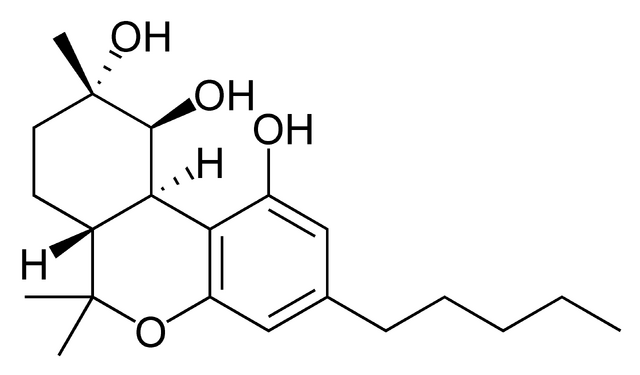
(+/-)9,10-Dihydroxy-delta6a(10a)-tetrahydrocannabinol and (+/-)8,9-dihydroxy-delta6a(10a)-tetrahydrocannabinol: 2 new cannabinoids from Cannabis sativa L.

“The structures of 2 new polyhydroxylated cannabinoids, (+/-)9,10-dihydroxy-delta6a(10a)-tetrahydrocannabinol and (+/-)8,9-dihydroxy-delta6a(10a)-tetrahydrocannabinol, obtained from a hexane extract of an Indian Cannabis variant were determined by spectral means and correlation with cannabinol.”

http://www.ncbi.nlm.nih.gov/pubmed/720501

Cannabinoid compounds in South African Cannabis sativa L.

“Dagga (Cannabis sativa L.) samples were collected from various geographical regions of South Africa. These were classified into age, sex and plant part and the cannabinoids were analysed quantitatively by gas-liquid chromatography and mass spectrometry. Analytical results show that there appears to be at least three chemovariants of Cannabis sativa growing in South Africa with respect to relative cannabinoid content. One of these variants appears to be unique to Southern Africa. It also appears that South African C. sativa ranks among the world’s more potent C. sativa variants in terms of its delta 9-tetrahydrocannabinol content.”

http://www.ncbi.nlm.nih.gov/pubmed/6102121

Isolation and Pharmacological Evaluation of Minor Cannabinoids from High-Potency Cannabis sativa.

“Seven new naturally occurring hydroxylated cannabinoids (1-7), along with the known cannabiripsol (8), have been isolated from the aerial parts of high-potency Cannabis sativa.

The structures of the new compounds were determined by 1D and 2D NMR spectroscopic analysis, GC-MS, and HRESIMS as 8α-hydroxy-Δ9-tetrahydrocannabinol (1), 8β-hydroxy-Δ9-tetrahydrocannabinol (2), 10α-hydroxy-Δ8-tetrahydrocannabinol (3), 10β-hydroxy-Δ8-tetrahydrocannabinol (4), 10α-hydroxy-Δ9,11-hexahydrocannabinol (5), 9β,10β-epoxyhexahydrocannabinol (6), and 11-acetoxy-Δ9-tetrahydrocannabinolic acid A (7).

The binding affinity of isolated compounds 1-8, Δ9-tetrahydrocannabinol, and Δ8-tetrahydrocannabinol toward CB1 and CB2 receptors as well as their behavioral effects in a mouse tetrad assay were studied.

The results indicated that compound 3, with the highest affinity to the CB1 receptors, exerted the most potent cannabimimetic-like actions in the tetrad assay, while compound 4 showed partial cannabimimetic actions. Compound 2, on the other hand, displayed a dose-dependent hypolocomotive effect only.”

http://www.ncbi.nlm.nih.gov/pubmed/26000707

Cannabidiol Rescues Acute Hepatic Toxicity and Seizure Induced by Cocaine.

“Cocaine is a commonly abused illicit drug that causes significant morbidity and mortality. The most severe and common complications are seizures, ischemic strokes, myocardial infarction, and acute liver injury. Here, we demonstrated that acute cocaine intoxication promoted seizure along with acute liver damage in mice, with intense inflammatory infiltrate.

Considering the protective role of the endocannabinoid system against cell toxicity, we hypothesized that treatment with an anandamide hydrolysis inhibitor, URB597, or with a phytocannabinoid, cannabidiol (CBD), protects against cocaine toxicity.

URB597 (1.0 mg/kg) abolished cocaine-induced seizure, yet it did not protect against acute liver injury.

Using confocal liver intravital microscopy, we observed that CBD reduced acute liver inflammation and damage induced by cocaine and prevented associated seizure.

Additionally, we showed that previous liver damage induced by another hepatotoxic drug (acetaminophen) increased seizure and lethality induced by cocaine intoxication, linking hepatotoxicity to seizure dynamics.

These findings suggest that activation of cannabinoid system may have protective actions on both liver and brain induced by cocaine, minimizing inflammatory injury promoted by cocaine, supporting its further clinical application in the treatment of cocaine abuse.”

http://www.ncbi.nlm.nih.gov/pubmed/25999668

http://www.ncbi.nlm.nih.gov/pmc/articles/PMC4427116/

[Cannabinoids in medicine].

“Cannabinoids have been known for many centuries because of their various effects in healthcare. They are primarily effective in reducing nausea, vomiting, pain, anorexia, spasticity and depression. Some other effects are known, all seem to be mediated by cannabinoid receptors in the central nervous system. In the past years, medical use has been proven in several studies. Today, the therapeutical use of cannabinoids in medicine is increasing, and access was made easier. Especially in pain-management and palliative care, they seem to be a valuable therapeutic option.”

http://www.ncbi.nlm.nih.gov/pubmed/19165445

Impact of cannabis treatment on the quality of life, weight and clinical disease activity in inflammatory bowel disease patients: a pilot prospective study.

“Inflammatory bowel disease (IBD) patients suffer from significant morbidity and diminished life quality.

The plant cannabis is beneficial in various gastrointestinal diseases, stimulating appetite and causing weight gain.

Our aims were to assess whether treatment with inhaled cannabis improves quality of life, disease activity and promotes weight gain in these patients.

CONCLUSIONS:

Three months’ treatment with inhaled cannabis improves quality of life measurements, disease activity index, and causes weight gain and rise in BMI in long-standing IBD patients.”

http://www.ncbi.nlm.nih.gov/pubmed/22095142

http://www.thctotalhealthcare.com/category/inflammatory-bowel-disease-2/