The Amazing Health Benefits of Juicing Raw Cannabis (Marijuana) Leaves

“Contrary to popular belief, the marijuana plant is a whole lot more than just a psychoactive drug that “stoners” use to get high.

In raw form, marijuana leaves and buds are actually loaded with a non-psychoactive, antioxidant, anti-inflammatory, and anti-cancer nutrient compound known as cannabidiol (CBD) that is proving to be a miracle “superfood” capable of preventing and reversing a host of chronic illnesses…


“There’s a tendency to discount claims when something appears to be good for everything, but there’s a reason this is the case. The endogenous cannabinoid system acts as a modulator in fine-tuning a lot of these systems, and if something is deranged biochemically in a person’s body, it may well be that a cannabinoid system can bring things back into balance.””

Read More: http://www.whydontyoutrythis.com/2013/02/health-benefits-of-juicing-raw-cannabis.html#sthash.Zgix94HO.dpbs

Cannabis Treats Cancer and Epilepsy

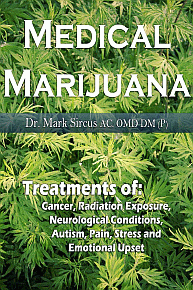
Description: Medical Marijuana

Dr. Mark Sircus, Ac., OMD, DM (P)

Director International Medical Veritas Association

Doctor of Oriental and Pastoral Medicine

Dr. Sean McAllister and Pierre Desprez claim they’ve successfully used cannabidiol to fight animal genes involved in the spread of cancer. “We found this one compound had a specific effect on metastatic cancer cells, very aggressive tumor cells,” McAllister says. Cannabidiol, the research appears to show, helps shut down receptors that inhibit cancerous cells from metastasizing.  “We find when you treat with cannabidiol, you down regulate the expression of this protein, and that inhibits the disease process.” Unlike THC, the ingredient in marijuana that makes you feel stoned, cannabidiol is a non-toxic compound of the plant that has no psychoactive qualities.

I already published that marijuana is the best medicine for 3-year-old Cash Hyde of Missoula, Montana. The boy’s parent’s defied doctor’s orders—and Montana law—to get their hands on the medicinal treatment their son needed after he was diagnosed with recurring brain tumors at 22 months old. “I’ve had law enforcement threatening to kick my door down, but I would have done anything to keep Cashy alive,” said Mike Hyde, who has long been a proponent of the drug, told ABCNews.com.

My book on Medical Marijuana goes into the research from around the globe, including from Harvard University that sustains the conclusions of doctors McAllister and Desprez.

Dixie Botanicals is shipping Cannabidiol from Denver Colorado to all fifty states though of course one can grow marijuana oneself and or use regular marijuana strains if one lives in one of the now fifteen states that has made medical marijuana legal.

I take great exception to the Obama administration that has continued to resist the legalization on a federal level of medical marijuana. They still insist that there is no medical use for marijuana when all the science proves the government to be dead wrong. They hunt the world for terrorists but some of the worst live and work right in Washington DC. Terrorists are people who hurt others and I do not see the difference between those who use guns and those who use drugs or deny the population the natural substances they need to be well.

Of course marijuana is extremely effective for other diseases. The most recent I have read about: Medical pot treats boy’s epilepsy, without getting him high. The little boy has been swallowing droppers full of a solution made mostly of cannabidiol, or CBD, the second most prominent of marijuana’s 100 or so cannabinoids. Unlike the dominant THC, cannabidiol is not psychoactive, so the sweet-tasting infusion Jayden takes four times a day doesn’t make him high.

Down from 22 prescription pills per day to four, he now eats solid food, responds to his father’s incessant requests for kisses and dances in his Modesto living room to the “Yo Gabba Gabba!” theme song. The frequency and intensity of his seizures have been greatly reduced.

CBD was virtually bred out of U.S. plants decades ago by growers whose customers preferred the mind-altering properties of high-THC varietals. Yet it is experiencing a resurgence, having shown promise as an anti-inflammatory, anticonvulsant, neuroprotectant and cancer-fighting agent.

Studies have shown THC is “overwhelmingly anticonvulsant” in animals, said Dr. Ben Whalley, a researcher at Britain’s University of Reading, but CBD and some other non-psychoactive cannabinoids have shown similar effects without the mind-altering downside.”

http://drsircus.com/medicine/cancer/cannabis-treats-cancer-and-epilepsy#utm_source=Dr+Sircus+Newsletter&utm_campaign=820775ef59-Article_045&utm_medium=email

Cannabinoid Receptor 2-Mediated Attenuation of CXCR4-Tropic HIV Infection in Primary CD4+ T Cells

“Agents that activate cannabinoid receptor pathways have been tested as treatments for cachexia, nausea or neuropathic pain in HIV-1/AIDS patients… Cannabinoid agonists activate the CB1R and CB2R cannabinoid receptors…

Cannabinoid agonists are currently under investigation for the treatment of AIDS-associated cachexia, nausea, and neuropathic pain. One such drug, dronabinol (Δ9-THC; Marinol®), has won Food and Drug Administration (FDA) approval for treatment of HIV-associated anorexia. Additionally, the prescription of smoked or ingested cannabis (marijuana) for treatment of AIDS-related symptoms has been approved…. Despite the use of cannabinoids by HIV/AIDS patients, few studies have investigated the impact of such drugs in regard to viral pathogenesis or immune regulation…

….Indeed, both smoked marijuana and dronabinol were reported to increase total CD4+ T cell number and naïve T cell number over a 21-day period. A decrease in viral load was also observed in these patients. Similarly, in SIV infected rhesus macaques, Δ9-THC exposure reduced viral load and CD4+ T cell depletion, significantly increasing animal survival over an 11 month period.

. Our findings suggest that CB2R activation in CD4+ T cells can inhibit actin reorganization and impair productive infection following cell-free or cell-associated viral acquisition of CXCR4-tropic HIV-1 in resting cells.

Therefore, the clinical use of CB2R agonists in the treatment of AIDS symptoms may also exert beneficial adjunctive antiviral effects against CXCR4-tropic viruses in late stages of HIV-1 infection.

Further study of cannabinoids and other neuroendocrine regulators that selectively modulate immune function may result in the discovery of new anti-viral drugs that can also mitigate AIDS-associated symptoms.”

Full text: http://www.ncbi.nlm.nih.gov/pmc/articles/PMC3309010/

Cannabinoids may be therapeutic in breast cancer.

“Cannabinoids are a group of compounds synthesized exclusively by the Cannabis sativa plant, commonly known as marijuana. In 1990, the first cannabinoid-specific membrane (CB1) was characterized and cloned (Matsuda, Lolait, Brownstein, Young, & Bonner, 1990), which catapulted biomedical research on these unique compounds.

 Cannabinoids refer to both marijuana-derived compounds with the active ingredient of 9-tetrahydrocannabinol (THC) and also the synthetic molecules that activate the same primary targets as THC.

Therapeutic properties of marijuana have been well established; however, the clinical use of either plant-sourced or pure cannabinoids remains limited.

The anticachexia properties of cannabinoids are found in tetrahydrocannabinol (oral capsules of synthetically generated THC) and are used to manage weight loss, wasting syndrome, and nausea and vomiting associated with cancer treatment.”

http://www.ncbi.nlm.nih.gov/pubmed/23448745

Medical Marijuana: Sleeping Medicine

“The most frequent comment by those ignorant of the medical properties of cannabis or those believing the U.S. Government’s propaganda, is that marijuana patients use it only to get “high” which incidentally can be somewhat like a Starbucks espresso jolt or maybe two or three martinis.

Anybody who knows anything at all about marijuana knows that it causes euphoria or a feeling of well being. After all, isn’t that why we take medicine when we are sick—to feel better?

At any rate, marijuana users, as medical patients of which there are at least 400,000 with legal permits, or as many as ten million “illegal” users who use it instead of alcohol, tobacco, prescription tranquilizers or antidepressants, have found it beneficial for a wide variety of illnesses and diseases.

It is certain that the euphoria or feeling of comfort is very important for all these conditions. If some ignorant people consider that to be getting high, no users will disagree.

Many medical patients use it only in the evening to enable them to sleep. This is true especially with those in chronic pain, which represents about 70 percent of patients. Pain frequently or even most usually prevents sleep and some patients tell me, “if I can get a decent night’s sleep, I can fight alligators all day”.

Sleeping pills are prescribed mostly for those in pain who cannot sleep without those pills. The crazy thing about this is that many or maybe most sleeping pills are as addicting as heroin. Valium, the most prescribed sleeping pill for many years, produced millions of addicts, and there are many valium-like drugs with similar problems.

In my experience with 4,000 plus patients, I was told by hundreds that by using marijuana they were able to cut down or eliminate completely most prescription sleeping pills.

The U.S. Government purports that marijuana is addicting. This is not so. If a person uses it frequently to relieve or control pain, the patient wants relief. Does that mean he is addicted to relief? If one takes aspirin everyday, is he addicted to aspirin? To me, the comparison is valid.

One of the critical signs of addiction is uncomfortable withdrawal symptoms. Most marijuana users will run out of their medicine once in a while. Do they get withdrawal symptoms? If so, they are very minor, like running out of aspirin.

It is known that very heavy marijuana use (which is uncommon because it costs more than gold) can cause mild withdrawal symptoms, such as disrupted sleep and nervousness (from Merck Manual).

I think the final coup de grace is also given by the Merck Manual “any drug which causes euphoria and diminishes anxiety can cause dependence” (not addiction—my comment).”-

Dr. Phillip Leveque

http://www.salem-news.com/articles/june272007/marijuana_sleep_62707.php

Cannabis for better sleep

“The use of both natural cannabinoids and cannabis extracts are associated with improved sleep in patients with various debilitating illnesses, according to a review of clinical trial data published in the journal Chemistry & Biodiversity.

“Cannabis … has been utilized for [the] treatment of pain and sleep disorders since ancient times,” authors wrote. “Modern clinical trials indicate that patients administered cannabis extracts report experiencing “more restful sleep, [an] increase [in] their daytime level of function, and [a] markedly improve[d] … quality of life.”

According to available data, of the 2,000 subjects that have been administered cannabis extracts in clinical trials, most “demonstrate marked improvement in subjective sleep parameters.”

Trial volunteers have not reported developing tolerance to the drug, even after using it for several years.

Full text of the study, “Cannabis, pain, and sleep: Lessons from therapeutic clinical trials of Sativex, a cannabis-based medicine,” appears in the journal Chemistry & Biodiversity.”

http://azarius.net/news/193/Cannabis_for_better_sleep/

Cannabis ‘helped woman to sleep’

“A YOUNG mother using cannabis to help her sleep has been given the benefit of the probation act at Wexford District Court.

Shelly Donnelly, Moortown Great, Ballmitty, had pleaded guilty to the possession of cannabis at her home on June 11, 2010.

Judge Donnchadh O Buachalla heard that the property at Moortown Great was searched and a small quantity of cannabis herb was found. It was for Donnelly’s own use.

Eva Lalor, for Donnelly, said her client is 24years-old and has a fiveyear-old daughter with her long-term partner.

Ms Lalor said Donnelly was suffering from insomnia following a family bereavement and was using cannabis to help her sleep. Donnelly, who has no previous convictions, is now on medication to help her sleep.

Judge O Buachalla gave her the benefit of the probation act, saying that he hopes she has learnt her lesson from the experience.”

http://www.independent.ie/regionals/wexfordpeople/news/cannabis-helped-woman-to-sleep-27726026.html

Stab victim started taking cannabis to sleep

A YOUNG man started smoking cannabis herb to help him sleep after he was stabbed through the heart and lungs, a court heard. Francis Kelly (23) spent two weeks in intensive care, and started taking the drug after he came out of hospital….

He was in intensive care for two weeks and was on tablets while he was in hospital.

Mr O’Doherty said that Kelly couldn’t sleep when he left hospital and he started taking it to help him relax.”

More: http://www.herald.ie/news/stab-victim-started-taking-cannabis-to-sleep-27997127.html

Cannabis helped night worker sleep

Mark Jackson has escaped without having a conviction recorded for his latest drug offences. 
Mark Jackson has escaped without having a conviction recorded for his latest drug offences.

HOSPITALITY manager Mark Jackson has been fined for possessing marijuana, which he smoked after night work to help him get some sleep.

Jackson has a history of drug use dating back to 2000, when the Supreme Court gave him a suspended jail sentence for supplying drugs.

However, his last drug-related offence was in 2005.

Jackson, a 48-year-old who supports four dependents, pleaded guilty in Mackay Magistrate’s Court yesterday to the unlawful possession of a small amount of marijuana and a pipe last October 20.

Police executed a search warrant at his Andergrove home at 12.45am and Jackson was the sole occupant, prosecutor Constable Janelle Young said.

Asked if he had anything to declare, he said he had a bong beside his bed.

A homemade pipe and a small amount of marijuana were found.

He told police he had smoked some marijuana that morning, after night work, because it helped him to sleep.

The items were seized and he was issued with a property receipt.

Duty lawyer John Aberdeen said Jackson “holds a managerial position in hospitality” and did mostly night work.

His previous convictions in 2000 and 2005 were acknowledged but the new offences involved only a small amount of drugs for personal use, Mr Aberdeen said.

Mr Aberdeen asked for no conviction to be recorded because of the length of time that had elapsed since the last offence.

Magistrate Damien Dwyer imposed a fine of $600 and ordered that no conviction be recorded.”

http://www.dailymercury.com.au/news/marijuana-helped-night-worker-get-some-sleep/1228013/

Smoking Cannabis Reduces Pain, Helps Sleep And Improves Mood For Those With Chronic Symptoms

“For patients with chronic (long-term) neuropathic pain, smoking cannabis was found to reduce symptoms of pain, improve mood and help sleep, a report published in CMAJ (Canadian Medical Journal Association) revealed. When damage or dysfunction of the nervous system results in chronic neuropathic pain, patients have few treatment options, such as antidepressants, local anesthetics, anticonvulsants or opioids. However, these medications often have undesirable side effects and do not work for everybody.

The authors inform that oral cannabinoids have been effective in reducing the symptoms of some types of pain. However, they many have different effects and risks compared to smoked cannabis.

Investigators from McGill University Health Centre (MUHC) and McGill University carried out a randomized, controlled trial to determine the analgesic effect of smoked cannabis in 21 patients, aged 18 years or more, all of them with chronic neuropathic pain. THC levels (drug potencies) were divided into 2.5%, 6% and 9.4%. Some participants also received a placebo (0%).

The researchers inform that there was a correlation between increased THC content and better sleep quality. Symptoms of depression and/or anxiety were also reduced at 9.5% THC level.”

More: http://www.medicalnewstoday.com/articles/199376.php