“Multiple sclerosis is the most common inflammatory demyelinating disease of the central nervous system, caused by an autoimmune response against myelin that eventually leads to progressive neurodegeneration and disability. Although the knowledge on its underlying neurobiological mechanisms has considerably improved, there is a still unmet need for new treatment options, especially for the progressive forms of the disease.
Both preclinical and clinical data suggest that cannabinoids, derived from the Cannabis sativa plant, may be used to control symptoms such as spasticity and chronic pain, whereas only preclinical data indicate that these compounds and their endogenous counterparts, i.e. the endocannabinoids, may also exert neuroprotective effects and slow down disease progression.
Here, we review the preclinical and clinical studies that could explain the therapeutic action of cannabinoid-based medicines, as well as the medical potential of modulating endocannabinoid signaling in multiple sclerosis, with a link to other neuroinflammatory disorders that share common hallmarks and pathogenetic features.”
“Medicinal cannabis has already entered mainstream medicine in some countries.
Cannabis-based medicines undoubtedly enrich the possibilities of drug treatment of chronic pain conditions.
It remains the responsibility of the health care community to continue to pursue rigorous study of cannabis-based medicines to provide evidence that meets the standard of 21st century clinical care.”
“Multiple sclerosis (MS) is a chronic inflammatory and demyelinating disorder of the central nervous system (CNS) that can cause cognition, mobility, and sensory impairments. It is considered one of the most common non-traumatic causes of disability in the world.
The aim of the present article was to review the clinical evidence related to medicinal plants in the management of MS symptoms.
Electronic databases, including the Cochrane Library, Pubmed, and Scopus, were searched for entries from 1966 to February 2017. Only clinical studies were included in this review. Different medicinal plants have positive effects on MS, including Andrographis paniculata, Boswellia papyrifera, Ruta graveolens, Vaccinium spp., Camellia sinensis, Panax ginseng, Aloysia citrodora, Ginkgo biloba, Oenothera biennis, and Cannabis sativa.
C. sativa had the highest level of clinical evidence, supporting its efficacy in MS symptoms.
Proanthocyanidins, ginkgo flavone glycosides, ginsenosides, epigallocatechin-3-gallate, cannabinoids (including delta-9-tetrahydrocannabinol and cannabidiol), boswellic acid, and andrographolide were presented as the main bioactive components of medicinal plants with therapeutic benefits in MS.
The main complications of MS in which natural drugs were effective include spasticity, fatigue, scotoma, incontinence, urinary urgency, nocturia, memory performance, functional performance, and tremor. Herbal medicines were mostly well tolerated, and the adverse effects were limited to mild to moderate. Further well-designed human studies with a large sample size and longer follow-up period are recommended to confirm the role of medicinal plants and their metabolites in the management of MS.”
https://www.ncbi.nlm.nih.gov/pubmed/28948486
“The management of chronic pain is a complex challenge worldwide. Cannabis-based medicines (CBMs) have proven to be efficient in reducing chronic pain, although the topic remains highly controversial in this field.
OBJECTIVES:
This study’s aim is to conduct a conclusive review and meta-analysis, which incorporates all randomized controlled trials (RCTs) in order to update clinicians’ and researchers’ knowledge regarding the efficacy and adverse events (AEs) of CBMs for chronic and postoperative pain treatment.
CONCLUSIONS:
The current systematic review suggests that CBMs might be effective for chronic pain treatment, based on limited evidence, primarily for neuropathic pain (NP) patients. Additionally, GI AEs occurred more frequently when CBMs were administered via oral/oromucosal routes than by inhalation.”
https://www.ncbi.nlm.nih.gov/pubmed/28934780]]>
“Hemp has been an important crop throughout human history for food, fiber, and medicine. Despite significant progress made by the international research community, the basic biology of hemp plants remains insufficiently understood. Clear objectives are needed to guide future research. As a semi-domesticated plant, hemp has many desirable traits that require improvement, including eliminating seed shattering, enhancing the quantity and quality of stem fiber, and increasing the accumulation of phytocannabinoids. Methods to manipulate the sex of hemp plants will also be important for optimizing yields of seed, fiber, and cannabinoids. Currently, research into trait improvement is hindered by the lack of molecular techniques adapted to hemp. Here we review how addressing these limitations will help advance our knowledge of plant biology and enable us to fully domesticate and maximize the agronomic potential of this promising crop.”
https://www.ncbi.nlm.nih.gov/pubmed/28886910http://www.cell.com/trends/plant-science/fulltext/S1360-1385(17)30177-2?_returnURL=http%3A%2F%2Flinkinghub.elsevier.com%2Fretrieve%2Fpii%2FS1360138517301772%3Fshowall%3Dtrue]]>
“Cannabis is an increasingly sought-after remedy for US children with intractable (biomedically uncontrollable) epilepsy. However, like other complementary-alternative medicine (CAM) modalities, and particularly as a federally illegal, stigmatized substance, it is unsanctioned by mainstream medicine. Parents are largely on their own when it comes to learning about, procuring, dispensing, and monitoring treatments. Exploring how they manage is crucial to better assist them. Moreover, it can illuminate how ‘research’ done on the ground by laypeople variously disrupts and reinforces lay-expert and science-non-science divides. To those ends, in 2016, 25 Southern California parents who used, had used, or sought to use cannabis pediatrically for epilepsy/seizures were interviewed regarding their evidentiary standards, research methods, and aims when trying the drug. Parents generally described their work as experimentation; they saw their efforts as adhering to authorized scientific practices and standards, and as contributing to the authorized medical cannabis knowledge base. Findings subverted assumptions, based on an outdated stereotype of CAM, that cannabis-using parents do not believe in biomedicine. Indeed, parents’ desire for their children’s biomedical demarginalization, combined with biomedical dependency and a high caregiver burden, fueled a collaborative stance. Implications for understanding the boundaries of science are explored, as are norms for parent agency as ill children’s care managers, radicalization among people affected by contested illnesses, and the future of ‘medical marijuana.'”
https://www.ncbi.nlm.nih.gov/pubmed/28865255http://www.sciencedirect.com/science/article/pii/S0277953617304756?via%3Dihub
]]>
“Cannabis-based medicines (CBMs) may offer relief from symptoms of disease; however, their additional cost needs to be considered alongside their effectiveness. We sought to review the economic costs and benefits of prescribed CBMs in any chronic illness, and the frameworks used for their economic evaluation.
“The endocannabinoid system plays a regulatory role in a number of physiological processes and has been found altered in different pathological conditions, including movement disorders. The interactions between cannabinoids and dopamine in the basal ganglia are remarkably complex and involve both the modulation of other neurotransmitters (γ-aminobutyric acid, glutamate, opioids, peptides) and the activation of different receptors subtypes (cannabinoid receptor type 1 and 2).
In the last years, experimental studies contributed to enrich this scenario reporting interactions between cannabinoids and other receptor systems (transient receptor potential vanilloid type 1 cation channel, adenosine receptors, 5-hydroxytryptamine receptors). The improved knowledge, adding new interpretation on the biochemical interaction between cannabinoids and other signaling pathways, may contribute to develop new pharmacological strategies.
A number of preclinical studies in different experimental Parkinson’s disease (PD) models demonstrated that modulating the cannabinoid system may be useful to treat some motor symptoms. Despite new cannabinoid-based medicines have been proposed for motor and nonmotor symptoms of PD, so far, results from clinical studies are controversial and inconclusive. Further clinical studies involving larger samples of patients, appropriate molecular targets, and specific clinical outcome measures are needed to clarify the effectiveness of cannabinoid-based therapies.” https://www.ncbi.nlm.nih.gov/pubmed/28861502
“Cannabis is a psychoactive compound widely used along history for recreational and therapeutic purposes. Although many open questions remain, cannabis-based therapies have become increasingly common raising considerable interest in politics as well as in general public for legalization of medical cannabis.” http://online.liebertpub.com/doi/10.1089/can.2017.0002
“The endocannabinoid system plays a regulatory role in a number of physiological processes and has been found altered in different pathological conditions, including movement disorders. The interactions between cannabinoids and dopamine in the basal ganglia are remarkably complex and involve both the modulation of other neurotransmitters (γ-aminobutyric acid, glutamate, opioids, peptides) and the activation of different receptors subtypes (cannabinoid receptor type 1 and 2).
In the last years, experimental studies contributed to enrich this scenario reporting interactions between cannabinoids and other receptor systems (transient receptor potential vanilloid type 1 cation channel, adenosine receptors, 5-hydroxytryptamine receptors). The improved knowledge, adding new interpretation on the biochemical interaction between cannabinoids and other signaling pathways, may contribute to develop new pharmacological strategies.
A number of preclinical studies in different experimental Parkinson’s disease (PD) models demonstrated that modulating the cannabinoid system may be useful to treat some motor symptoms. Despite new cannabinoid-based medicines have been proposed for motor and nonmotor symptoms of PD, so far, results from clinical studies are controversial and inconclusive. Further clinical studies involving larger samples of patients, appropriate molecular targets, and specific clinical outcome measures are needed to clarify the effectiveness of cannabinoid-based therapies.” https://www.ncbi.nlm.nih.gov/pubmed/28861502
“Cannabis is a psychoactive compound widely used along history for recreational and therapeutic purposes. Although many open questions remain, cannabis-based therapies have become increasingly common raising considerable interest in politics as well as in general public for legalization of medical cannabis.” http://online.liebertpub.com/doi/10.1089/can.2017.0002
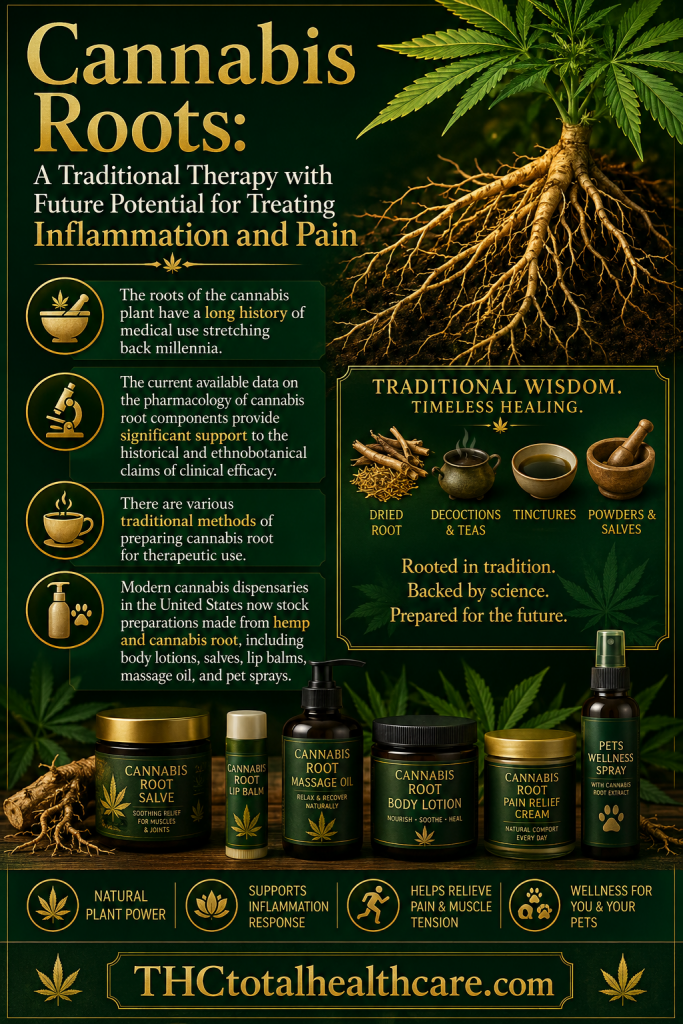
“Introduction: The roots of the cannabis plant have a long history of medical use stretching back millennia. However, the therapeutic potential of cannabis roots has been largely ignored in modern times.
Discussion: In the first century, Pliny the Elder described in Natural Histories that a decoction of the root in water could be used to relieve stiffness in the joints, gout, and related conditions. By the 17th century, various herbalists were recommending cannabis root to treat inflammation, joint pain, gout, and other conditions. There has been a subsequent paucity of research in this area, with only a few studies examining the composition of cannabis root and its medical potential. Active compounds identified and measured in cannabis roots include triterpenoids, friedelin (12.8 mg/kg) and epifriedelanol (21.3 mg/kg); alkaloids, cannabisativine (2.5 mg/kg) and anhydrocannabisativine (0.3 mg/kg); carvone and dihydrocarvone; N-(p-hydroxy-β-phenylethyl)-p-hydroxy-trans-cinnamamide (1.6 mg/kg); various sterols such as sitosterol (1.5%), campesterol (0.78%), and stigmasterol (0.56%); and other minor compounds, including choline. Of note, cannabis roots are not a significant source of Δ9-tetrahydrocannabinol (THC), cannabidiol, or other known phytocannabinoids.
Conclusion: The current available data on the pharmacology of cannabis root components provide significant support to the historical and ethnobotanical claims of clinical efficacy. Certainly, this suggests the need for reexamination of whole root preparations on inflammatory and malignant conditions employing modern scientific techniques.”
“There are various traditional methods of preparing cannabis root for therapeutic use.
The raw cannabis roots can be prepared by pounding and crushing the fresh root to extract its juices. There are numerous mentions of cannabis root preparations in water, especially boiling water, which suggest that early formulators were attempting to extract the water-soluble compounds in the roots. Throughout the 17th and 18th centuries, there are also many mentions of using cannabis root decoctions. The fresh ground root, juice, or cannabis root decoction has also been mixed with fat (oil or butter). There is also an account of mixing pulverized cannabis root with wine. Interestingly, topical applications of cannabis root-based preparations are most often described.
Modern cannabis dispensaries in the United States now stock preparations made from hemp and cannabis root, including body lotions, salves, lip balms, massage oil, and pet sprays.”



 “Multiple sclerosis (MS) is a chronic inflammatory and demyelinating disorder of the central nervous system (CNS) that can cause cognition, mobility, and sensory impairments. It is considered one of the most common non-traumatic causes of disability in the world.
The aim of the present article was to review the clinical evidence related to medicinal plants in the management of MS symptoms.
Electronic databases, including the Cochrane Library, Pubmed, and Scopus, were searched for entries from 1966 to February 2017. Only clinical studies were included in this review. Different medicinal plants have positive effects on MS, including Andrographis paniculata, Boswellia papyrifera, Ruta graveolens, Vaccinium spp., Camellia sinensis, Panax ginseng, Aloysia citrodora, Ginkgo biloba, Oenothera biennis, and Cannabis sativa.
C. sativa had the highest level of clinical evidence, supporting its efficacy in MS symptoms.
Proanthocyanidins, ginkgo flavone glycosides, ginsenosides, epigallocatechin-3-gallate,
“Multiple sclerosis (MS) is a chronic inflammatory and demyelinating disorder of the central nervous system (CNS) that can cause cognition, mobility, and sensory impairments. It is considered one of the most common non-traumatic causes of disability in the world.
The aim of the present article was to review the clinical evidence related to medicinal plants in the management of MS symptoms.
Electronic databases, including the Cochrane Library, Pubmed, and Scopus, were searched for entries from 1966 to February 2017. Only clinical studies were included in this review. Different medicinal plants have positive effects on MS, including Andrographis paniculata, Boswellia papyrifera, Ruta graveolens, Vaccinium spp., Camellia sinensis, Panax ginseng, Aloysia citrodora, Ginkgo biloba, Oenothera biennis, and Cannabis sativa.
C. sativa had the highest level of clinical evidence, supporting its efficacy in MS symptoms.
Proanthocyanidins, ginkgo flavone glycosides, ginsenosides, epigallocatechin-3-gallate,  “The endocannabinoid system plays a regulatory role in a number of physiological processes and has been found altered in different pathological conditions, including movement disorders. The interactions between cannabinoids and dopamine in the basal ganglia are remarkably complex and involve both the modulation of other neurotransmitters (γ-aminobutyric acid, glutamate, opioids, peptides) and the activation of different receptors subtypes (cannabinoid receptor type 1 and 2).
In the last years, experimental studies contributed to enrich this scenario reporting interactions between cannabinoids and other receptor systems (transient receptor potential vanilloid type 1 cation channel, adenosine receptors, 5-hydroxytryptamine receptors). The improved knowledge, adding new interpretation on the biochemical interaction between cannabinoids and other signaling pathways, may contribute to develop new pharmacological strategies.
A number of preclinical studies in different experimental Parkinson’s disease (PD) models demonstrated that modulating the cannabinoid system may be useful to treat some motor symptoms. Despite new cannabinoid-based medicines have been proposed for motor and nonmotor symptoms of PD, so far, results from clinical studies are controversial and inconclusive. Further clinical studies involving larger samples of patients, appropriate molecular targets, and specific clinical outcome measures are needed to clarify the effectiveness of cannabinoid-based therapies.”
“The endocannabinoid system plays a regulatory role in a number of physiological processes and has been found altered in different pathological conditions, including movement disorders. The interactions between cannabinoids and dopamine in the basal ganglia are remarkably complex and involve both the modulation of other neurotransmitters (γ-aminobutyric acid, glutamate, opioids, peptides) and the activation of different receptors subtypes (cannabinoid receptor type 1 and 2).
In the last years, experimental studies contributed to enrich this scenario reporting interactions between cannabinoids and other receptor systems (transient receptor potential vanilloid type 1 cation channel, adenosine receptors, 5-hydroxytryptamine receptors). The improved knowledge, adding new interpretation on the biochemical interaction between cannabinoids and other signaling pathways, may contribute to develop new pharmacological strategies.
A number of preclinical studies in different experimental Parkinson’s disease (PD) models demonstrated that modulating the cannabinoid system may be useful to treat some motor symptoms. Despite new cannabinoid-based medicines have been proposed for motor and nonmotor symptoms of PD, so far, results from clinical studies are controversial and inconclusive. Further clinical studies involving larger samples of patients, appropriate molecular targets, and specific clinical outcome measures are needed to clarify the effectiveness of cannabinoid-based therapies.”