Cannabidiol Induces Apoptosis and Perturbs Mitochondrial Function in Human and Canine Glioma Cells

Frontiers in Pharmacology (@FrontPharmacol) | Twitter“Cannabidiol (CBD), the major non-psychoactive compound found in cannabis, is frequently used both as a nutraceutical and therapeutic.

Despite anecdotal evidence as an anticancer agent, little is known about the effect CBD has on cancer cells. Given the intractability and poor prognoses of brain cancers in human and veterinary medicine, we sought to characterize the in vitro cytotoxicity of CBD on human and canine gliomas.

Glioma cells treated with CBD showed a range of cytotoxicity from 4.9 to 8.2 μg/ml; canine cells appeared to be more sensitive than human.

These results demonstrate the cytotoxic nature of CBD in human and canine glioma cells and suggest a mechanism of action involving dysregulation of calcium homeostasis and mitochondrial activity.”

https://pubmed.ncbi.nlm.nih.gov/34456736/

“In this present study, we demonstrate that highly purified CBD isolate reduced proliferation and induced caspase-mediated cell death, suggestive of apoptosis, in both canine glioma cell lines SDT3G and J3TBG as well as the human glioma cell lines U87MG and U373MG Uppsala. The growing body of knowledge of the pharmacology, anticancer effects, and other therapeutically relevant properties of cannabidiol reveal the exciting potential of CBD as a potential clinical therapeutic.”

https://www.frontiersin.org/articles/10.3389/fphar.2021.725136/full

Industrial Hemp ( Cannabis sativa subsp. sativa) as an Emerging Source for Value-Added Functional Food Ingredients and Nutraceuticals

molecules-logo“Industrial hemp (Cannabis sativa L., Cannabaceae) is an ancient cultivated plant originating from Central Asia and historically has been a multi-use crop valued for its fiber, food, and medicinal uses. Various oriental and Asian cultures kept records of its production and numerous uses.
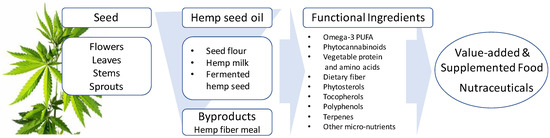
Due to the similarities between industrial hemp (fiber and grain) and the narcotic/medical type of Cannabis, the production of industrial hemp was prohibited in most countries, wiping out centuries of learning and genetic resources. In the past two decades, most countries have legalized industrial hemp production, prompting a significant amount of research on the health benefits of hemp and hemp products.

Current research is yet to verify the various health claims of the numerous commercially available hemp products. Hence, this review aims to compile recent advances in the science of industrial hemp, with respect to its use as value-added functional food ingredients/nutraceuticals and health benefits, while also highlighting gaps in our current knowledge and avenues of future research on this high-value multi-use plant for the global food chain.”

https://pubmed.ncbi.nlm.nih.gov/32906622/

https://www.mdpi.com/1420-3049/25/18/4078

Hemp in Veterinary Medicine: From Feed to Drug

 See the source image“Hemp (Cannabis sativa) is an angiosperm plant belonging to the Cannabaceae family. Its cultivation dates back to centuries. It has always been cultivated due to the possibility of exploiting almost all the parts of the plant: paper, fabrics, ropes, bio-compounds with excellent insulating capacity, fuel, biodegradable plastic, antibacterial detergents, and food products, such as flour, oils, seeds, herbal teas, and beer, are indeed obtained from hemp.
Hemp flowers have also always been used for their curative effects, as well as for recreational purposes due to their psychotropic effects. Cannabis contains almost 500 chemical compounds, such as phytocannabinoids, terpenes, flavonoids, amino acids, fatty acids, vitamins, and macro-, and micro-elements, among others.

When utilized as a food source, hemp shows excellent nutritional and health-promoting (nutraceutical) properties, mainly due to the high content in polyunsaturated fatty acids (especially those belonging to the ω-3 series), as well as in phenolic compounds, which seem effective in the prevention of common diseases such as gastrointestinal disorders, neurodegenerative diseases, cancer, and others.

Moreover, hemp oil and other oils (i.e., olive oil and medium-chain triglyceride-MCT-oil) enriched in CBD, as well as extracts from hemp dried flowers (Cannabis extracts), are authorized in some countries for therapeutic purposes as a second-choice approach (when conventional therapies have failed) for a certain number of clinical conditions such as pain and inflammation, epilepsy, anxiety disorders, nausea, emesis, and anorexia, among others.

The present review will synthetize the beneficial properties of hemp and hemp derivatives in animal nutrition and therapeutics.”

https://pubmed.ncbi.nlm.nih.gov/32850997/

C. sativa has been an important source of food in the Old World, as hempseeds and seed meal are excellent sources of dietary oil, fiber, and protein. Many of the constituents of C. sativa can be classified as either nutrients, nutraceuticals, or pharmaceutical ingredients.”

https://www.frontiersin.org/articles/10.3389/fvets.2020.00387/full

Neuroprotective protein hydrolysates from hemp (Cannabis sativa L.) seeds.

 “Hemp (Cannabis sativa L.) seeds are well known for their potential use as a source of nutrients, fiber, and bioactive compounds.

A hemp protein isolate, prepared from defatted hemp flour, was hydrolyzed by alcalase and flavourzyme under specific conditions.

The resulting hydrolysates were evaluated for the selection of potentially bioactive hemp protein hydrolysates (HPHs) owing to their DPPH scavenging and ferric reducing antioxidant power activity. In vitro cell-free experiments led to the identification of two bioactive HPHs, HPH20A and HPH60A + 15AF, which were used at 50 and 100 μg mL-1 on BV-2 microglial cells in order to evaluate the anti-neuroinflammatory activities.

Our results showed that HPH20A and HPH60A + 15AF down-regulated TNF-α, IL-1β, and IL-6 mRNA transcriptional levels in LPS-stimulated BV-2 microglial cells. In addition, HPH20A and HPH60A + 15AF up-regulated the gene expression of anti-inflammatory cytokine IL-10.

This study suggests for the first time that HPHs may improve the neuroinflammatory and inflammatory states, supporting the nutraceutical value of hemp seeds.”

https://www.ncbi.nlm.nih.gov/pubmed/31576391

https://pubs.rsc.org/en/content/articlelanding/2019/FO/C9FO01904A#!divAbstract

Cannabinoid Profiling of Hemp Seed Oil by Liquid Chromatography Coupled to High-Resolution Mass Spectrometry.

 Image result for frontiers in plant science

“Hemp seed oil is well known for its nutraceutical, cosmetic and pharmaceutical properties due to a perfectly balanced content of omega 3 and omega 6 polyunsaturated fatty acids. Its importance for human health is reflected by the success on the market of organic goods in recent years.

However, it is of utmost importance to consider that its healthy properties are strictly related to its chemical composition, which varies depending not only on the manufacturing method, but also on the hemp variety employed. In the present work, we analyzed the chemical profile of ten commercially available organic hemp seed oils. Their cannabinoid profile was evaluated by a liquid chromatography method coupled to high-resolution mass spectrometry.

Besides tetrahydrocannabinol and cannabidiol, other 30 cannabinoids were identified for the first time in hemp seed oil.

The results obtained were processed according to an untargeted metabolomics approach. The multivariate statistical analysis showed highly significant differences in the chemical composition and, in particular, in the cannabinoid content of the hemp oils under investigation.”

https://www.ncbi.nlm.nih.gov/pubmed/30815007

https://www.frontiersin.org/articles/10.3389/fpls.2019.00120/full

New Methods for the Comprehensive Analysis of Bioactive Compounds in Cannabis sativa L. (hemp).

 molecules-logo “Cannabis sativa L. is a dioecious plant belonging to the Cannabaceae family. The main phytochemicals that are found in this plant are represented by cannabinoids, flavones, and terpenes. Some biological activities of cannabinoids are known to be enhanced by the presence of terpenes and flavonoids in the extracts, due to a synergistic action. In the light of all the above, the present study was aimed at the multi-component analysis of the bioactive compounds present in fibre-type C. sativa (hemp) inflorescences of different varieties by means of innovative HPLC and GC methods. In particular, the profiling of non-psychoactive cannabinoids was carried out by means of HPLC-UV/DAD, ESI-MS, and MS². The content of prenylated flavones in hemp extracts, including cannflavins A and B, was also evaluated by HPLC. The study on Cannabis volatile compounds was performed by developing a new method based on headspace solid-phase microextraction (HS-SPME) coupled with GC-MS and GC-FID. Cannabidiolic acid (CBDA) and cannabidiol(CBD) were found to be the most abundant cannabinoids in the hemp samples analysed, while β-myrcene and β-caryophyllene were the major terpenes. As regards flavonoids, cannflavin A was observed to be the main compound in almost all the samples. The methods developed in this work are suitable for the comprehensive chemical analysis of both hemp plant material and related pharmaceutical or nutraceutical products in order to ensure their quality, efficacy, and safety.” https://www.ncbi.nlm.nih.gov/pubmed/30322208 https://www.mdpi.com/1420-3049/23/10/2639
]]>