
 “Cannabis is an annual plant with a long history of use as food, feed, fiber, oil, medicine, and narcotics. Despite realizing its true value, it has not yet found its true place. Cannabis has had a long history with many ups and downs, and now it is our turn to promote it.
Cannabis contains approximately 600 identified and many yet unidentified potentially useful compounds. Cannabinoids, phenolic compounds, terpenoids, and alkaloids are some of the secondary metabolites present in cannabis. However, among a plethora of unique chemical compounds found in this plant, the most important ones are phytocannabinoids (PCs).
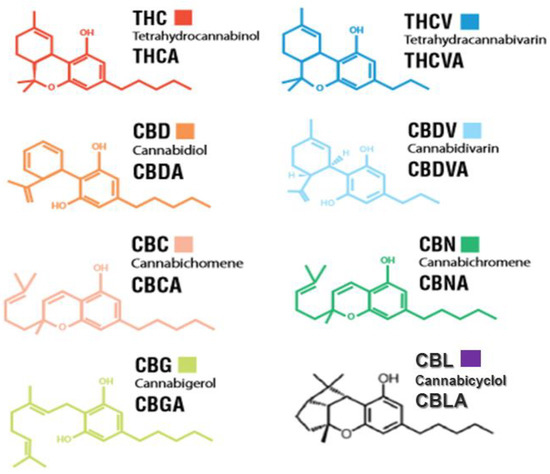
Over hundreds of 21-22-carbon compounds exclusively produce in cannabis glandular hairs through either polyketide and or deoxyxylulose phosphate/methylerythritol phosphate (DOXP/MEP) pathways. Trans-Δ9-tetrahydrocannabinol (Δ9-THC) and cannabidiol (CBD) are those that first come to mind while talking about cannabis. Nevertheless, despite the low concentration, cannabinol (CBN), cannabigerol (CBG), cannabichromene (CBC), tetrahydrocannabivarin (THCV), cannabidivarin (CBDV), cannabinodiol (CBND), and cannabinidiol (CBDL) may have potentially some medical effects.
PCs and endocannabinoids (ECs) mediate their effects mainly through CB1 and CB2 receptors. Despite all concerns regarding cannabis, nobody can ignore the use of cannabinoids as promising tonic, analgesic, antipyretic, antiemetic, anti-inflammatory, anti-epileptic, anticancer agents, which are effective for pain relief, depression, anxiety, sleep disorders, nausea and vomiting, multiple sclerosis, cardiovascular disorders, and appetite stimulation.
The scientific community and public society have now increasingly accepted cannabis specifically hemp as much more than a recreational drug. There are growing demands for cannabinoids, mainly CBD, with many diverse therapeutic and nutritional properties in veterinary or human medicine. The main objective of this review article is to historically summarize findings concerning cannabinoids, mainly THC and CBD, towards putting these valuable compounds into food, feed and health baskets and current and future trends in the consumption of products derived from cannabis.”
https://pubmed.ncbi.nlm.nih.gov/32899626/
https://www.mdpi.com/1420-3049/25/18/4036
 “Cannabis (Cannabis sativa L.) is a complex, polymorphic plant species, which produces a vast array of bioactive metabolites, the two major chemical groups being cannabinoids and terpenoids. Nonetheless, the psychoactive cannabinoid tetrahydrocannabinol (Δ 9 -THC) and the non-psychoactive cannabidiol (CBD), are the two major cannabinoids that have monopolized the research interest.
 “Cannabis sativa or Indian hemp (subfamily Cannaboideae of family Moraceae) is an annual herbaceous plant, native to central and western Asia, cultivated for medicinal properties and for hemp, which is a natural textile fiber. The plant contains over 400 chemical compounds, of which approximately 80 biologically active chemical molecules. The most important cannabis compounds are cannabinoids formed by a terpene combined with resorcinol, or, according to a different nomenclature, by a benzopyranic ring system. There are about sixty cannabinoids, of which the most important psychoactive compound is tetrahydrocannabinol (TCH), in particular the isomer delta (Δ9-THC). Other identified compounds are
  “Cannabis research has historically focused on the most prevalent
  “Elucidation of
  “Compounds present in Cannabis sativa such as phytocannabinoids and terpenoids may act in concert to elicit therapeutic effects.
  “Mood disorders are the most prevalent mental conditions encountered in psychiatric practice. Numerous patients suffering from mood disorders present with treatment-resistant forms of depression, co-morbid anxiety, other psychiatric disorders and bipolar disorders.
 “Mixtures of different Cannabis sativa phytocannabinoids are more active biologically than single phytocannabinoids. However, cannabis terpenoids as potential instigators of phytocannabinoid activity have not yet been explored in detail.
 “The therapeutic effect of