“A glioma is a primary brain tumor that originates from the supportive cells of the brain, called glial cells.” http://neurosurgery.ucla.edu/body.cfm?id=159
“Long-term use of both mobile and cordless phones is associated with an increased risk for glioma, the most common type of brain tumor, the latest research on the subject concludes.” http://www.medscape.com/viewarticle/834888
“Remarkably, cannabinoids kill glioma cells selectively and can protect non-transformed glial cells from death… cannabinoids-the active components of the plant Cannabis sativa.” http://www.ncbi.nlm.nih.gov/pubmed/15275820
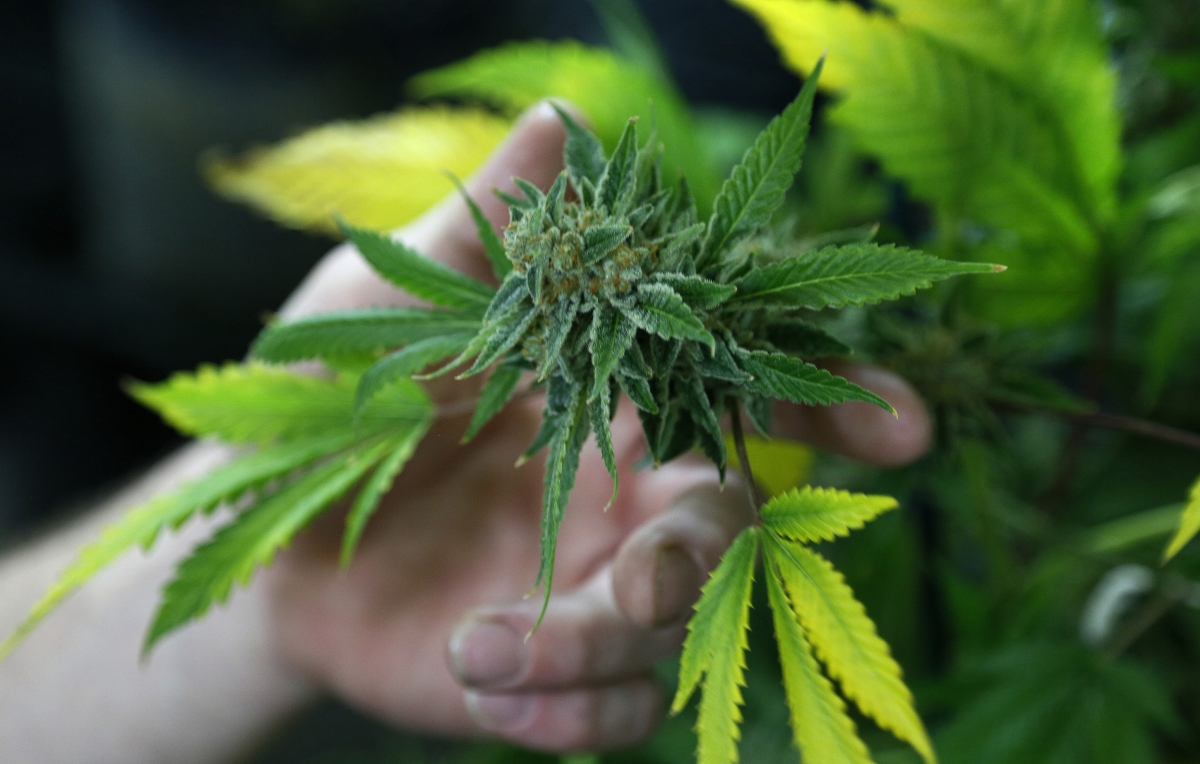
“Molecular mechanisms involved in the antitumor activity of cannabinoids… Cannabinoids, the active components of Cannabis sativa, have been shown to exert antiproliferative and proapoptotic effects on a wide spectrum of tumor cells… Of interest, cannabinoids have displayed great potency in reducing the growth of glioma tumors… Cannabinoids appear to be selective antitumoral agents as they kill glioma cells without affecting the viability of non-transformed cells. Cannabinoids have been proven to inhibit glioma tumor growth… Since cannabinoids kill tumor cells without toxicity on their non transformed counterparts, they can represent a class of new potential anticancer drugs.” http://www.ncbi.nlm.nih.gov/pmc/articles/PMC3835116/
“Antitumor effects of THC.” http://www.ncbi.nlm.nih.gov/pmc/articles/PMC1240145/
“…cannabidiol (CBD), a non-psychoactive cannabinoid, is able to kill glioma cells, both in vivo and in vitro, independently of cannabinoid receptor stimulation… CBD exerts its antitumoral effects through modulation of the LOX pathway and of the endocannabinoid system…” http://www.ncbi.nlm.nih.gov/pubmed/18028339
“Antitumor effects of cannabidiol, a nonpsychoactive cannabinoid, on human glioma cell lines… Marijuana and its derivatives have been used in medicine for many centuries… cannabinoids (CBs) have been shown to possess antitumor properties… the nonpsychoactive CBD was able to produce a significant antitumor activity both in vitro and in vivo,” http://jpet.aspetjournals.org/content/308/3/838.long
“Cannabinoids appear to be selective antitumoral agents as they kill glioma cells without affecting the viability of nontransformed counterparts… good safety profile… remarkable antitumor effects… anticancer activity of cannabinoids.” http://www.ncbi.nlm.nih.gov/pubmed/18088200
“Marijuana Could Cure Cancer And Brain Tumors, Suggests Study” http://www.newseveryday.com/articles/13835/20150416/marijuana-fight-both-cancer-brain-tumour-research.htm
“Marijuana can kill cancer cells and even shrink brain tumours, amazing new findings reveal” http://www.mirror.co.uk/lifestyle/health/marijuana-can-kill-cancer-cells-5502082
“Cannabis extract shrinks brain tumours” http://www.newscientist.com/article/dn6283-cannabis-extract-shrinks-brain-tumours.html#.VUSoGlU4nTY
“Cannabis chemicals slows down brain cancer tumour: British Scientists” http://timesofindia.indiatimes.com/home/science/Cannabis-chemicals-slows-down-brain-cancer-tumour-British-Scientists/articleshow/45166303.cms
“Cannabis reduce tumour growth in cancer patients” http://timesofindia.indiatimes.com/home/science/Cannabis-reduce-tumour-growth-in-cancer-patients/articleshow/38456886.cms
“Cannabis can cure cancer and even shrink brain tumours” http://timesofindia.indiatimes.com/home/science/Cannabis-can-cure-cancer-and-even-shrink-brain-tumours/articleshow/46902373.cms
“Cannabinoids may cause antitumor effects by various mechanisms, including induction of cell death, inhibition of cell growth, and inhibition of tumor angiogenesis invasion and metastasis. Cannabinoids appear to kill tumor cells but do not affect their nontransformed counterparts and may even protect them from cell death.” https://medicine.yale.edu/cancer/patient/programs/sarcoma/info/info.aspx?id=CDR683767
“Study: Thinking Can Speed Up Brain Tumour Growth”
http://au.ibtimes.com/study-thinking-can-speed-brain-tumour-growth-1443392
“Cannabis Significantly Prevents Tumour Growth in Cancer Patients” http://au.ibtimes.com/cannabis-significantly-preventstumour-growth-cancer-patients-1347319
“Cannabis Extracts ‘Drastically Reduce’ Brain Tumour Size” http://www.ibtimes.co.uk/cannabis-extracts-drastically-reduce-brain-tumour-size-1475399
“Brain Tumors And Cell Phone Use Found To Be Linked (Again)” http://www.medicaldaily.com/brain-tumors-and-cell-phone-use-found-be-linked-again-310460
“Brain Tumors Removed Through The Eye Socket In Revolutionary Operation” http://www.medicaldaily.com/brain-tumors-removed-through-eye-socket-revolutionary-operation-319650
“Cannabis Shrinks Brain Tumors Associated With Highly Aggressive Form Of Cancer” http://www.medicaldaily.com/cannabis-shrinks-brain-tumors-associated-highly-aggressive-form-cancer-310720
“Towards the use of cannabinoids as antitumour agents. Various reports have shown that cannabinoids (the active components of marijuana and their derivatives) can reduce tumour growth and progression in animal models of cancer, in addition to their well-known palliative effects on some cancer-associated symptoms. This article discusses our current understanding of cannabinoids as antitumour agents” http://www.ncbi.nlm.nih.gov/pubmed/22555283
“…antitumor effects of cannabinoids in gliomas… canabinnoids exercised selective antitumoral action in several distinct tumor models. Thereby, normal cells used as controls were not affected. The safety factor in the cannabinoids’ administration has also been demonstrated in vivo. The various cannabinoids tested in multiple tumor models showed antitumoral effects both in vitro and in vivo. These findings indicate that cannabinoids are promising compounds for the treatment of gliomas.” http://www.ncbi.nlm.nih.gov/pubmed/24142199
“The tumors regressed over the same period of time that cannabis was consumed via inhalation, raising the possibility that the cannabis played a role in the tumor regression.” http://www.ncbi.nlm.nih.gov/pubmed/21336992
“CB1 and CB2 expression levels have been detected in human tumors, including those of brain. Cannabinoids-endocannabinoids exert anti-inflammatory, anti-proliferative, anti-invasive, anti-metastatic and pro-apoptotic effects in different cancer types, both in vitro and in vivo animal models, after local or systemic administration. We present the available experimental and clinical data, to date, regarding the antitumor action of cannabinoids on the tumorigenesis of gliomas.”
http://www.ncbi.nlm.nih.gov/pubmed/25472761
“The efficacy of cannabinoids against high-grade glioma in animal models, mediated by two specific receptors, CB1 and CB2, raised promises for targeted treatment of the most frequent and malignant primary brain tumors… The high levels of CB2 expression would predestine those tumors to be vulnerable to cannabinoid treatment.” http://www.ncbi.nlm.nih.gov/pubmed/17239827
“Cannabinoids may cause antitumor effects by various mechanisms, including induction of cell death, inhibition of cell growth, and inhibition of tumor angiogenesis invasion and metastasis… molecular mechanisms of action of cannabinoids as antitumor agents. Cannabinoids appear to kill tumor cells but do not affect their nontransformed counterparts and may even protect them from cell death… these compounds have been shown to induce apoptosis (programmed cell death) in glioma cells in culture and induce regression of glioma tumors in mice and rats, while they protect normal glial cells…” http://www.cancer.gov/cancertopics/pdq/cam/cannabis/healthprofessional/page4
“As a therapeutic agent, most people are familiar with the palliative effects of the primary psychoactive constituent of Cannabis sativa (CS), Δ9-tetrahydrocannabinol (THC), a molecule active at both the cannabinoid 1 (CB1) and cannabinoid 2 (CB2) receptors… however, several studies have now shown that CB1 and CB2 receptor agonists can act as direct antitumor agents in a variety of aggressive cancers.” http://www.ncbi.nlm.nih.gov/pubmed/25916739
“CANNABIS can help cancer patients: Drug kills cancer cells and shrinks brain tumours, report reveals.” http://www.dailymail.co.uk/health/article-3036667/How-cannabis-help-cancer-patients-Drug-kills-cancer-cells-shrinks-brain-tumours-report-reveals.html
“Active Component In Marijuana Targets Aggressive Brain Cancer Cells… cannabinoids such as THC had anticancer effects in mice with human brain cancer cells AND PEOPLE with brain tumors.” http://www.webmd.com/cancer/brain-cancer/news/20090401/marijuana-chemical-may-fight-brain-cancer
“Cannabinoid action induces autophagy-mediated cell death through stimulation of ER stress in human glioma cells” http://www.ncbi.nlm.nih.gov/pmc/articles/PMC2673842/
“Active Ingredient in Marijuana Inhibits Cancer Growth…the cannabinoids found in marijuana may aid in brain tumor treatment…cannabinoids inhibited genes needed for the production of vascular growth factor (VEGF) in laboratory mice with glioma brain tumors AND TWO PATIENTS with late-stage glioblastoma multiforme, a form of brain cancer.” http://www.webmd.com/cancer/news/20040815/marijuana-stall-brain-tumor-growth
“Cannabinoids Inhibit the Vascular Endothelial Growth Factor Pathway in Gliomas… Because blockade of the VEGF pathway constitutes one of the most promising antitumoral approaches currently available, the present findings provide a novel pharmacological target for cannabinoid-based therapies.” http://cancerres.aacrjournals.org/content/64/16/5617.long
“Marijuana’s Active Ingredient Targets Deadly Brain Cancer… cannabinoids could stop growth and kill cancer cells but did not harm normal cells.” http://www.webmd.com/cancer/news/20000228/marijuanas-active-ingredient-targets-deadly-brain-cancer
“Anti-tumoral action of cannabinoids: Involvement of sustained ceramide accumulation and extracellular signal-regulated kinase activation” http://www.nature.com/nm/journal/v6/n3/abs/nm0300_313.html
“Cannabinoids, the active components of Cannabis sativa L., inhibit tumor growth in laboratory animals by inducing apoptosis of tumor cells and inhibiting tumor angiogenesis. It has also been reported that cannabinoids inhibit tumor cell invasiveness… Local administration of Delta(9)-tetrahydrocannabinol (THC), the major active ingredient of cannabis, down-regulated TIMP-1 expression in mice bearing subcutaneous gliomas… THC also depressed TIMP-1 expression in cultures of various human glioma cell lines as well as in primary tumor cells obtained from a glioblastoma multiforme patient… TIMP-1 down-regulation may be a hallmark of cannabinoid-induced inhibition of glioma progression.” http://www.ncbi.nlm.nih.gov/pubmed/17675107
“Cannabinoids, the active components of Cannabis sativa L… inhibit tumor growth by inducing apoptosis of tumor cells and impairing tumor angiogenesis… these compounds inhibit tumor cell spreading… Local administration of Delta(9)-tetrahydrocannabinol (THC), the major active ingredient of cannabis, down-regulated MMP-2 expression in gliomas generated in mice… MMP-2 down-regulation constitutes a new hallmark of cannabinoid antitumoral activity.” http://www.ncbi.nlm.nih.gov/pubmed/18339876
“Cannabinoids, the active components of Cannabis sativa… Cannabinoids exert various palliative effects in cancer patients. In addition, cannabinoids inhibit the growth of different types of tumor cells, including glioma cells… Of interest, cannabinoids seem to be selective antitumoral compounds, as they kill glioma cells, but not their non-transformed astroglial counterparts.” http://www.ncbi.nlm.nih.gov/pubmed/17952650
http://www.thctotalhealthcare.com/category/brain-cancer/


