Water Extract from Inflorescences of Industrial Hemp Futura 75 Variety as a Source of Anti-Inflammatory, Anti-Proliferative and Antimycotic Agents: Results from In Silico, In Vitro and Ex Vivo Studies

Antioxidants 09 00437 g011 550

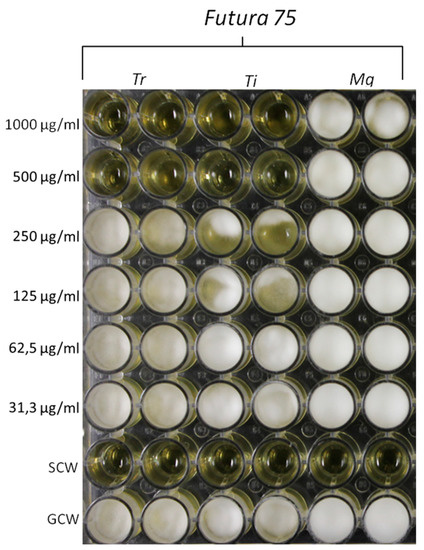
“Industrial hemp (Cannabis sativa) is traditionally cultivated as a valuable source of fibers and nutrients. Multiple studies also demonstrated antimicrobial, anti-proliferative, phytotoxic and insecticide effects of the essential oil from hemp female inflorescences. On the other side, only a few studies explored the potential pharmacological application of polar extracts from inflorescences. In the present study, we investigated the water extract from inflorescences of industrial hemp Futura 75 variety, from phytochemical and pharmacological point of view. The water extract was assayed for phenolic compound content, radical scavenger/reducing, chelating and anti-tyrosinase effects. Through an ex vivo model of toxicity induced by lipopolysaccharide (LPS) on isolated rat colon and liver, we explored the extract effects on serotonin, dopamine and kynurenine pathways and the production of prostaglandin (PG)E2. Anti-proliferative effects were also evaluated against human colon cancer HCT116 cell line. Additionally, antimycotic effects were investigated against Trichophyton rubrum, Trichophyton interdigitale, Microsporum gypseum. Finally, in silico studies, including bioinformatics, network pharmacology and docking approaches were conducted in order to predict the putative targets underlying the observed pharmacological and microbiological effects. Futura 75 water extract was able to blunt LPS-induced reduction of serotonin and increase of dopamine and kynurenine turnover, in rat colon. Additionally, the reduction of PGE2 levels was observed in both colon and liver specimens, as well. The extract inhibited the HCT116 cell viability, the growth of T. rubrum and T. interdigitale and the activity of tyrosinase, in vitro, whereas in silico studies highlighting the inhibitions of cyclooxygenase-1 (induced by carvacrol), carbonic anhydrase IX (induced by chlorogenic acid and gallic acid) and lanosterol 14-α-demethylase (induced by rutin) further support the observed pharmacological and antimycotic effects. The present findings suggest female inflorescences from industrial hemp as high quality by-products, thus representing promising sources of nutraceuticals and cosmeceuticals against inflammatory and infectious diseases.”

https://pubmed.ncbi.nlm.nih.gov/32429587/

“Concluding, the present findings highlight the potential of water extracts from industrial hemp inflorescences as sources of natural compounds that, besides the intrinsic antiradical activity, possess discrete mechanisms related to anti-inflammatory, anti-proliferative and antimycotic effects. In this context, and also in view of a more sustainable circular economy, it is desirable an improvement of industrial hemp chain production, taking into consideration the female inflorescences as high quality by-products with putative nutraceutical and cosmeceutical applications.”

https://www.mdpi.com/2076-3921/9/5/437/htm

The effect of cannabidiol on canine neoplastic cell proliferation and MAP Kinase activation during autophagy and apoptosis

“Low tetrahydrocannabinol Cannabis sativa products, also known as hemp products, have become widely available and their use in veterinary patients has become increasingly popular. Despite prevalence of use, the veterinary literature is lacking and evidence-based resource for cannabinoid efficacy.

The most prevailing cannabinoid found in hemp is cannabidiolic acid (CBDA) and becomes cannabidiol (CBD) during heat extraction; CBD has been studied for its direct anti-neoplastic properties alone and in combination with standard cancer therapies, yielding encouraging results.

The objectives of our study were to explore the anti-proliferative and cell death response associated with in vitro treatment of canine cancer cell lines with CBD alone and combination with common chemotherapeutics, as well as investigation into major proliferative pathways (e.g. p38, JNK, AKT, mTOR) potentially involved in the response to treatment with CBD.

CBD significantly reduced canine cancer cell proliferation far better than cannabidiolic acid (CBDA) across five canine neoplastic cell lines when treated with concentrations ranging from 2.5-10 μg/mL. Combinatory treatment with CBD and vincristine reduced cell proliferation in a synergistic or additive manner at anti-proliferative concentrations with less clear results using doxorubicin in combination with CBD. The cellular signaling effects of CBD treatment, showed that autophagy supervened induction of apoptosis and may be related to prompt induction of ERK and JNK phosphorylation prior to autophagy.

In conclusion, CBD is effective at hindering cell proliferation and induction of autophagy and apoptosis rapidly across neoplastic cell lines and further clinical trials are needed to understand its efficacy and interactions with traditional chemotherapy.”

https://pubmed.ncbi.nlm.nih.gov/33247539/

https://onlinelibrary.wiley.com/doi/10.1111/vco.12669

Cannabinoid Signaling in Glioma Cells.

 “Cannabinoids are a group of structurally heterogeneous but pharmacologically related compounds, including plant-derived cannabinoids, synthetic substances and endogenous cannabinoids, such as anandamide and 2-arachidonoylglycerol.

Cannabinoids elicit a wide range of central and peripheral effects mostly mediated through cannabinoid receptors. There are two types of specific Gi/o-protein-coupled receptors cloned so far, called CB1 and CB2, although an existence of additional cannabinoid-binding receptors has been suggested. CB1 and CB2 differ in their predicted amino acid sequence, tissue distribution, physiological role and signaling mechanisms.

Significant alterations of a balance in the cannabinoid system between the levels of endogenous ligands and their receptors occur during malignant transformation in various types of cancer, including gliomas.

Cannabinoids exert anti-proliferative action in tumor cells.

Induction of cell death by cannabinoid treatment relies on the generation of a pro-apoptotic sphingolipid ceramide and disruption of signaling pathways crucial for regulation of cellular proliferation, differentiation or apoptosis. Increased ceramide levels lead also to ER-stress and autophagy in drug-treated glioblastoma cells.

Beyond blocking of tumor cells proliferation cannabinoids inhibit invasiveness, angiogenesis and the stem cell-like properties of glioma cells, showing profound activity in the complex tumor microenvironment. Advances in translational research on cannabinoid signaling led to clinical investigations on the use of cannabinoids in treatments of glioblastomas.”

https://www.ncbi.nlm.nih.gov/pubmed/32034716

https://link.springer.com/chapter/10.1007%2F978-3-030-30651-9_11

“Cannabinoids exert anti-proliferative action in tumor cells.” https://www.ncbi.nlm.nih.gov/pubmed/22879071

“A glioma is a primary brain tumor that originates from the supportive cells of the brain, called glial cells.” http://neurosurgery.ucla.edu/body.cfm?id=159

“Remarkably, cannabinoids kill glioma cells selectively and can protect non-transformed glial cells from death.” http://www.ncbi.nlm.nih.gov/pubmed/15275820

The Highs and Lows of Cannabis in Cancer Treatment and Bone Marrow Transplantation.

 Logo of rmmj“In the last decade, we have observed an increased public and scientific interest in the clinical applications of medical cannabis.

Currently, the application of cannabinoids in cancer patients is mainly due to their analgesic and anti-emetic effects.

The direct effects of phyto-cannabinoids on cancer cells are under intensive research, and the data remain somewhat inconsistent. Although anti-proliferative properties were observed in vitro, conclusive data from animal models and clinical trials are lacking.

Since immunotherapy of malignant diseases and bone marrow transplantation are integral approaches in hemato-oncology, the immuno-modulatory characteristic of cannabinoids is a fundamental aspect for consideration. The effect of cannabinoids on the immune system is presently under investigation, and some evidence for its immuno-regulatory properties has been shown.

In addition, the interaction of cannabinoids and classical cytotoxic agents is a subject for further investigation. Here we discuss the current knowledge of cannabinoid-based treatments in preclinical models and the limited data in oncological patients. Particularly, we address the possible contradiction between the direct anti-tumor and the immune-modulatory effects of cannabinoids.

Better understanding of the mechanism of cannabinoids influence is essential to design therapies that will allow cannabinoids to be incorporated into the clinic.”

https://www.ncbi.nlm.nih.gov/pubmed/32017682

Cannabidiol-from Plant to Human Body: A Promising Bioactive Molecule with Multi-Target Effects in Cancer.

 ijms-logo“Cannabis sativa L. is a plant long used for its textile fibers, seed oil, and oleoresin with medicinal and psychoactive properties. It is the main source of phytocannabinoids, with over 100 compounds detected so far. In recent years, a lot of attention has been given to the main phytochemicals present in Cannabis sativa L., namely, cannabidiol (CBD) and Δ9-tetrahydrocannabinol (THC). Compared to THC, CBD has non-psychoactive effects, an advantage for clinical applications of anti-tumor benefits. The review is designed to provide an update regarding the multi-target effects of CBD in different types of cancer. The main focus is on the latest in vitro and in vivo studies that present data regarding the anti-proliferative, pro-apoptotic, cytotoxic, anti-invasive, anti-antiangiogenic, anti-inflammatory, and immunomodulatory properties of CBD together with their mechanisms of action. The latest clinical evidence of the anticancer effects of CBD is also outlined. Moreover, the main aspects of the pharmacological and toxicological profiles are given.”
https://www.ncbi.nlm.nih.gov/pubmed/31775230

https://www.mdpi.com/1422-0067/20/23/5905

Anti-Proliferative Properties and Proapoptotic Function of New CB2 Selective Cannabinoid Receptor Agonist in Jurkat Leukemia Cells.

ijms-logo “Several studies demonstrated that cannabinoids reduce tumor growth, inhibit angiogenesis, and decrease cancer cell migration. As these molecules are well tolerated, it would be interesting to investigate the potential benefit of newly synthesized compounds, binding cannabinoid receptors (CBRs). In this study, we describe the synthesis and biological effect of 2-oxo-1,8-naphthyridine-3-carboxamide derivative LV50, a new compound with high CB2 receptor (CB2R) affinity. We demonstrated that it decreases viability of Jurkat leukemia cells, evaluated by Trypan Blue and 3-(4,5-dimethylthiazol-2-yl)-2,5-diphenyltetrazolium bromide (MTT), but mainly induces a proapoptotic effect. We observed an increase of a hypodiploid peak by propidium iodide staining and changes in nuclear morphology by Hoechst 33258. These data were confirmed by a significant increase of Annexin V staining, cleavage of the nuclear enzyme poly(ADP-ribose)-polymerase (PARP), and caspases activation. In addition, in order to exclude that LV50 non-specifically triggers death of all normal leukocytes, we tested the new compound on normal peripheral blood lymphocytes, excluding the idea of general cytotoxicity. To characterize the involvement of CB2R in the anti-proliferative and proapoptotic effect of LV50, cells were pretreated with a specific CB2R antagonist and the obtained data showed reverse results. Thus, we suggest a link between inhibition of cell survival and proapoptotic activity of the new compound that elicits this effect as selective CB2R agonist.” https://www.ncbi.nlm.nih.gov/pubmed/29973514 http://www.mdpi.com/1422-0067/19/7/1958
]]>